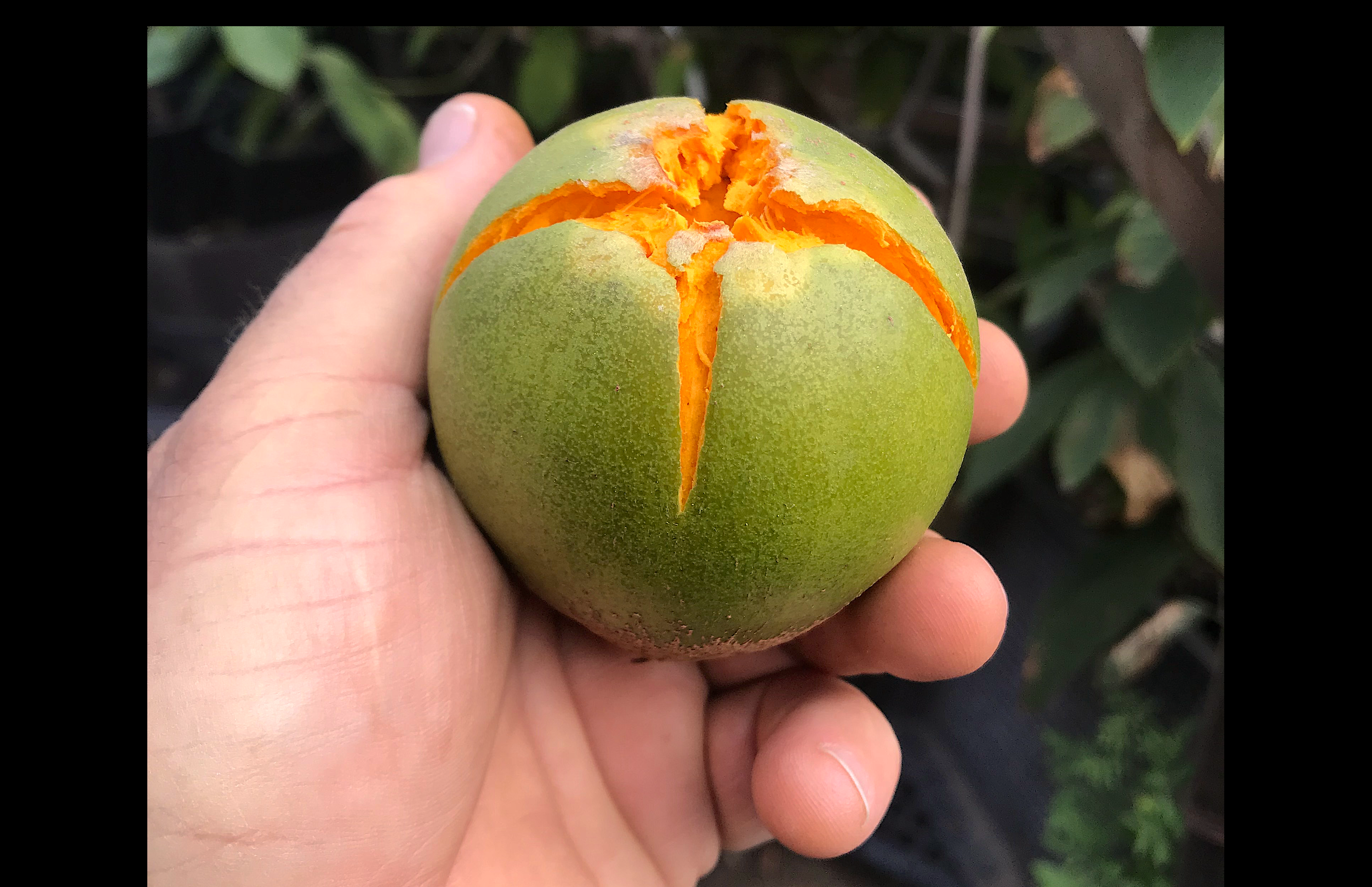
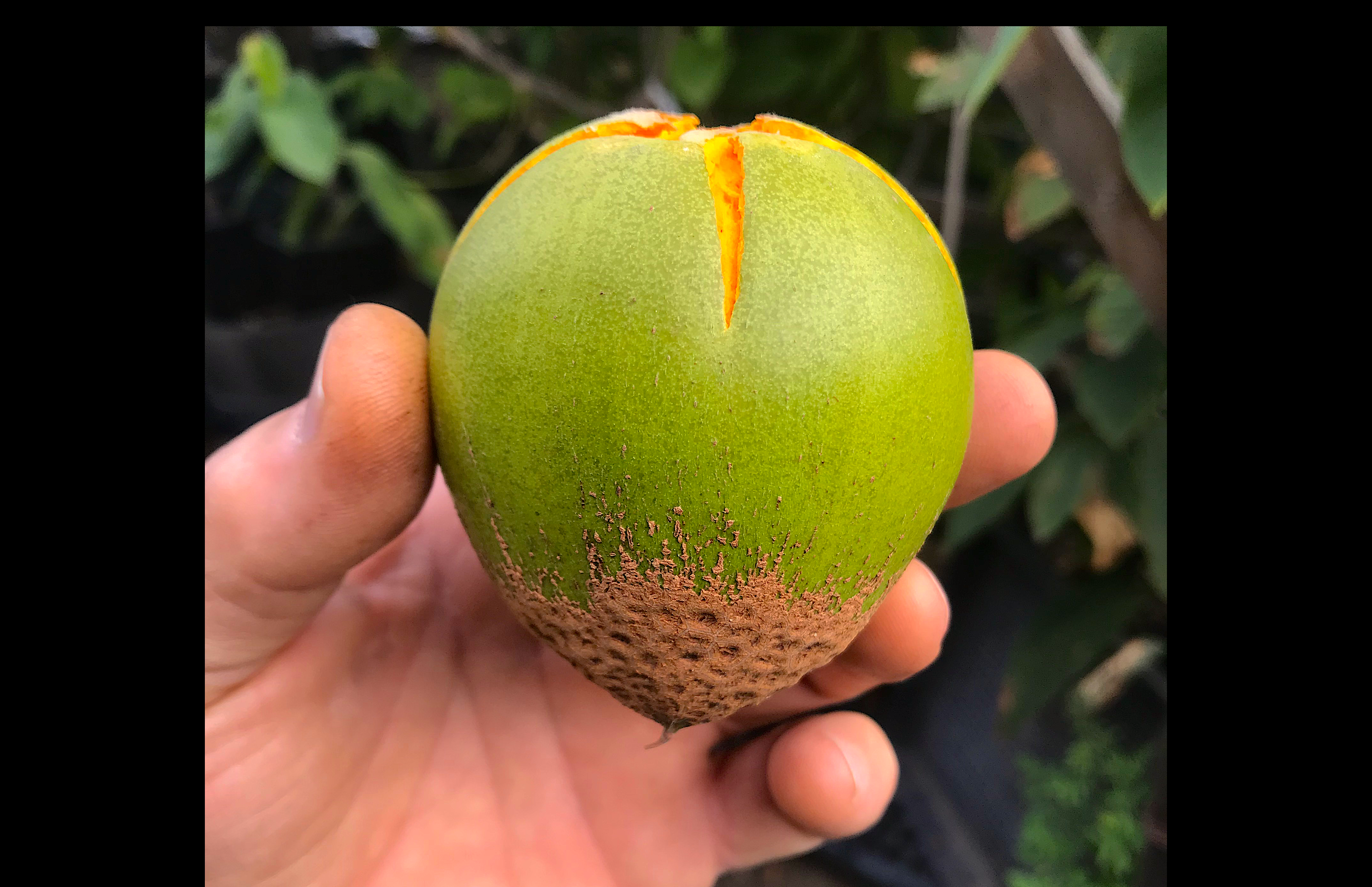
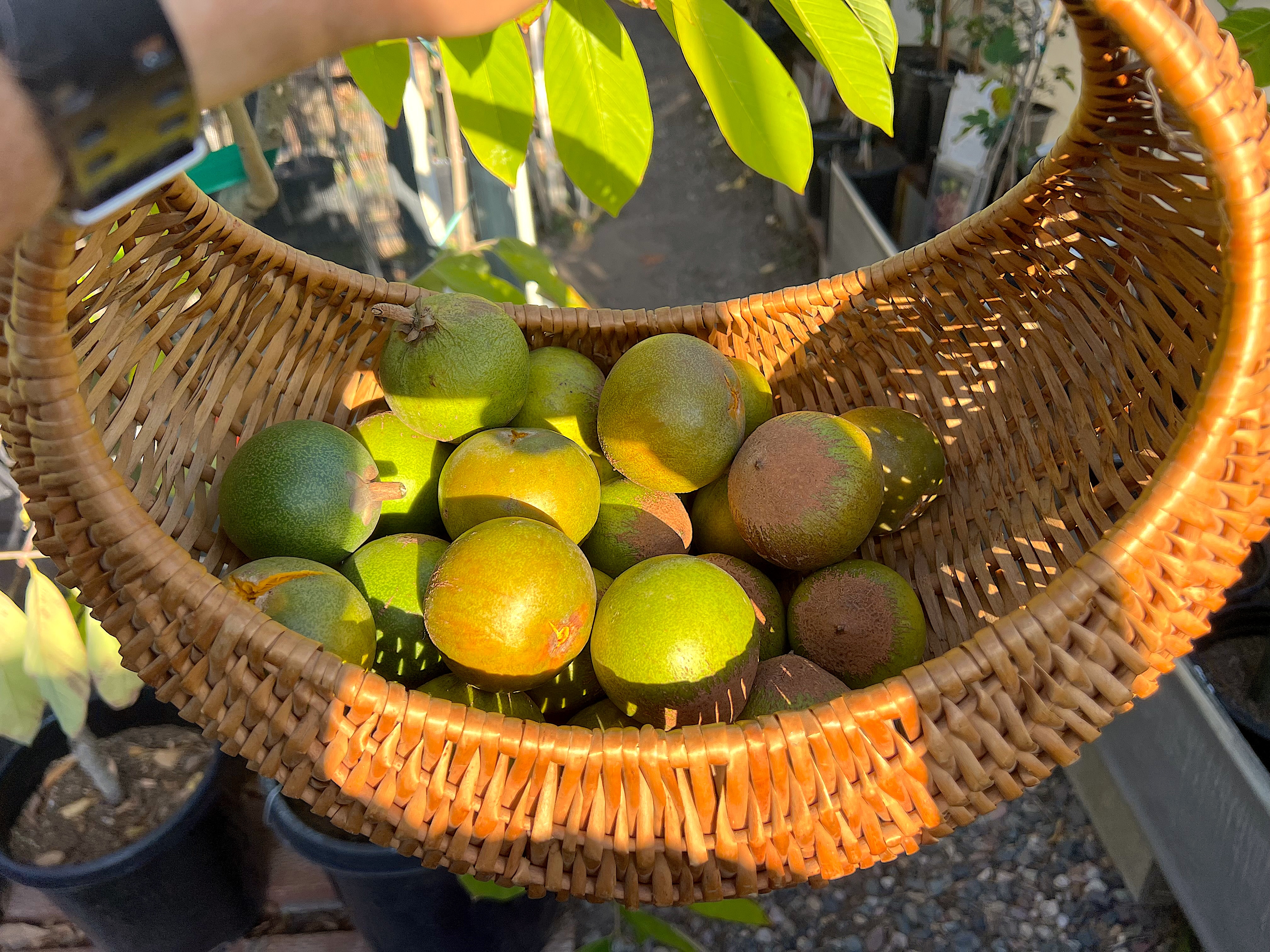
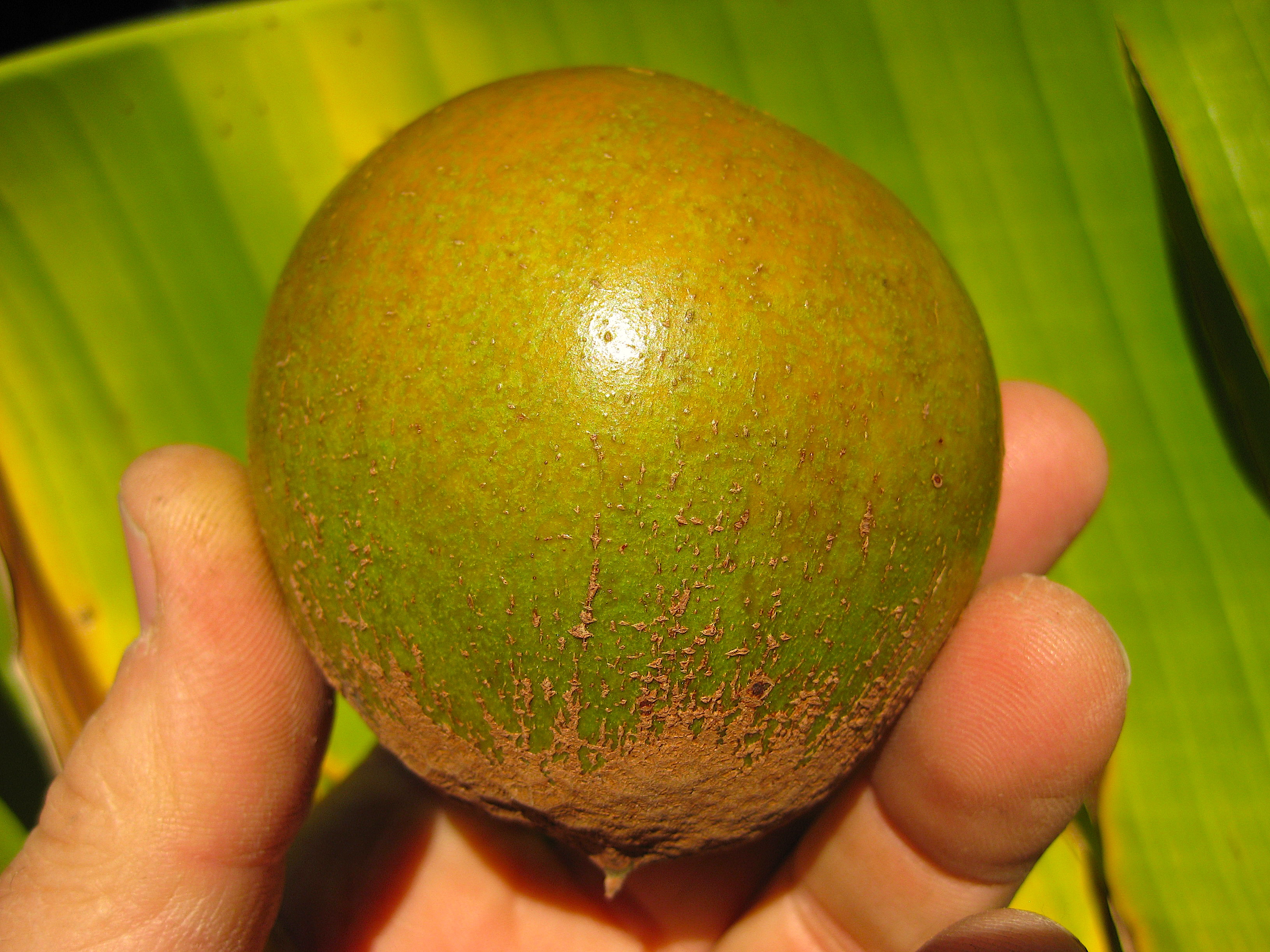
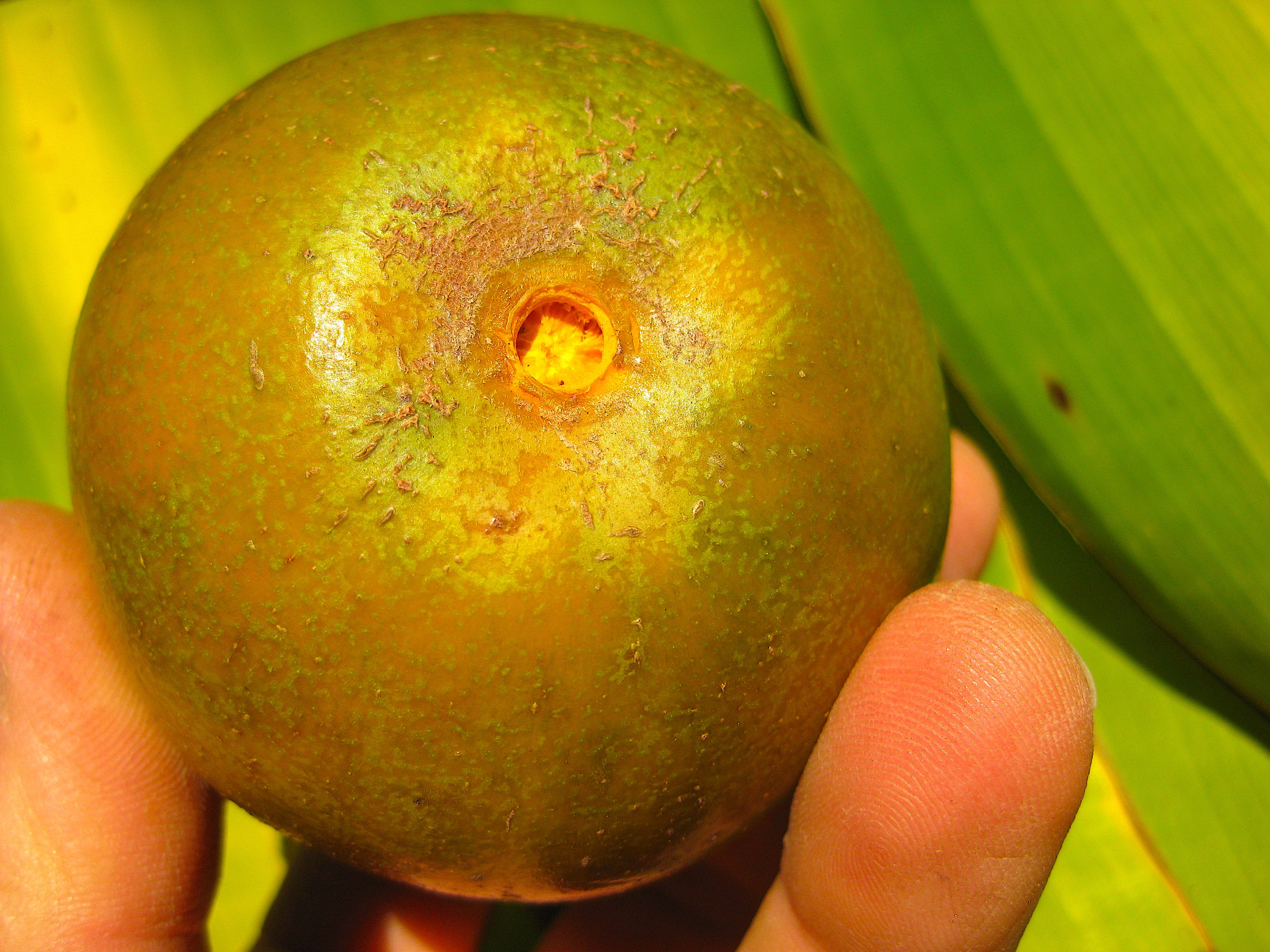
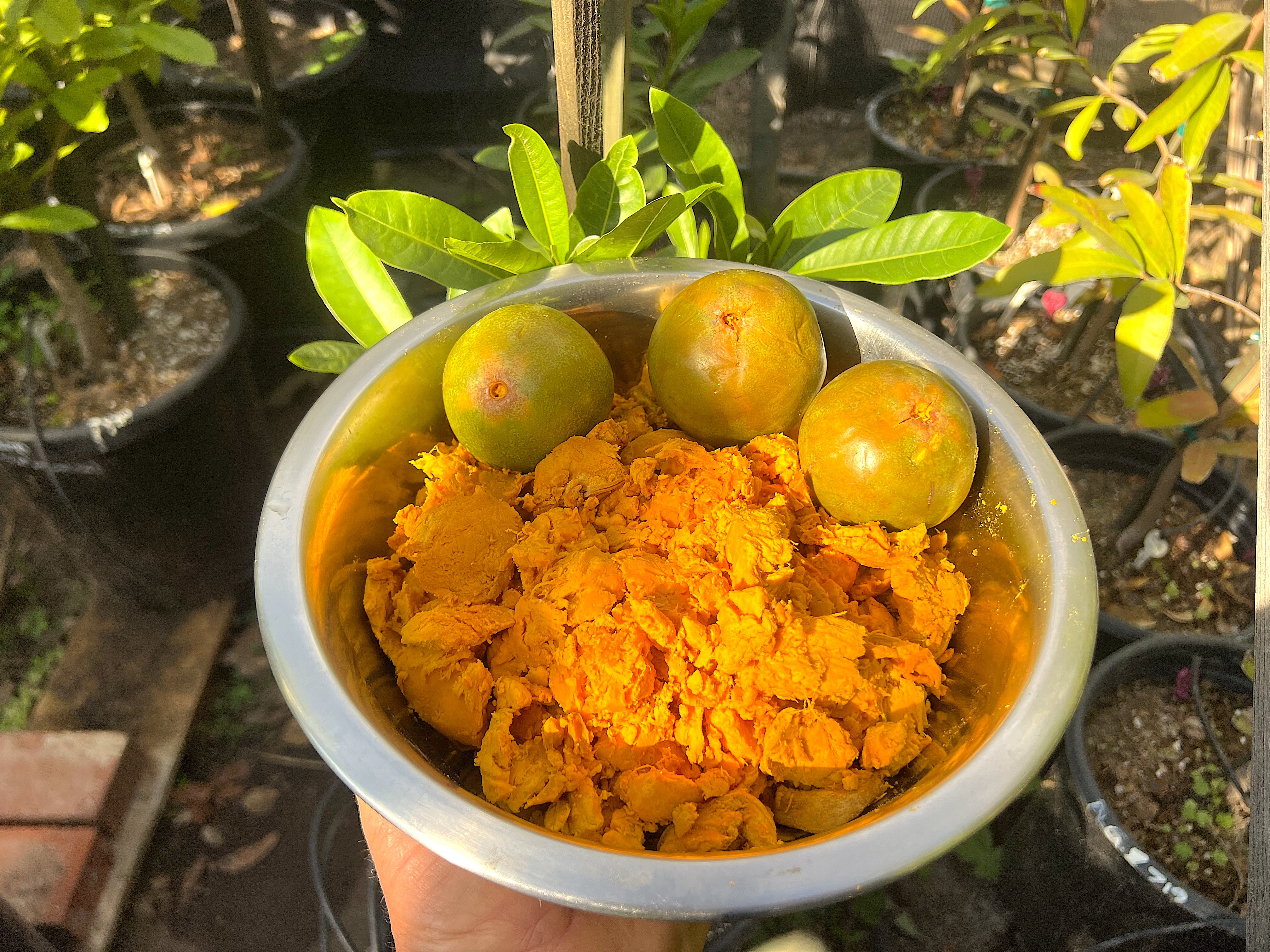
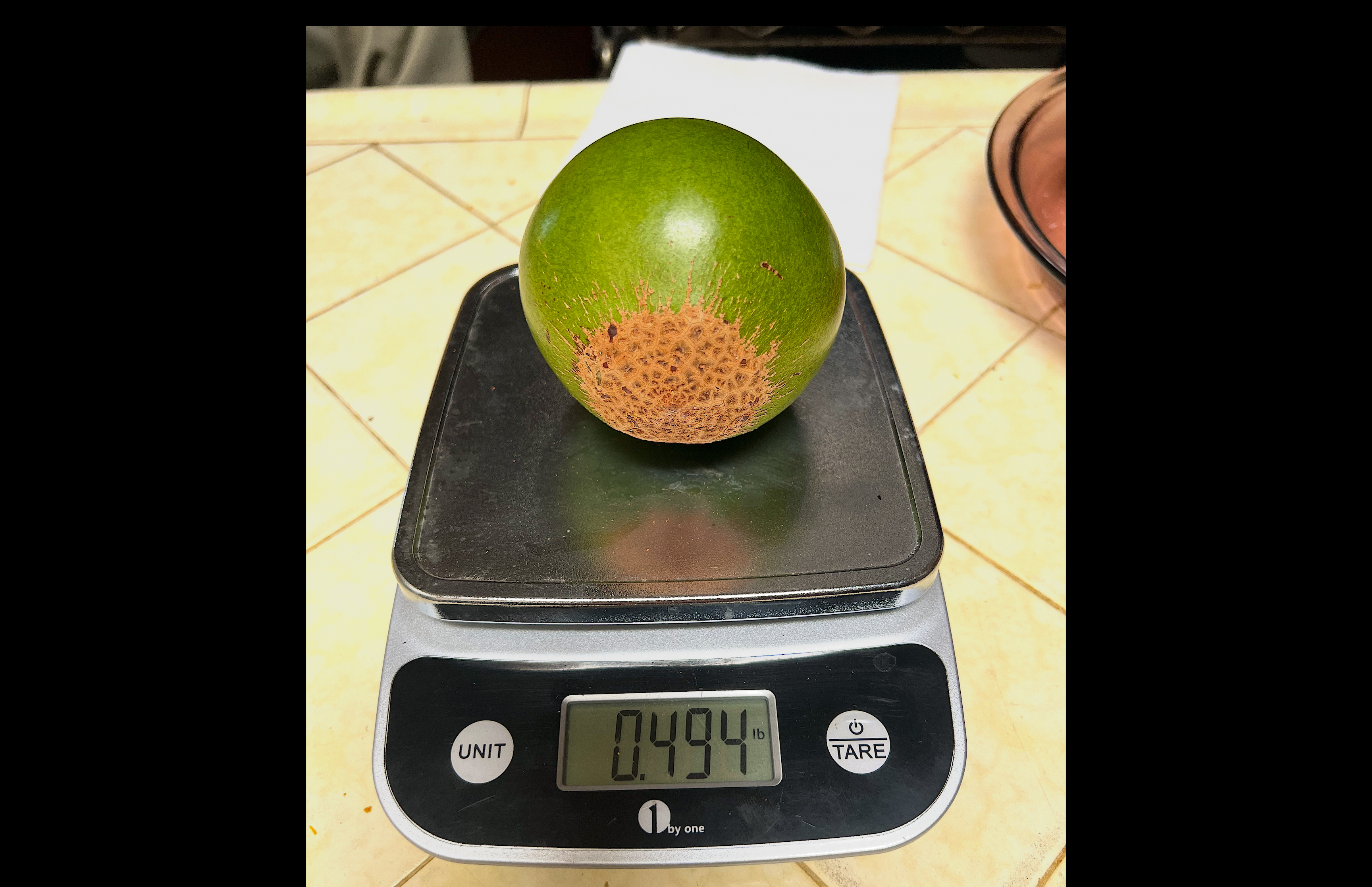
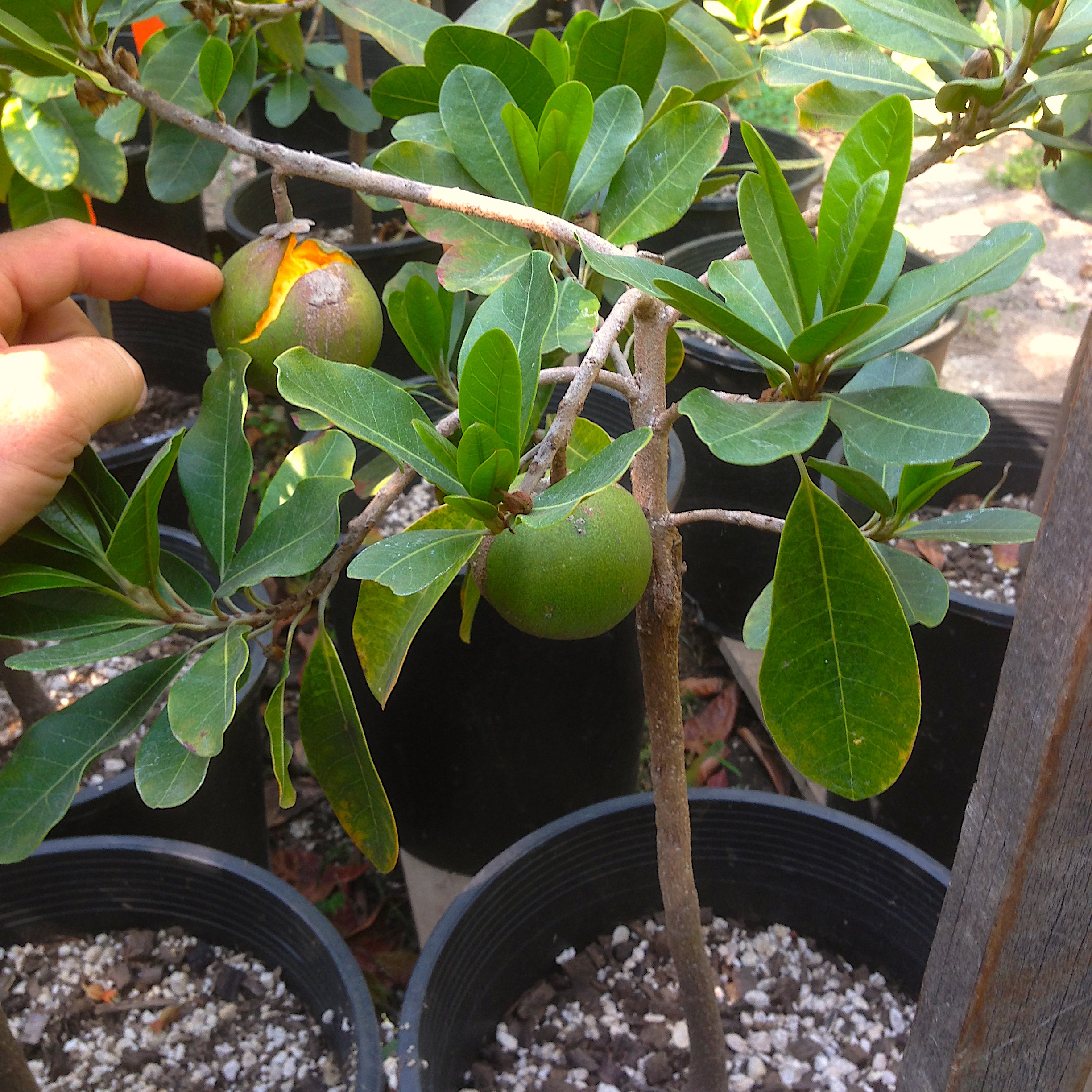
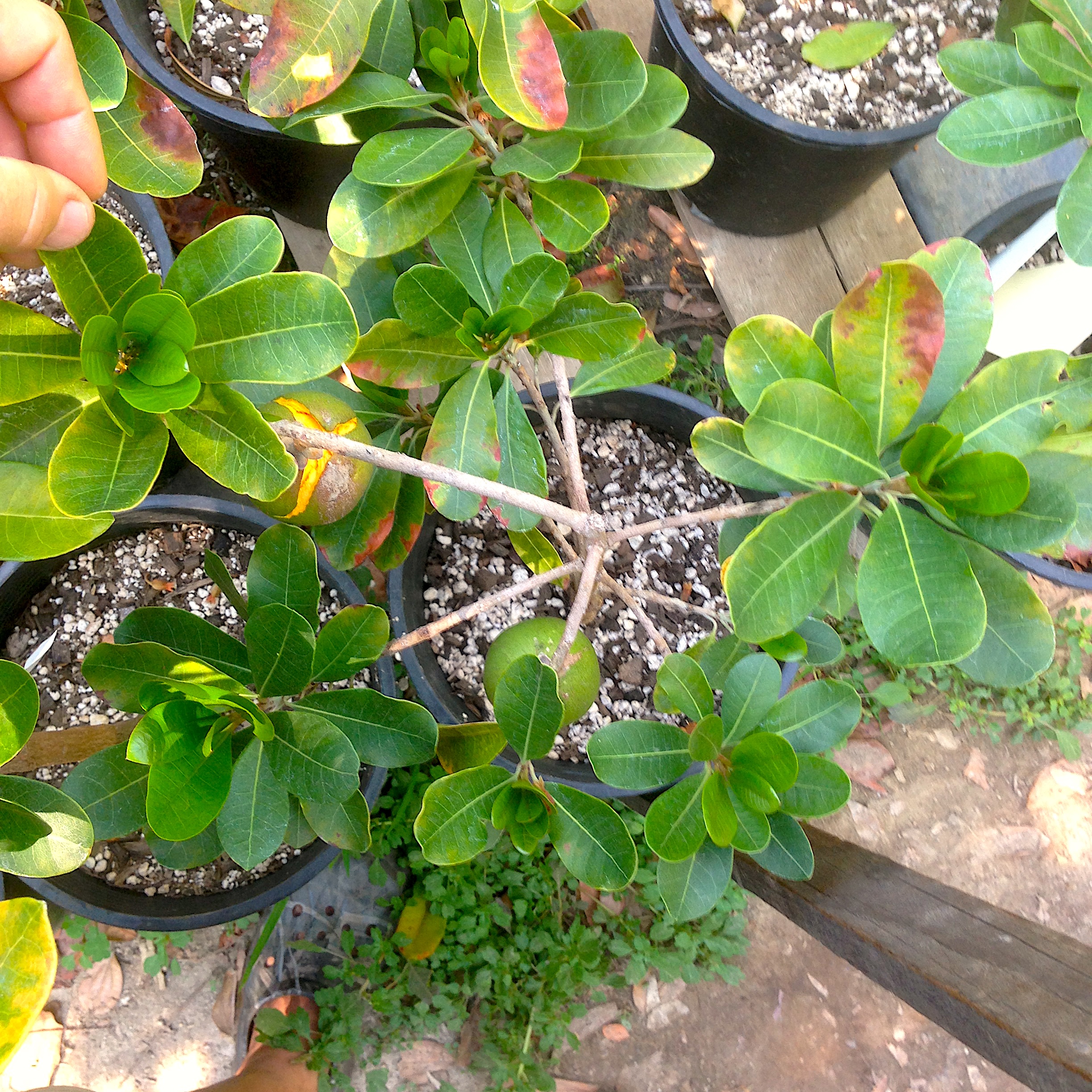
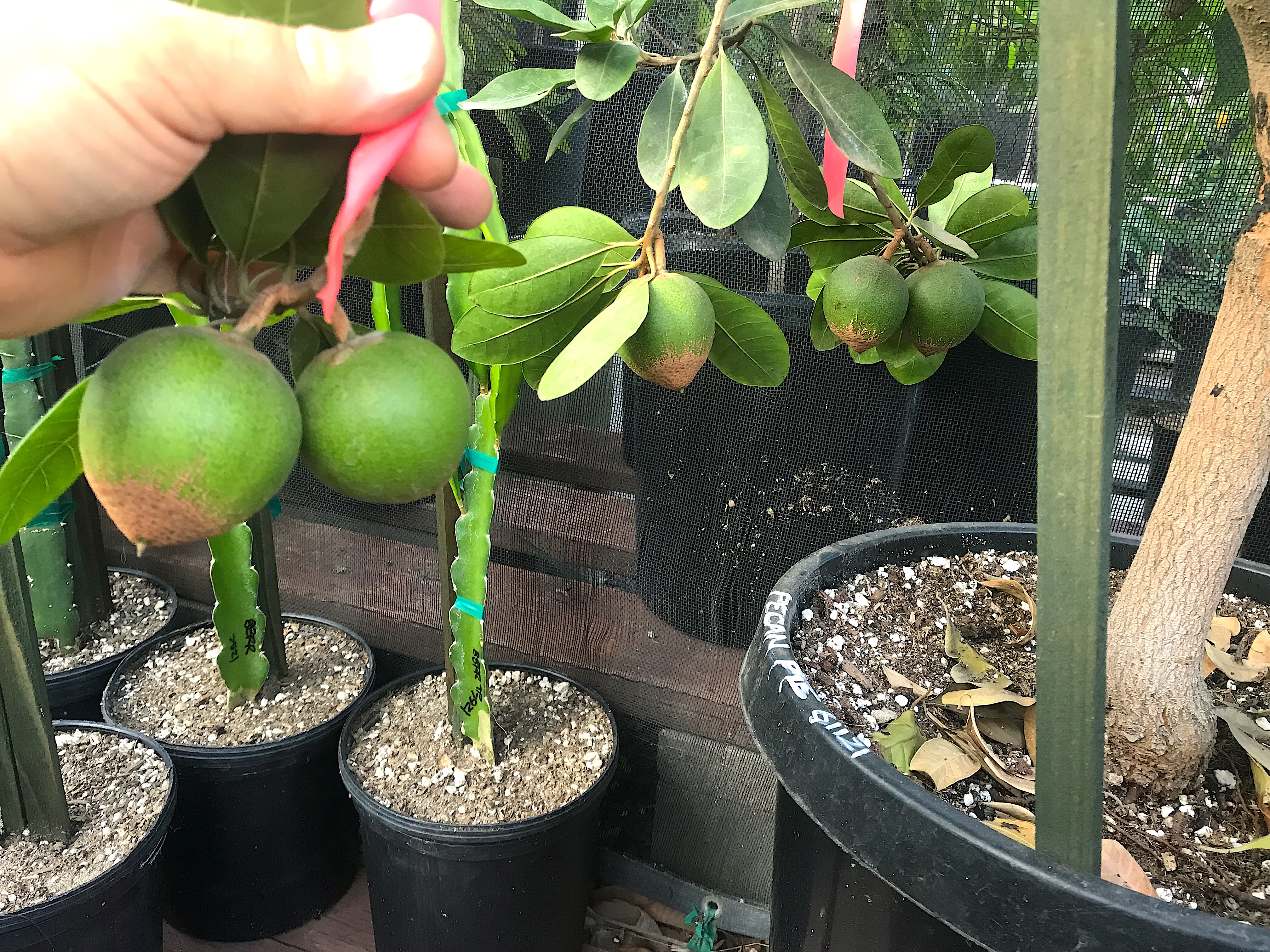
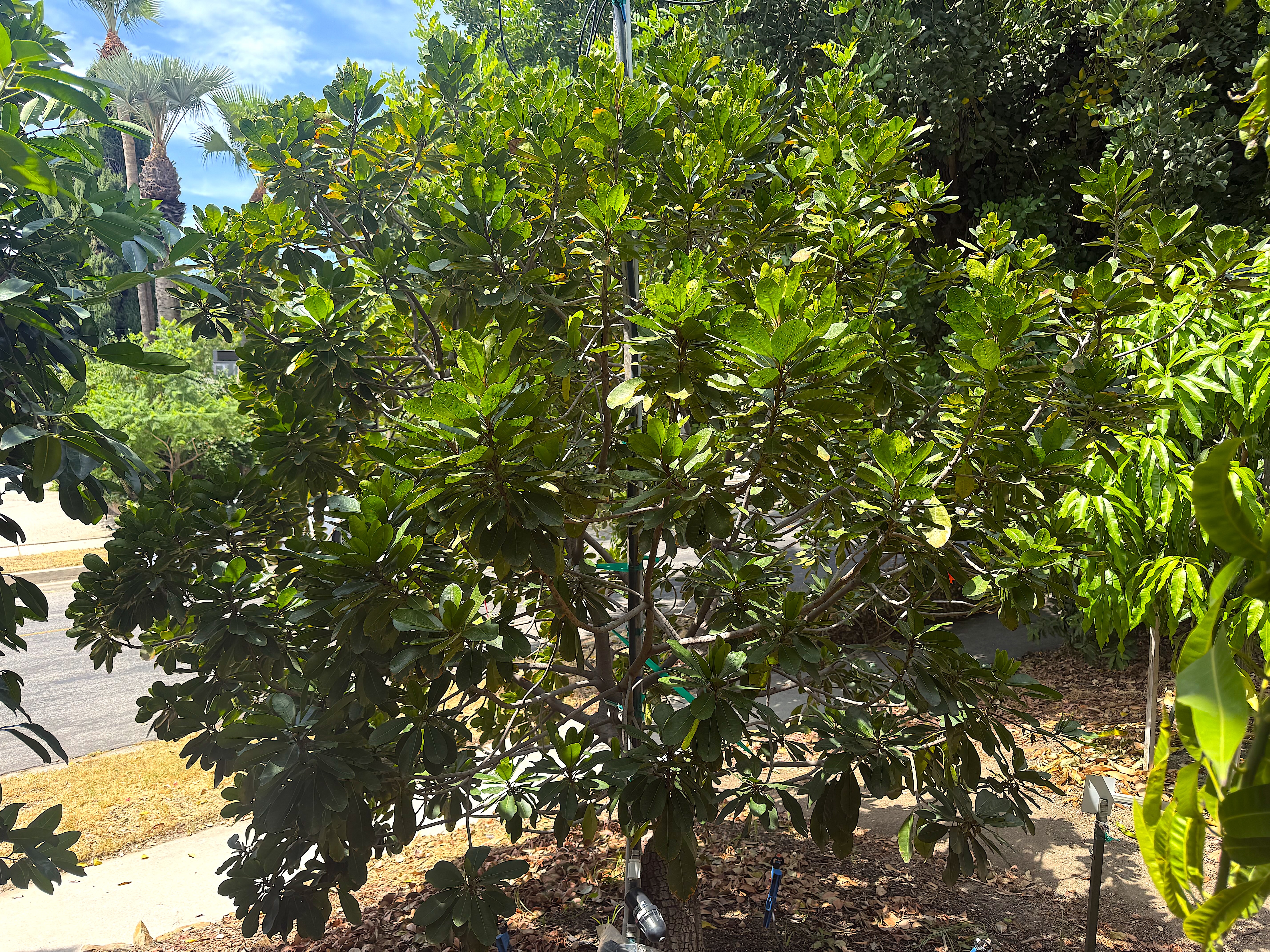
What is a Lucuma? Well, as far as first impressions go, I was fortunate. I first sampled the fruit about thirty-five years ago from a select variety originally given to my father to grow in Southern California, by a professor at the National University of Agriculture in the La Molina district of Lima, Peru. At the time, he was leading an ongoing evaluation of lucuma in an effort to identify superior varieties with greater potential for commercial production. The particular selection I tasted was one result of that effort and had been chosen for a number of desirable qualities compared with the more variable wild forms growing throughout the region. Among them were improved adaptability and productivity, larger fruit, greater sugar content and flavor, a lower seed-to-flesh ratio, and a higher moisture content producing a smoother texture. It was also surprisingly precocious, capable of bearing fruit when the tree was only about three feet tall. Now, to be clear, the so-called "improved" lucuma offered at Papaya Tree Nursery for all these years (30+) is still not what anyone would call a juicy fruit—but I don't consider that a shortcoming. To me, its dense, rich flesh is almost more reminiscent of a pastry than a typical juicy fruit such as a peach. Once you've experienced it that way, it's not difficult to understand why lucuma lends itself so beautifully to ice cream and other desserts. There's a richness and character to this unusual fruit from Peru that I became fond of all those years ago—and remain fond of to this day.
| Common Name | Lucuma |
| Scientific Name/Synonyms | Pouteria lucuma (Syn. Lucuma obovata) |
| Cultivars/Varieties | ("Seda" types only) Inca Gold, Kona, La Molina 4, Pecan Pie |
| Country of Origin | Peru |
| Native Range | Andean valleys of Peru, Ecuador, and neighboring northwestern South America |
| Also found in other Regions | Ecuador, Chile, Bolivia, Colombia, Central America, Mexico, Hawaii, Southern California, and other subtropical regions |
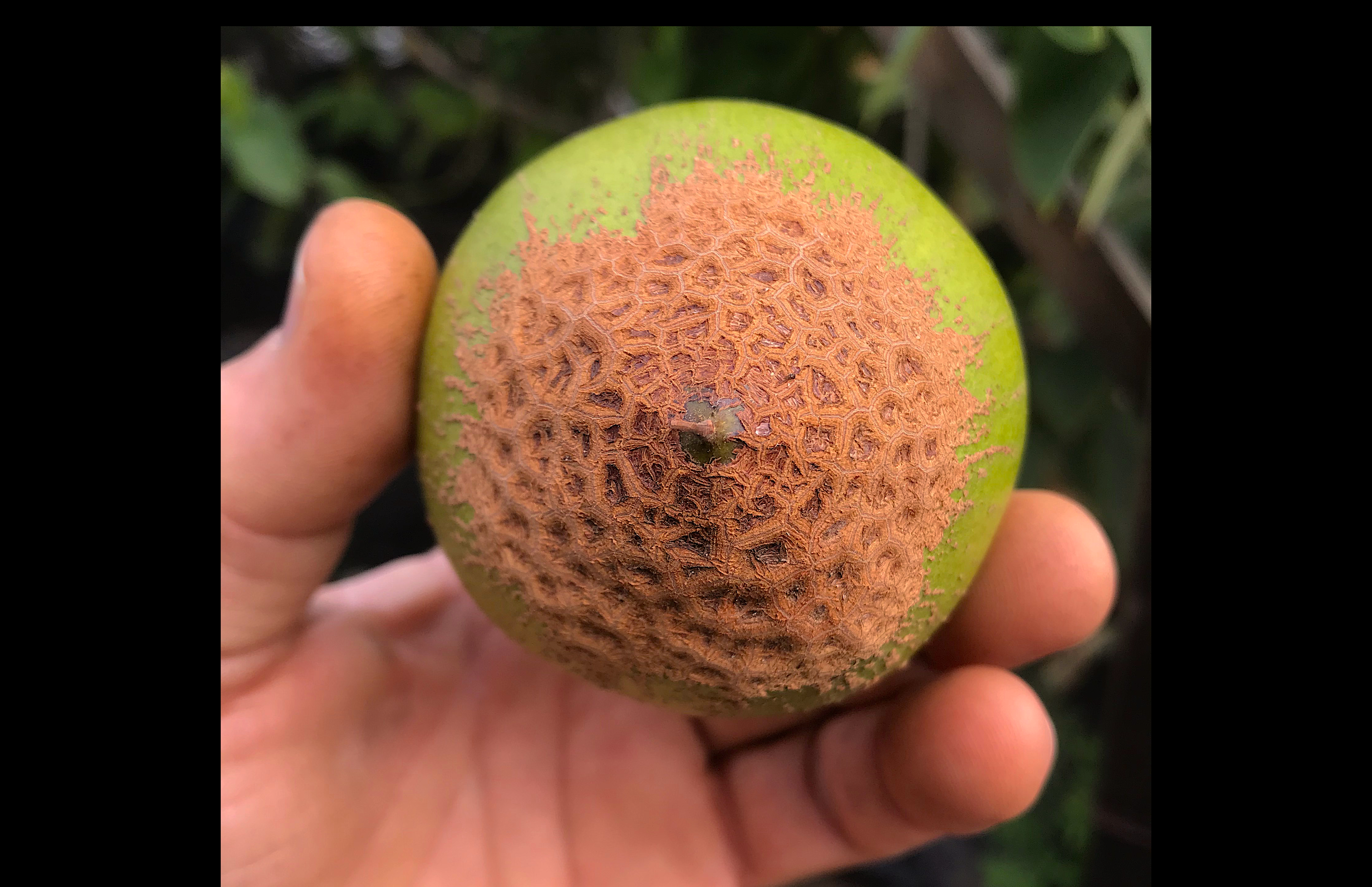
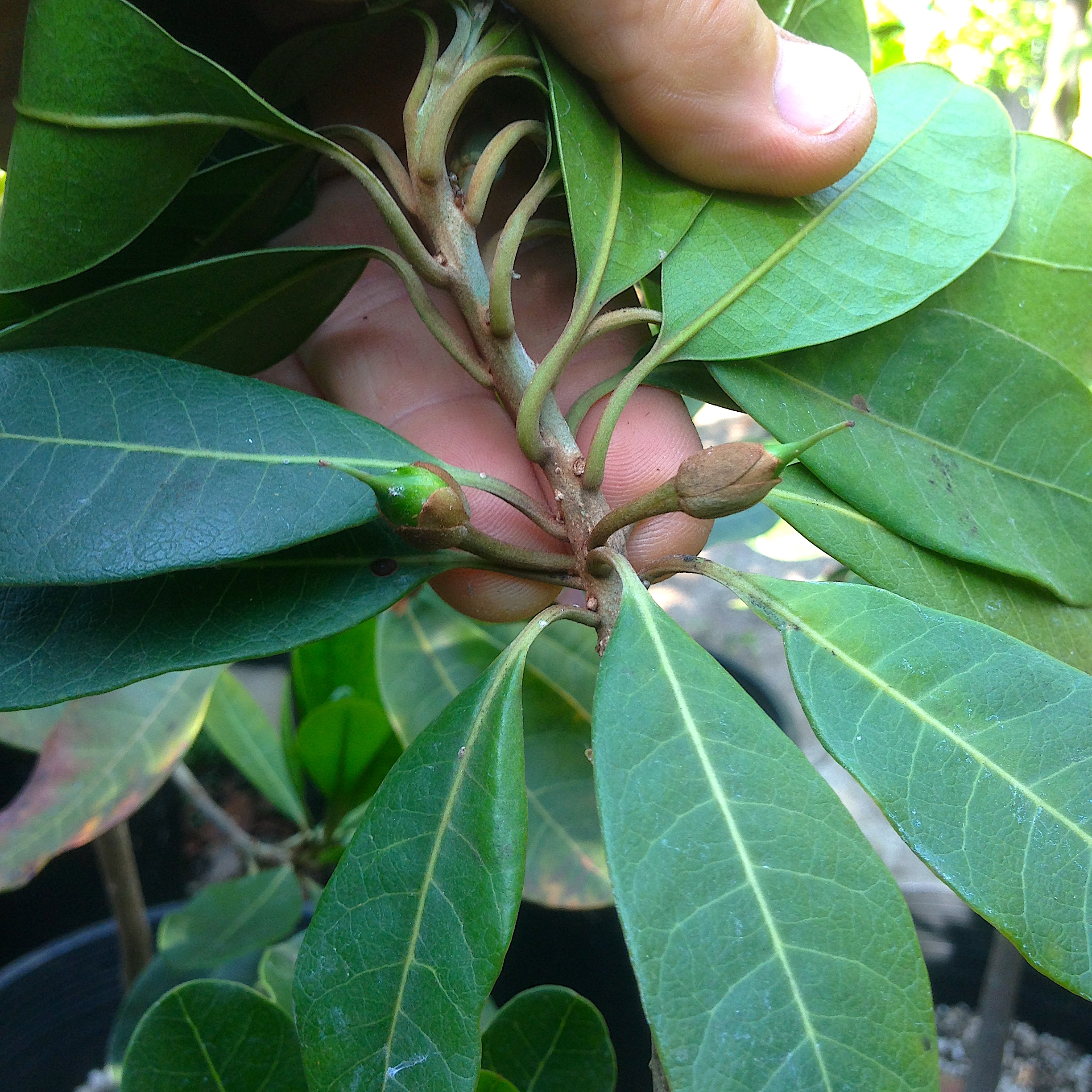
| Description | Lucuma (Pouteria lucuma) is a distinctive evergreen fruit tree native to the Andean region of western South America and has an especially long association with Peru, where the fruit has been cultivated and valued for centuries. Archaeological evidence indicates that lucuma was known to pre-Columbian cultures long before the arrival of Europeans, and representations of the fruit have been discovered on ancient Peruvian ceramics pre-dating even the use by the Incas over 2,000 years ago. Today, lucuma remains closely associated with Peruvian culture and cuisine and is sometimes affectionately referred to as the "Gold of the Incas." The tree itself is an attractive, moderately growing evergreen with dense foliage consisting of glossy, leathery leaves. Under favorable conditions it eventually develops into a handsome, rounded specimen capable of providing both ornamental value and an unusual crop of fruit. Although its tropical appearance might suggest otherwise, lucuma originates primarily from elevated Andean valleys and is therefore considerably more tolerant of cool subtropical conditions than many truly tropical fruit trees. The fruit is generally rounded to somewhat oval or heart-shaped and develops a green to yellowish-green skin as it approaches maturity. One particularly recognizable feature is the dry, brownish area surrounding the blossom end of the fruit, something that can make lucuma relatively easy to distinguish once one becomes familiar with it. When mature, the flesh develops a rich yellow to deep golden-orange color and surrounds one or more large, glossy brown seeds.Unlike many tropical fruits, lucuma is not particularly juicy. Its flesh is comparatively dense and dry, with a texture that can seem almost reminiscent of cooked sweet potato or a firm egg yolk when not completely ripe. However, once properly matured and softened, the texture becomes smoother and the fruit develops its characteristic sweetness and aroma. Its unusual flavor has been variously compared with maple, caramel, butterscotch, sweet potato, and vanilla, although—as is often the case with unusual fruits—none of those descriptions quite captures it completely. In Peru, lucuma is especially prized as a flavoring rather than simply as a fresh fruit. The pulp is traditionally incorporated into ice cream, milkshakes, desserts, pastries, cakes, and numerous other sweets. Lucuma ice cream in particular has become something of a Peruvian classic and provides many visitors to the country with their first introduction to the fruit. For Southern California fruit enthusiasts, lucuma offers another interesting advantage. Its origins in the relatively cool, elevated valleys of the Andes give established trees a degree of adaptability to our Mediterranean climate that might not be expected from its exotic appearance. Young trees should still be protected from significant frost, but once established, healthy specimens can perform surprisingly well in favorable coastal and warmer inland locations. Lucuma will probably never have the immediate universal appeal of a mango, cherimoya, or perfectly ripened peach. Its relatively dry flesh and unusual flavor can be unexpected when encountered for the first time. Yet that is also part of its charm. To me, it has always seemed more like a rich pastry than a fruit. It's no wonder it is used to make various pastries in the Americas and Europe. For the adventurous fruit grower interested in experiencing one of Peru's most historically important and distinctive fruits, lucuma offers something genuinely different—and a direct horticultural connection to the ancient cultures of the Andes. |
| Evergreen/Deciduous | Evergreen |
| Height x Width | Approximately 15–25' x 10–20' (Can be maintained considerably smaller with pruning) |
| Growth Habit | Dense, upright to rounded canopy |
| Growth Rate | Moderate |
| Sun Exposure | Full Sun |
| Cold Hardiness | Approximately 25–28°F once established (Young trees are more frost sensitive) |
| Fruit Bearing Age/Height | Approximately 3–5 years for vegetatively propagated trees; seedlings generally take longer |
| Suitable To Container Culture | Yes, while young; long-term culture is better suited to the ground |
| Harvest Period | Typically Fall–Winter in Southern California; may vary with climate and cultivar |
| Video | Coming Soon |
Lucuma is generally a relatively easy tree to grow in full sun throughout much of California. In the hotter inland valleys, however, a little extra attention may be helpful during periods of extreme summer heat, particularly when temperatures climb above 105°F. An otherwise adequate irrigation schedule may occasionally need to be adjusted during these sudden temperature extremes, especially when they occur near the drier end of the normal watering cycle. Some temporary leaf wilting or scorching can occur during extreme heat and is usually more alarming in appearance than harmful to an established tree. Exposed branches and portions of the trunk can also occasionally suffer sunburn. Fortunately, bark protection is relatively simple: coat vulnerable areas with white tree-trunk paint or appropriately diluted white interior, water-based, latex paint. With these few considerations in mind, Lucuma remains a surprisingly adaptable and rewarding fruit tree for Southern California.
Treating Every Wilted Leaf as a Request for Water When it comes to summer wilting in Lucuma, sometimes it's quite literally a matter of degrees. During periods of extreme heat, particularly as temperatures climb into the 100–105°F range and above, the foliage may wilt considerably more than the mild, temporary drooping that can occur on an otherwise warm day. The natural reaction may be to reach for the hose, but check the moisture in the root zone first. If the soil is becoming dry, particularly near the end of the normal irrigation cycle, watering somewhat earlier than normally scheduled may be appropriate. If adequate moisture is already present, however, substantially increasing irrigation may do little to correct the wilting and, if repeated, can create the more serious problem of an overly saturated root system.