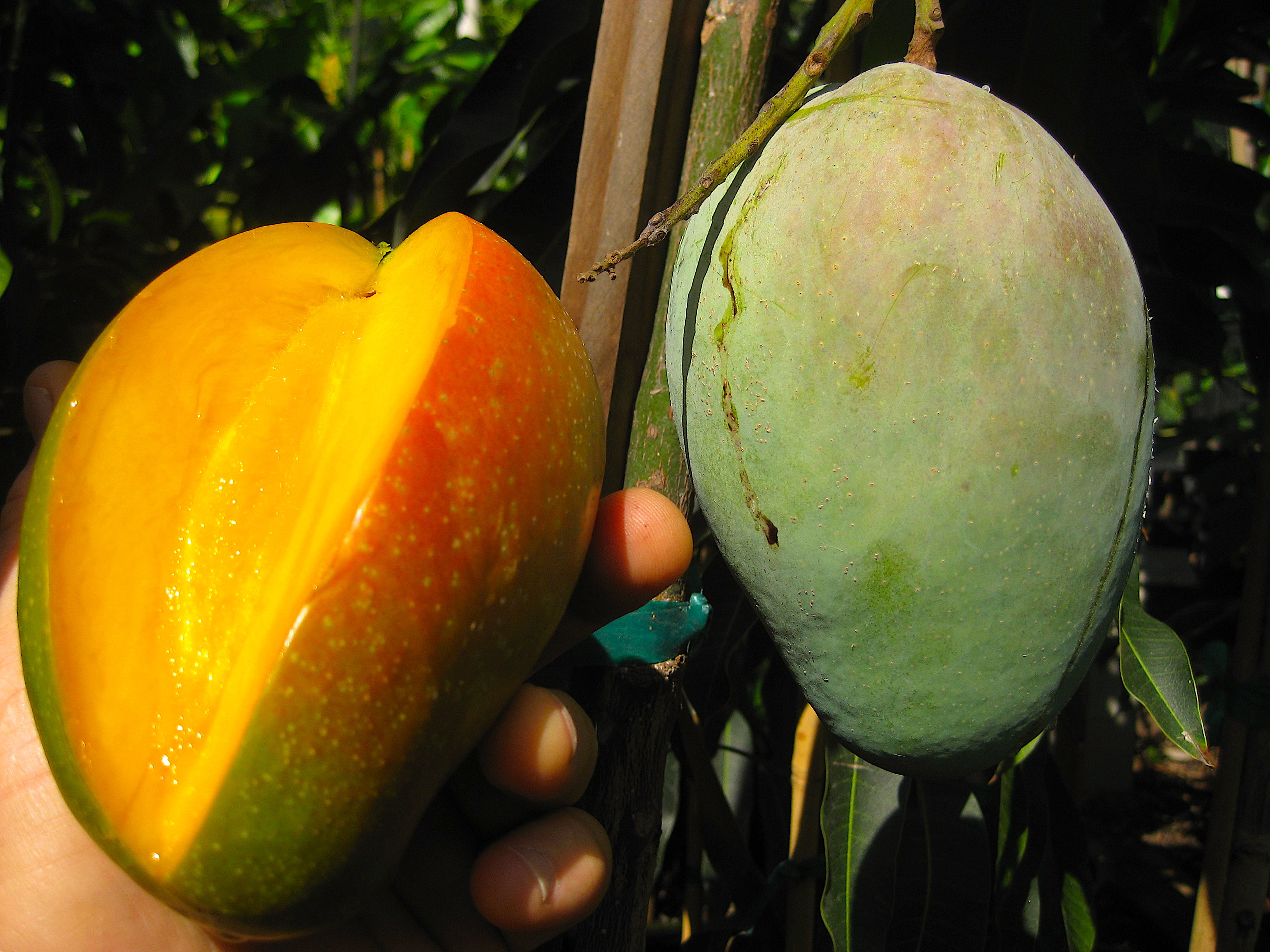
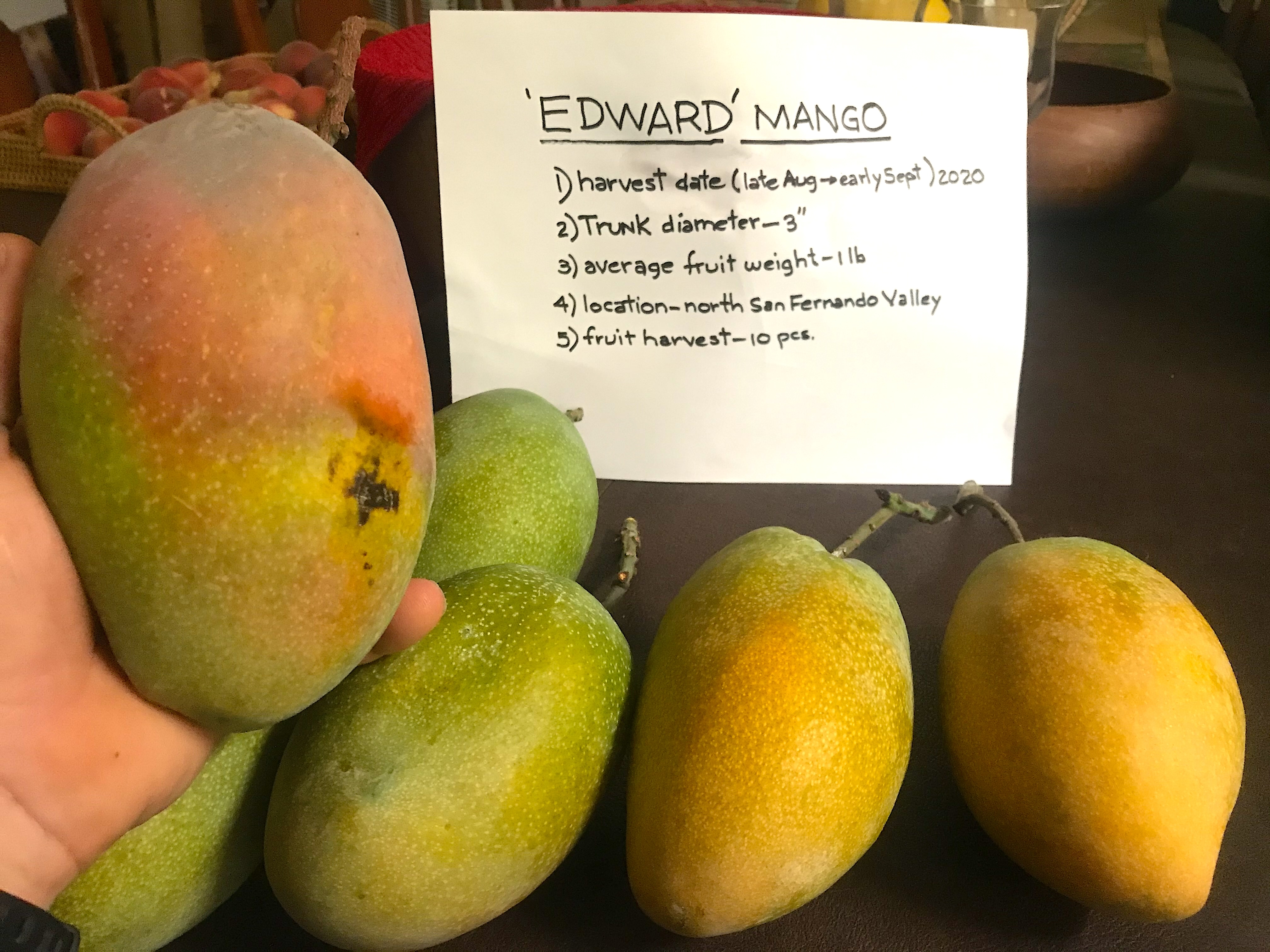
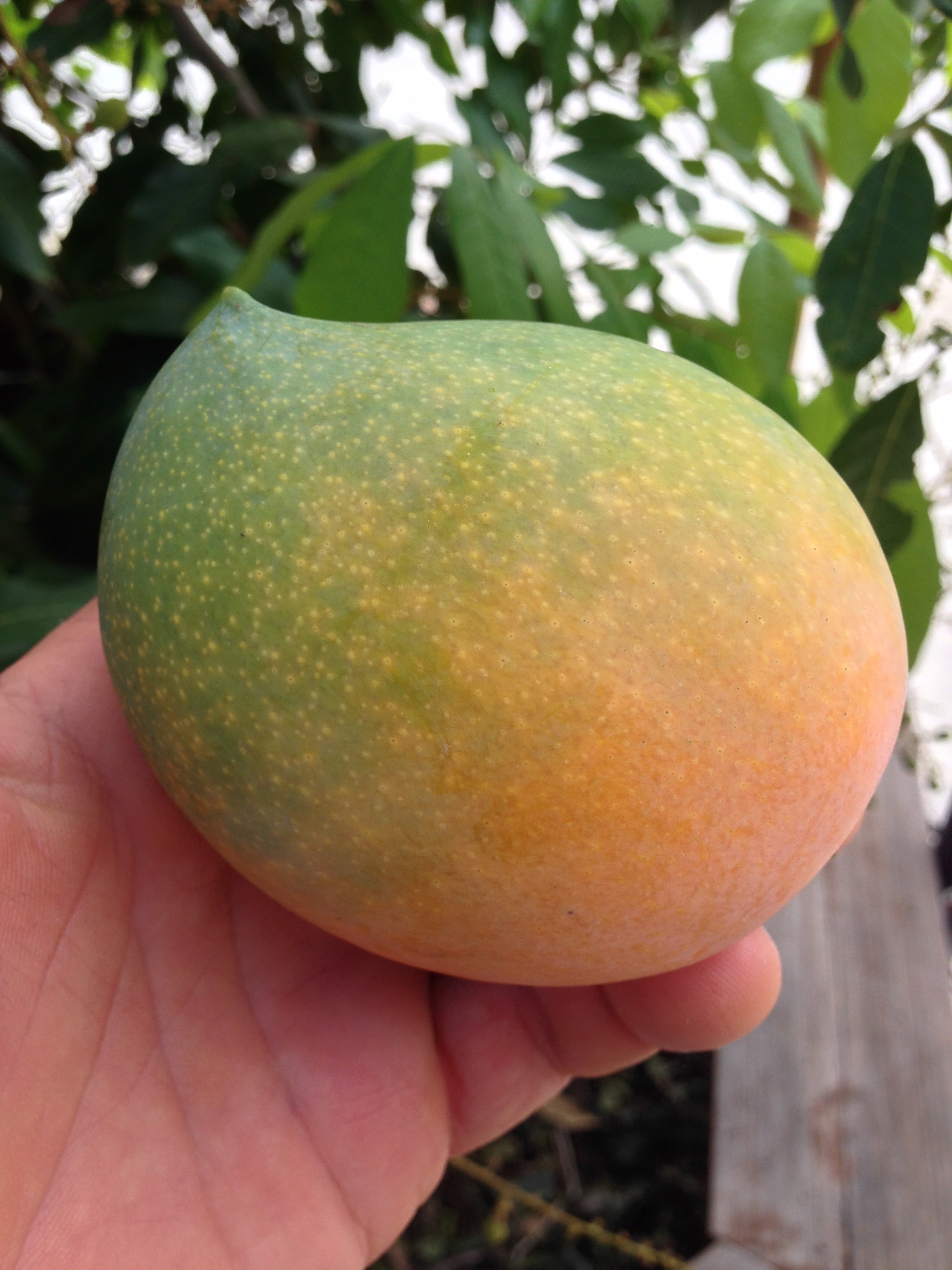
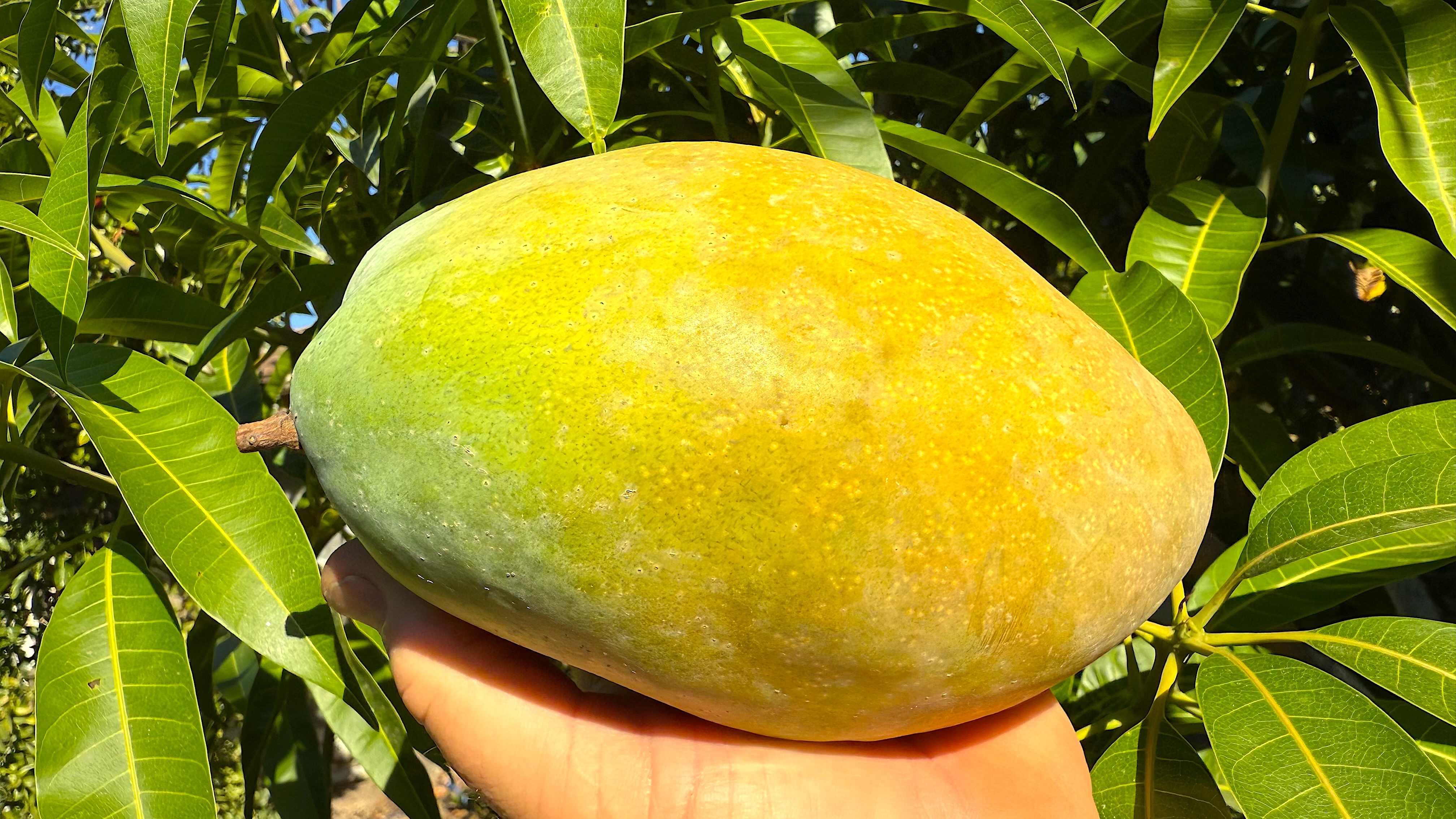
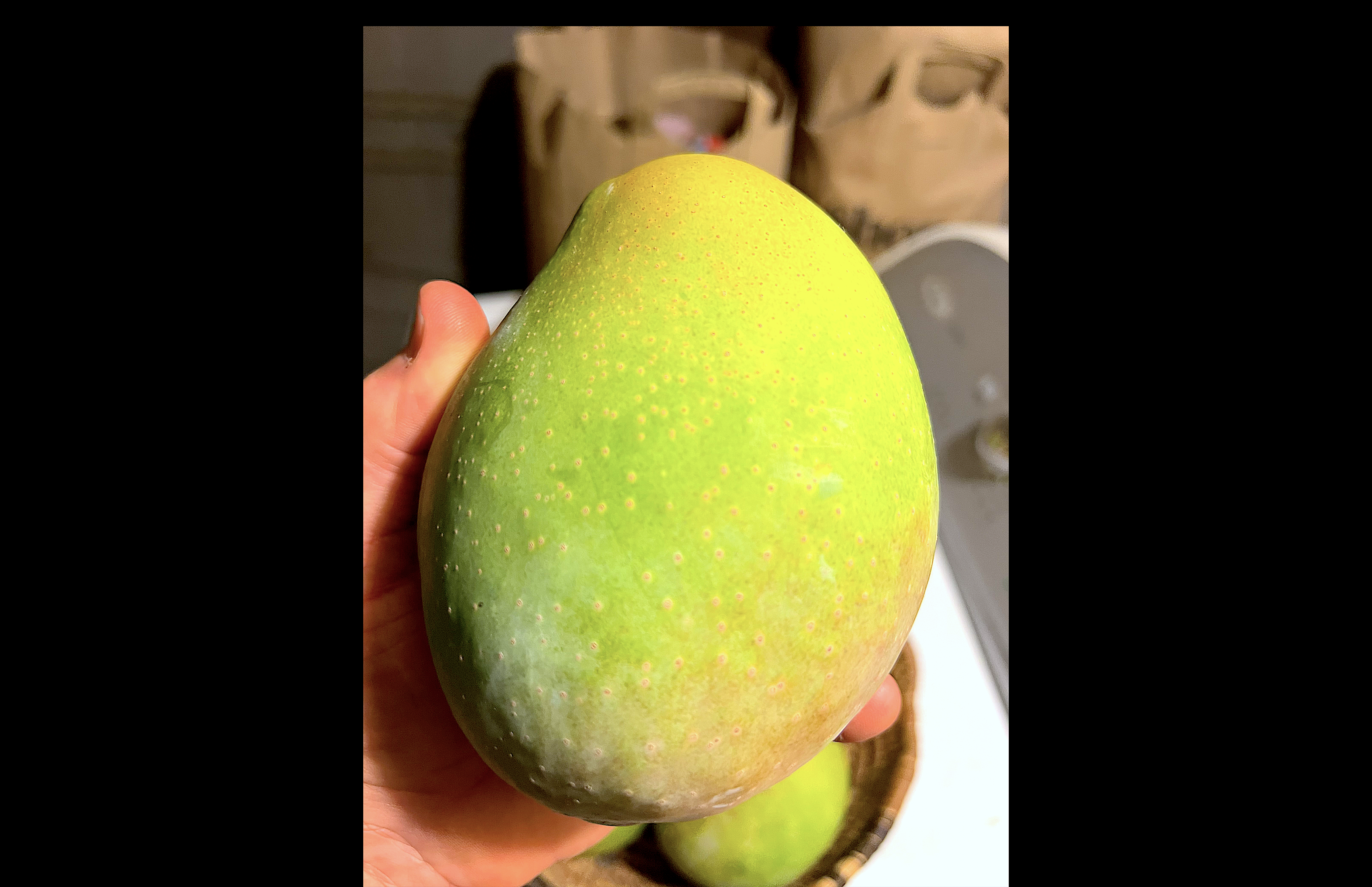
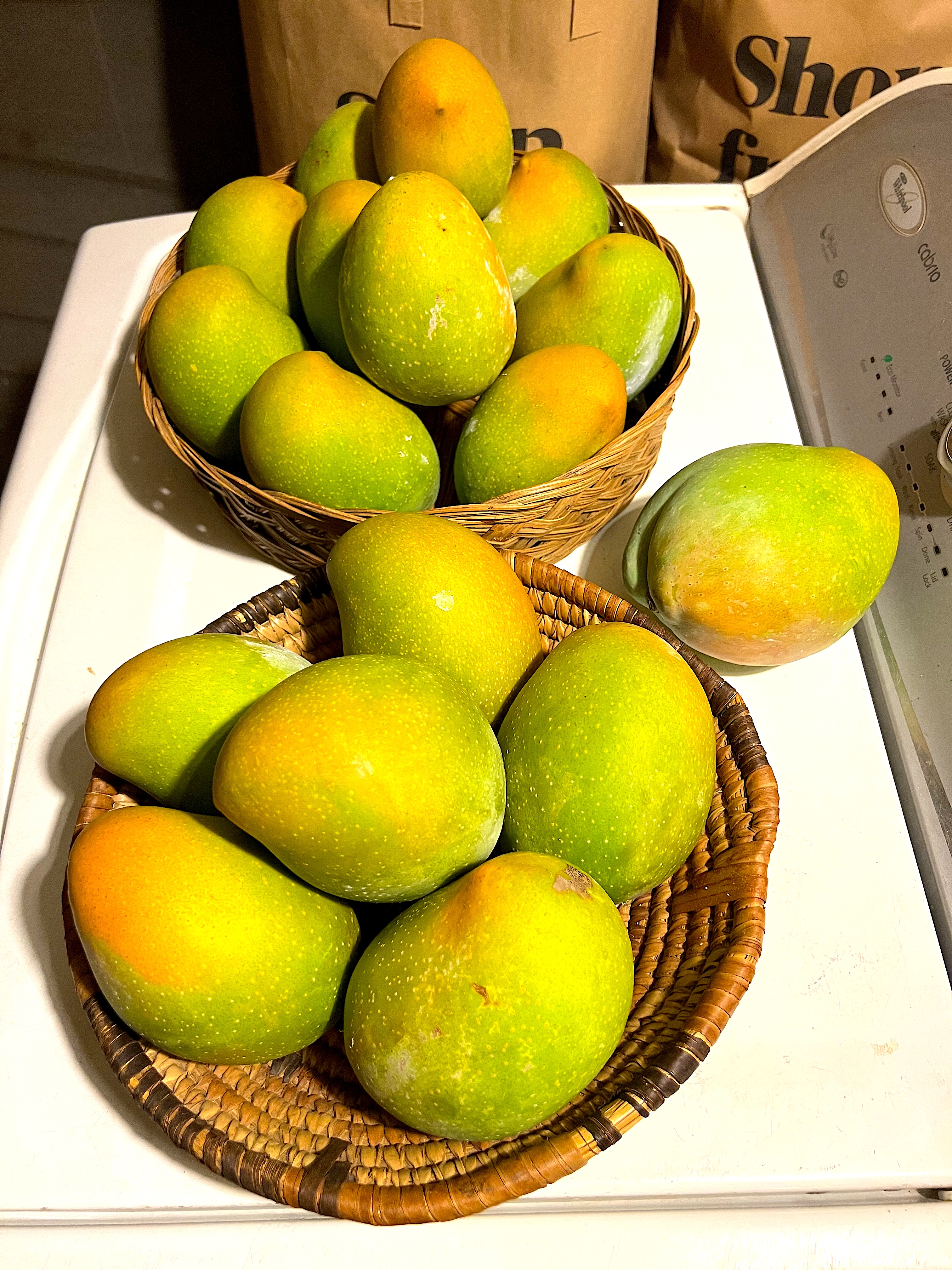
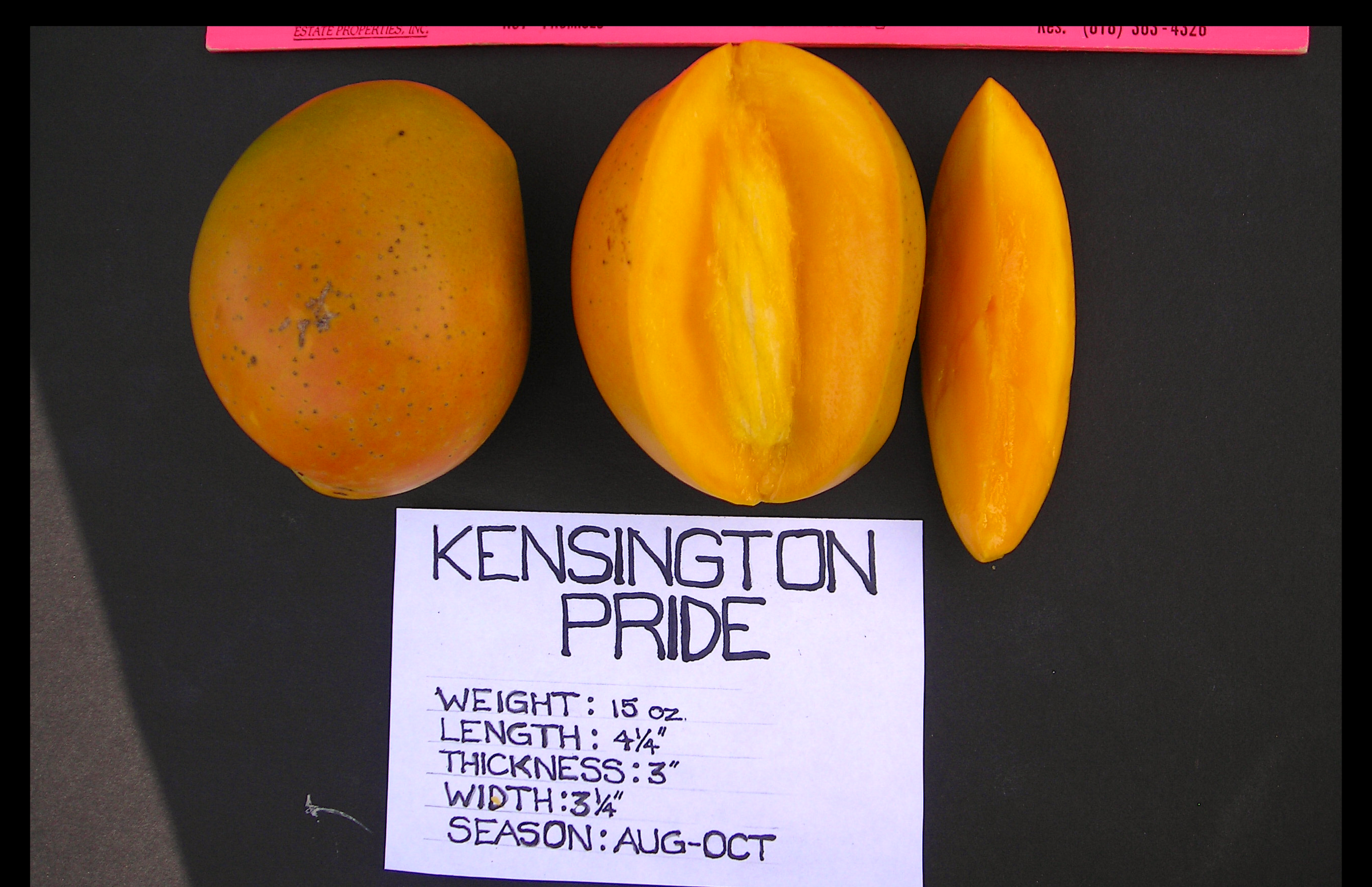
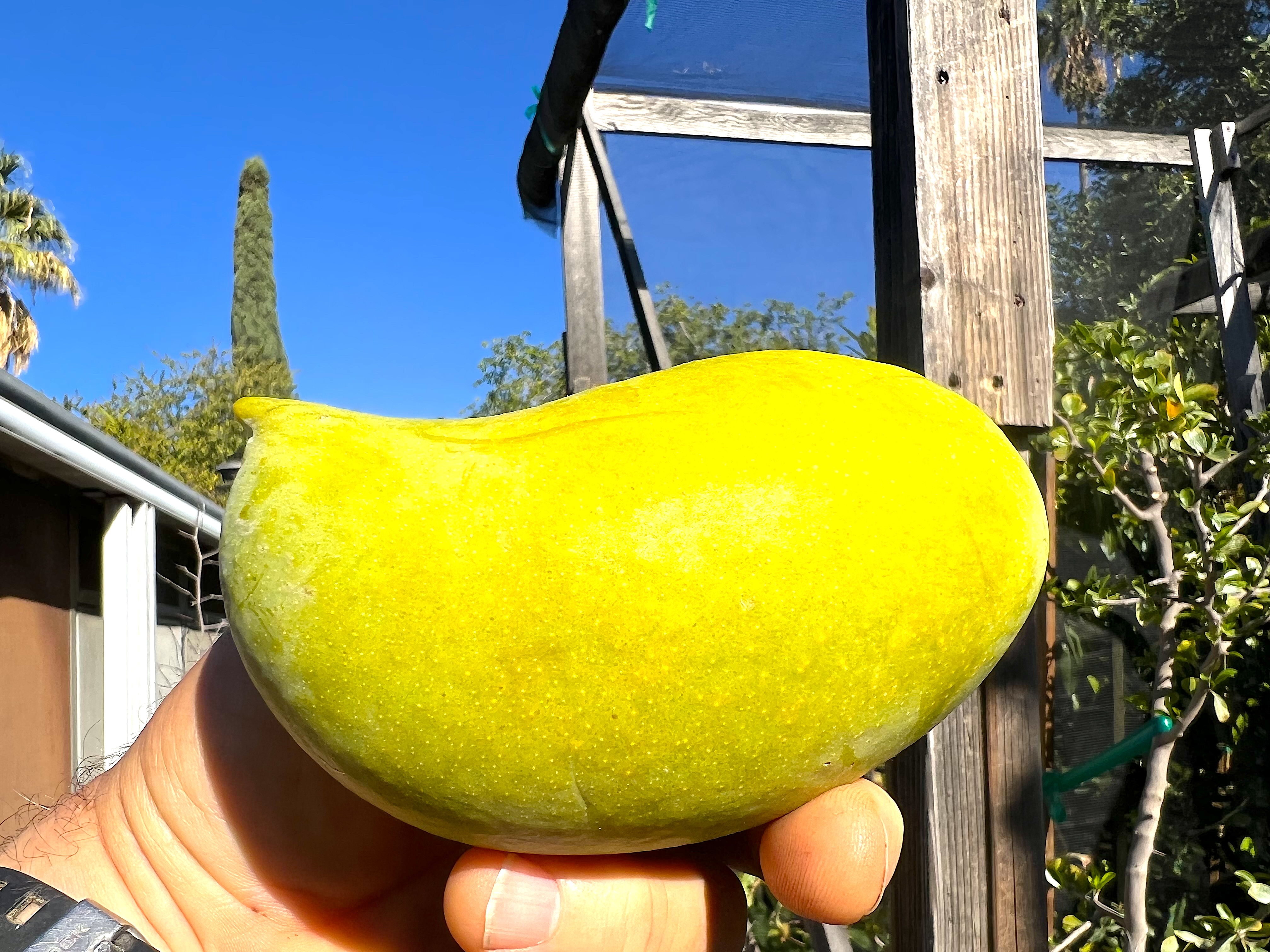
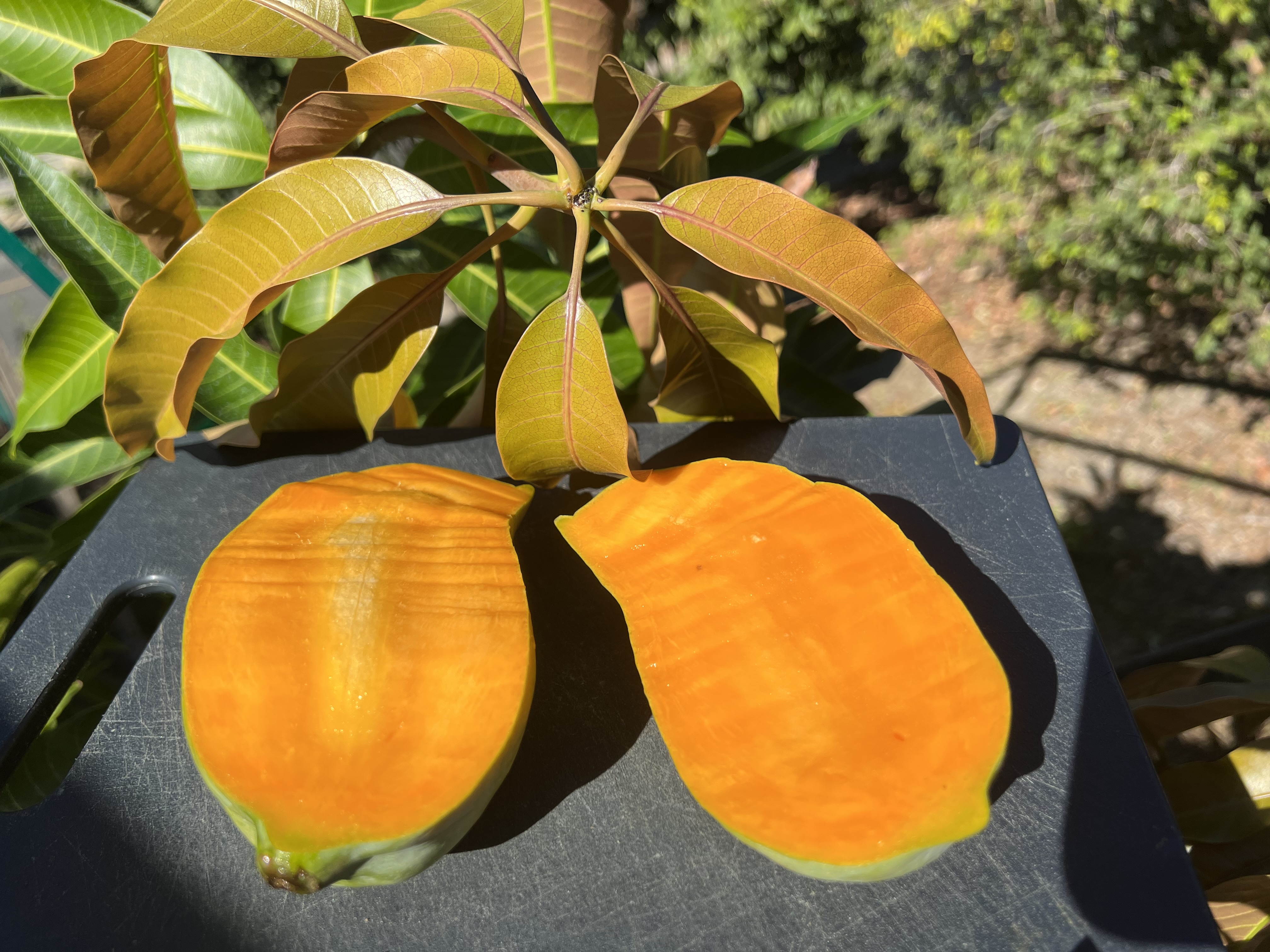
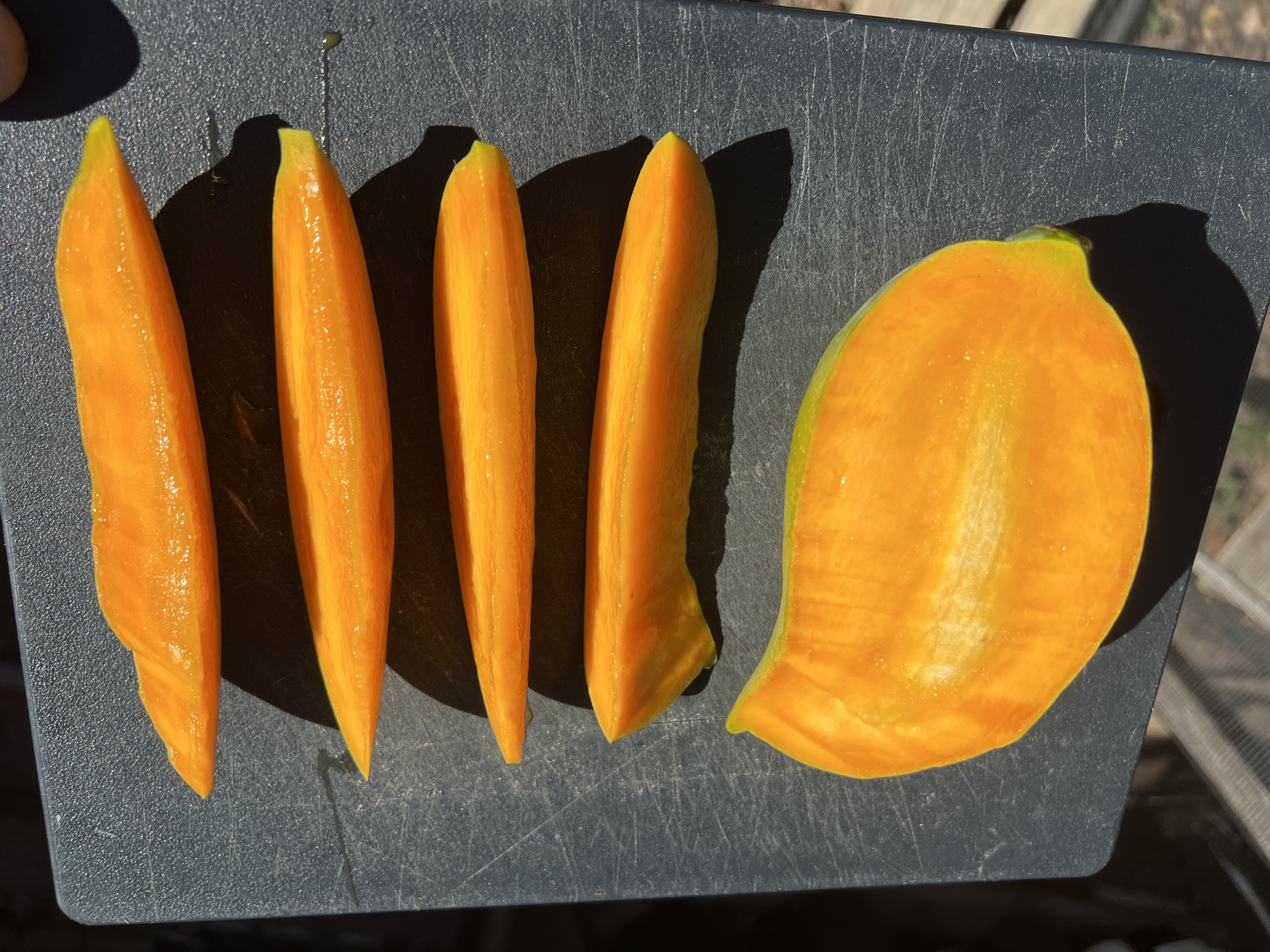
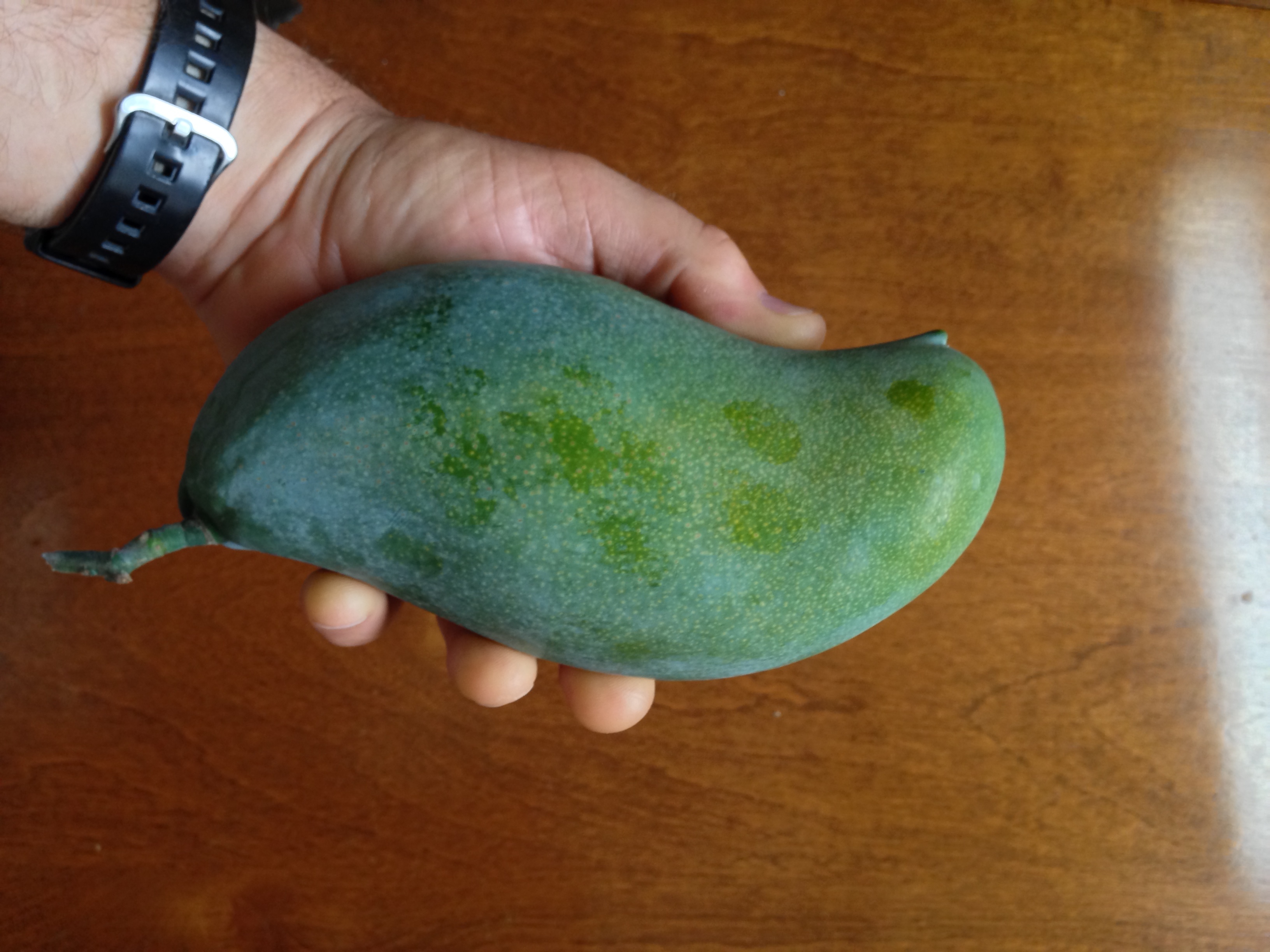
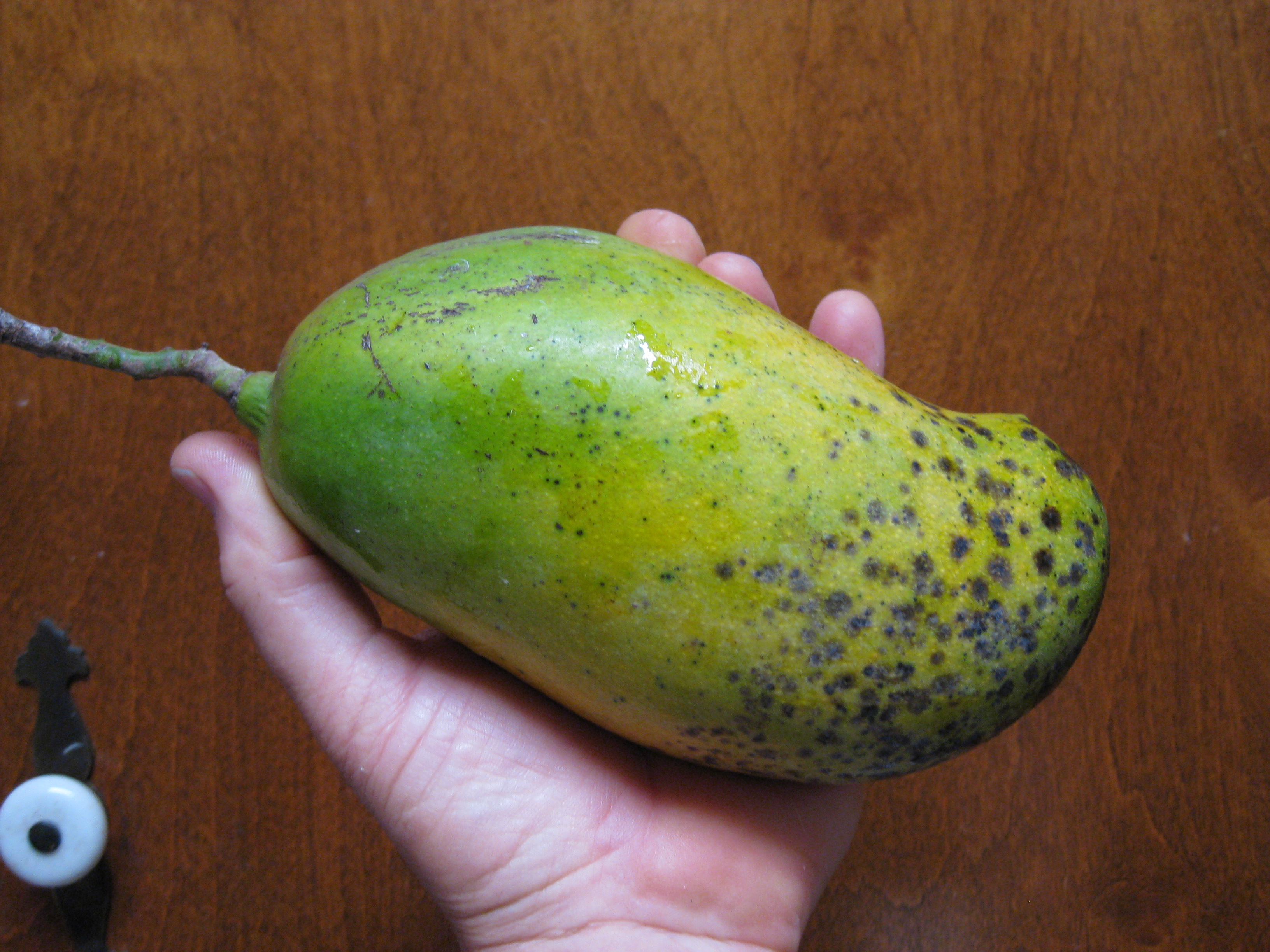
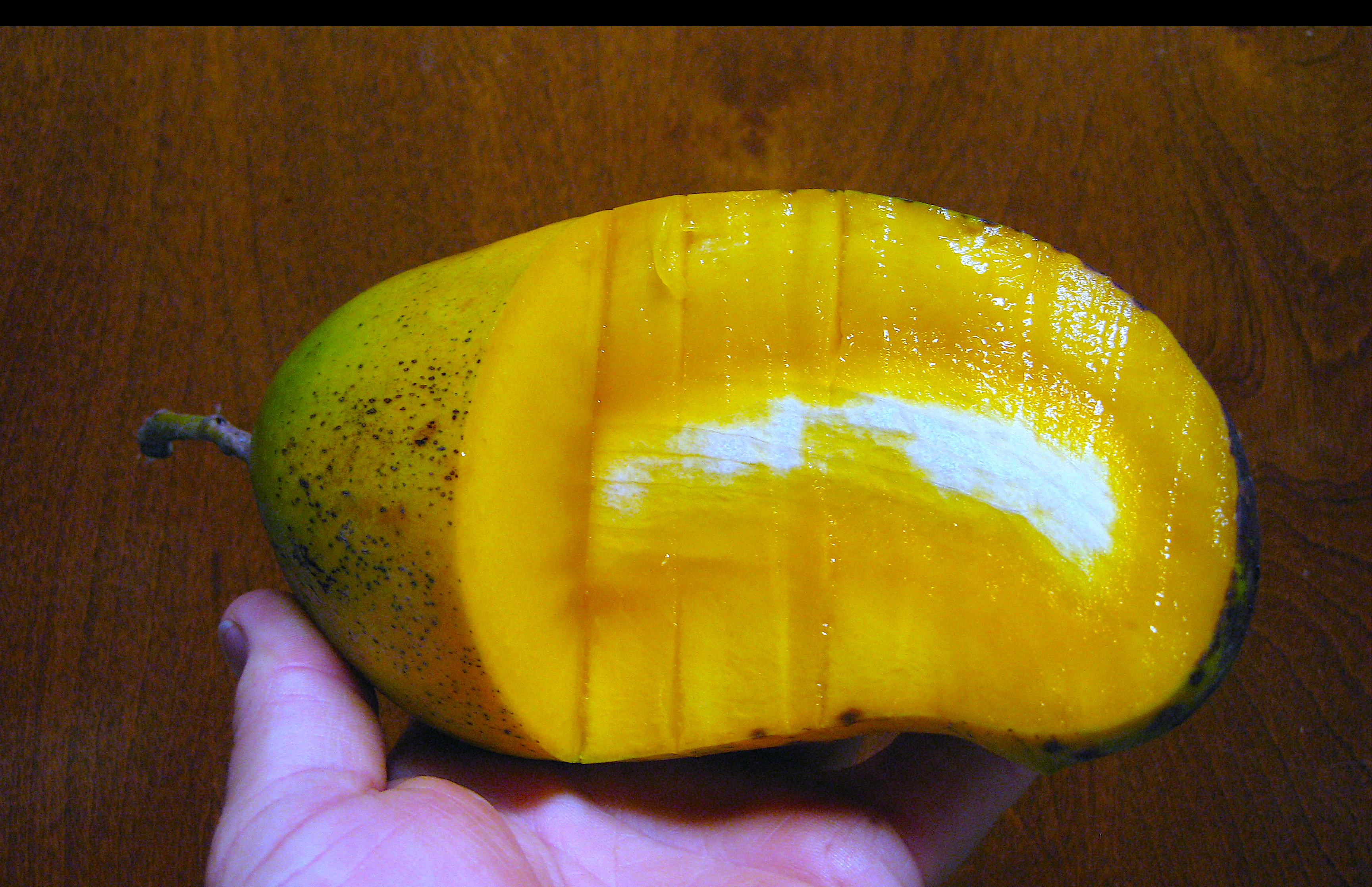
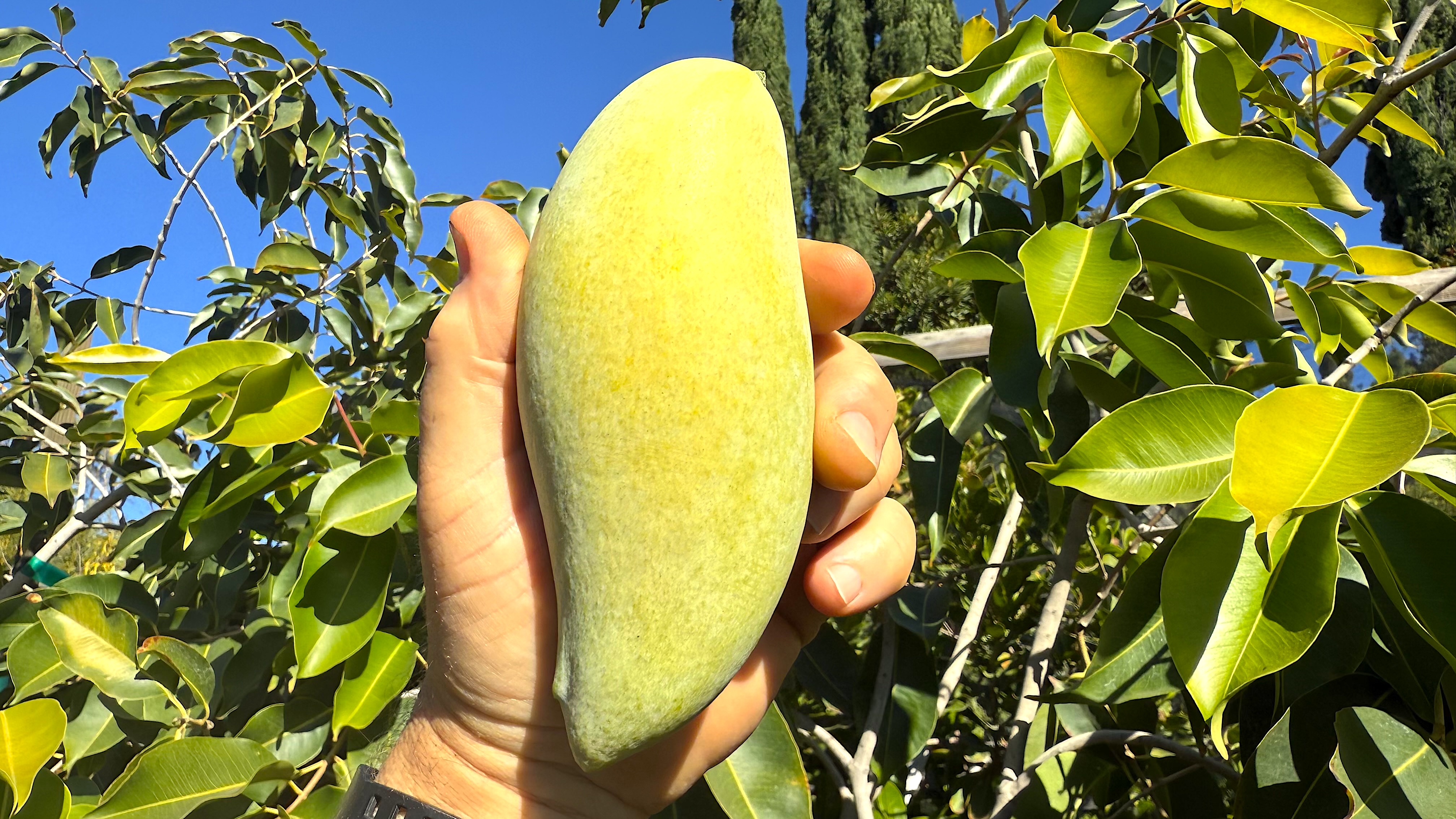
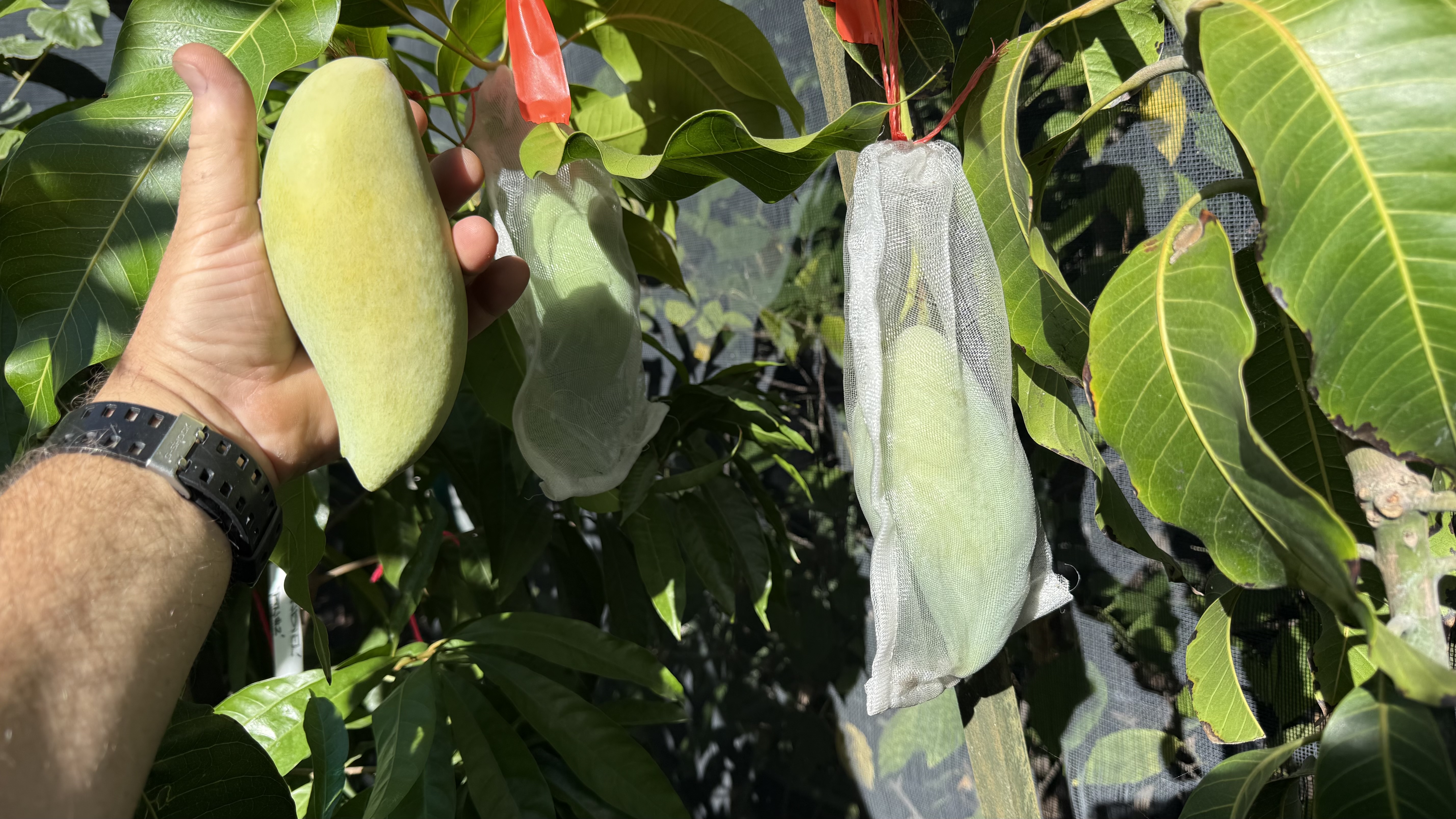
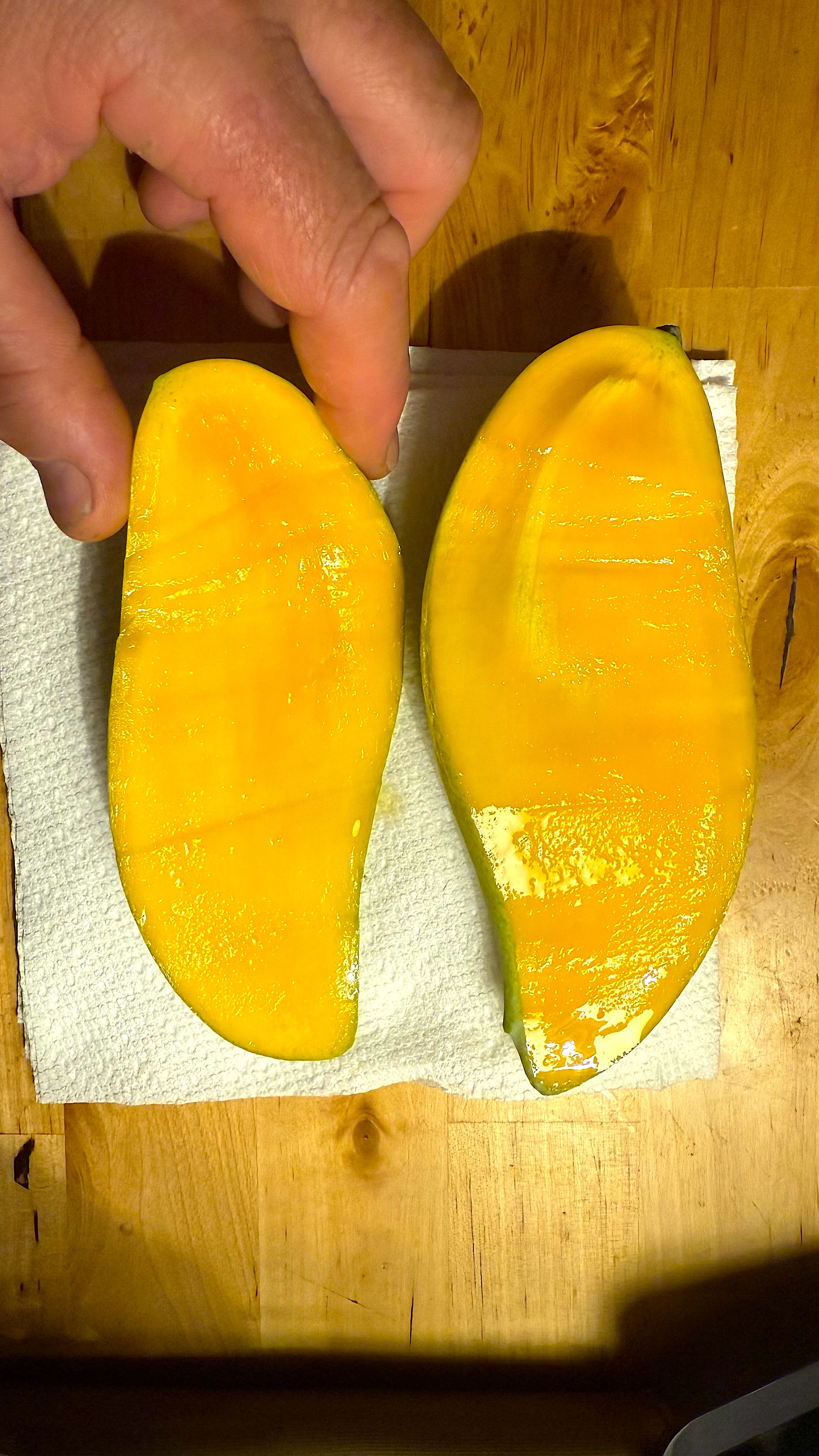
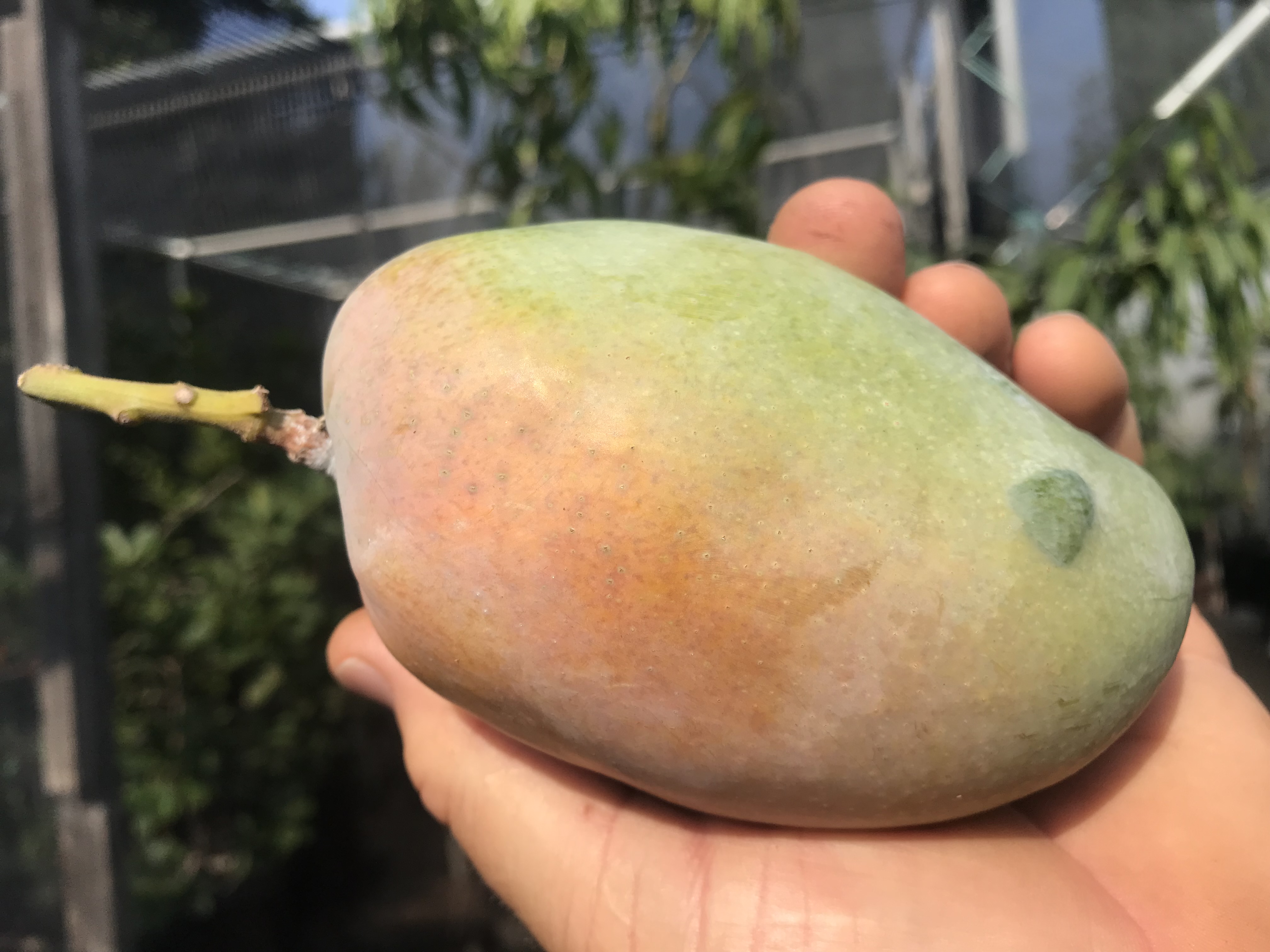
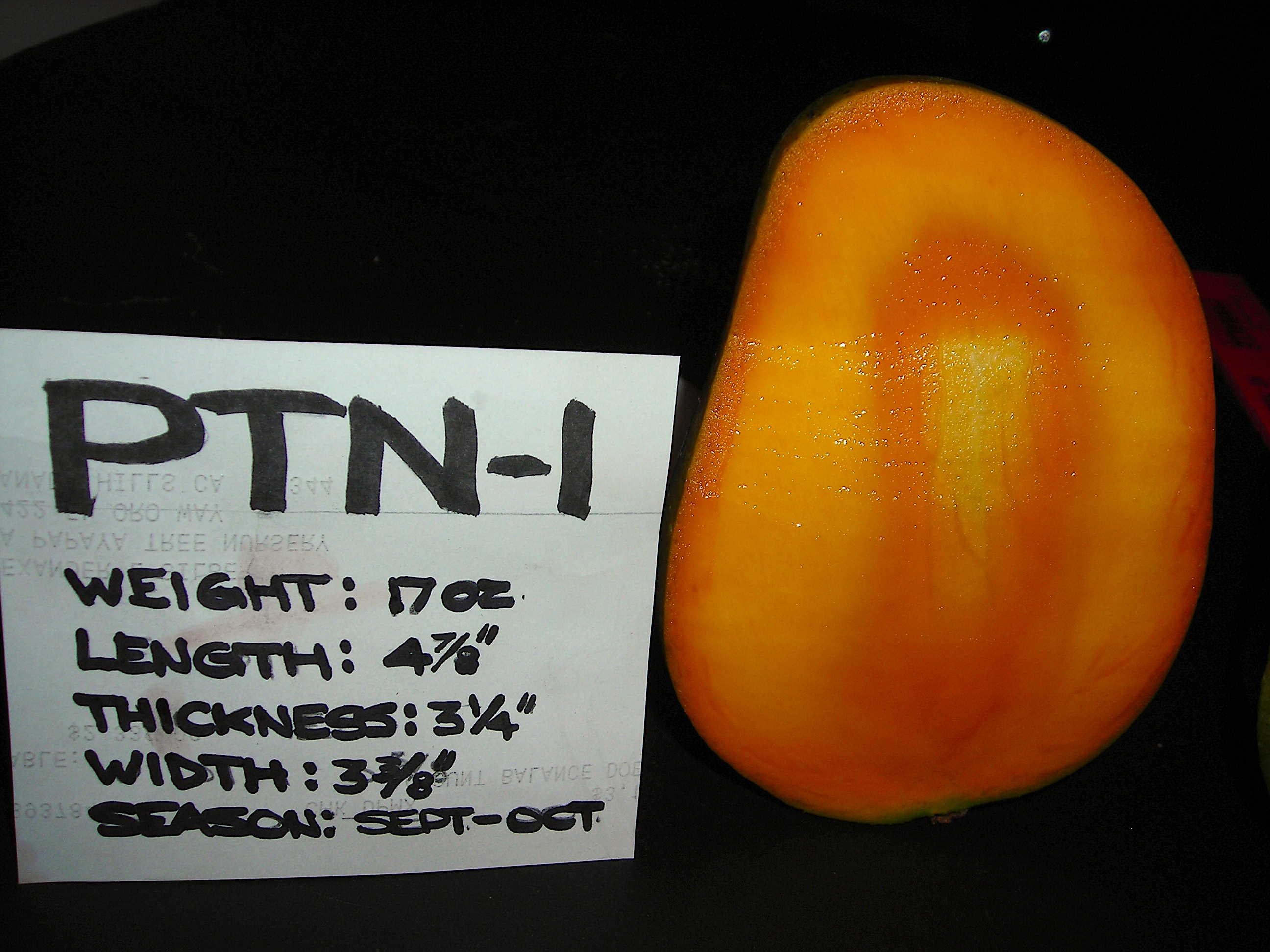
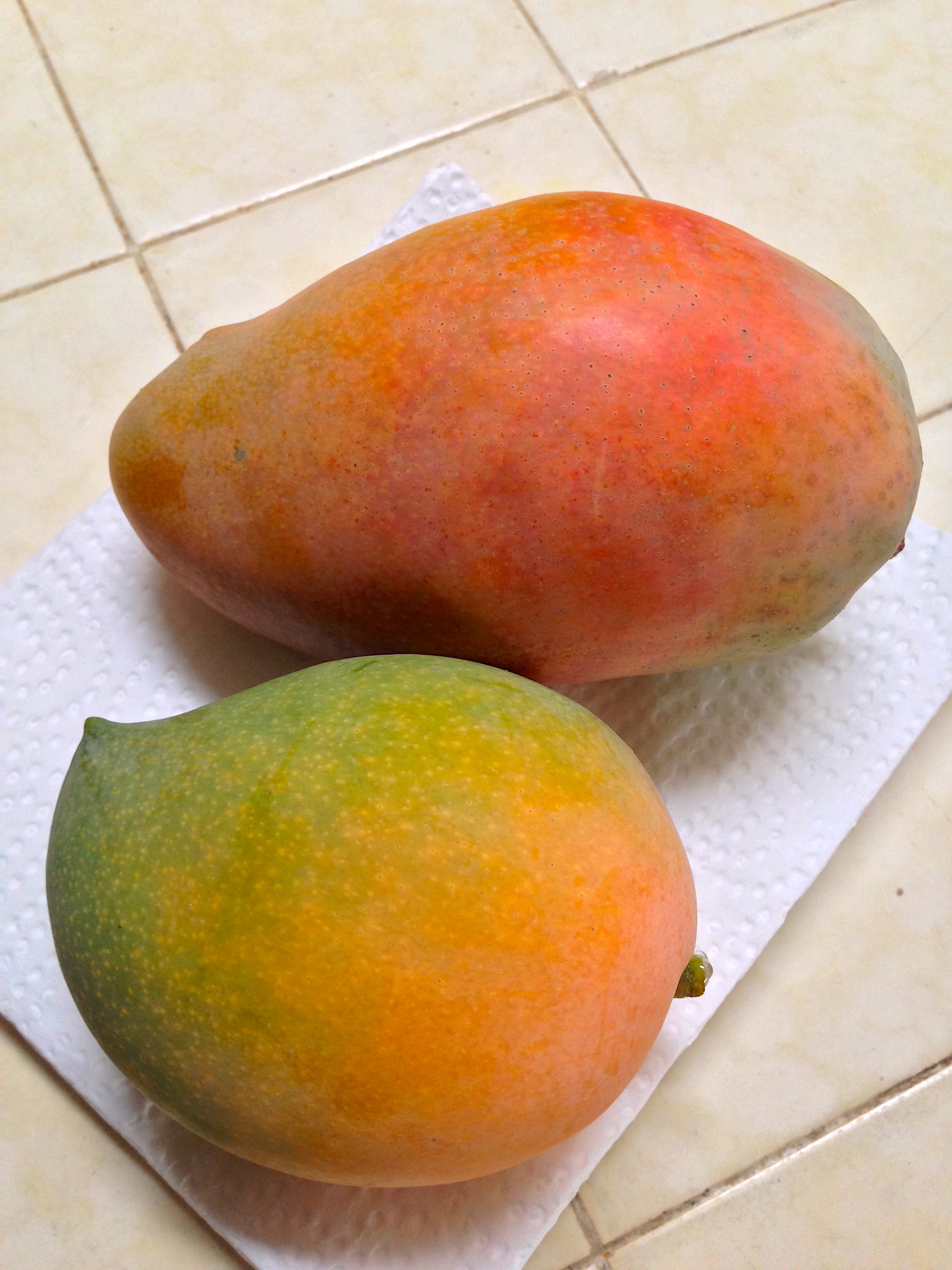
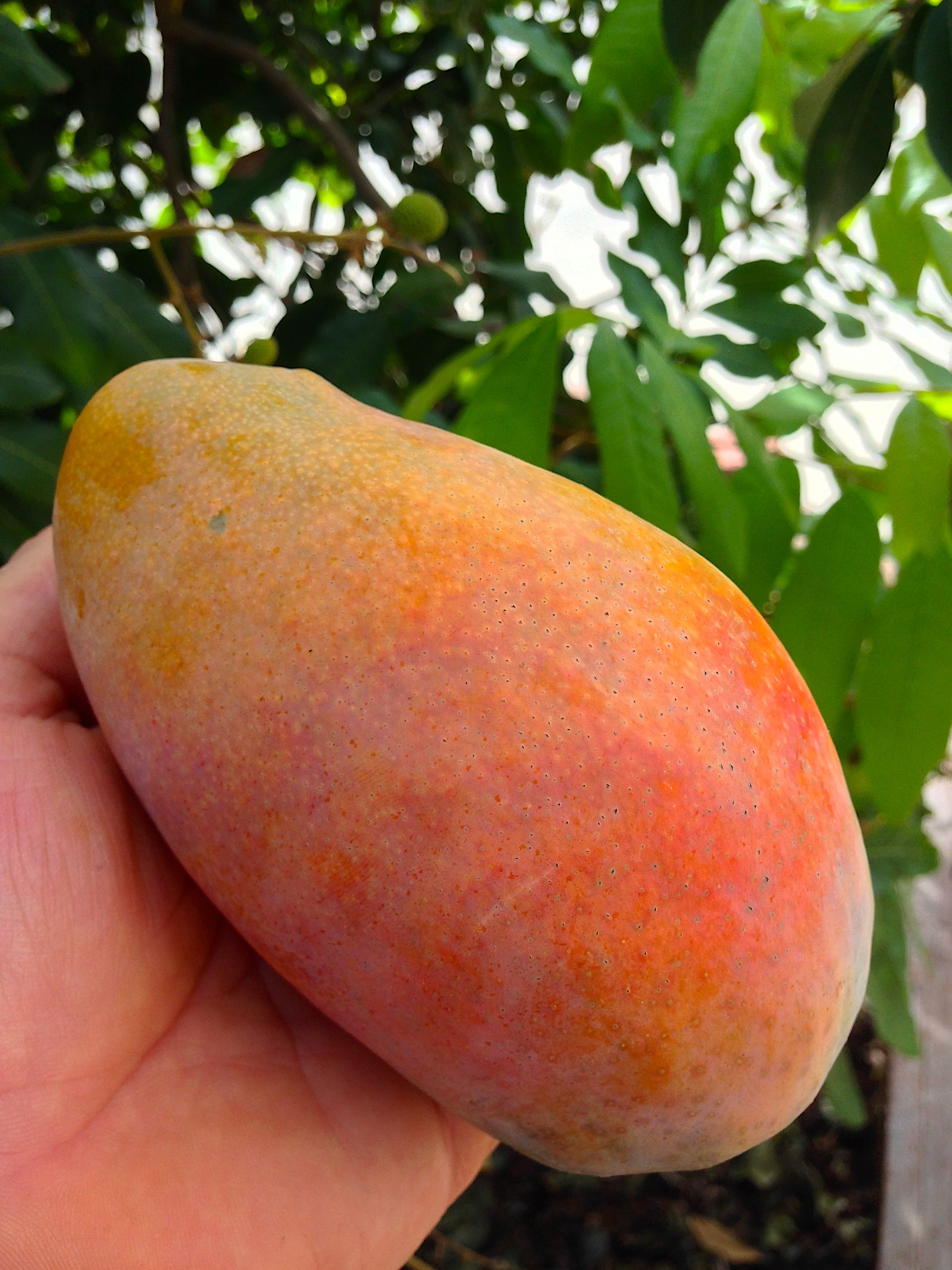
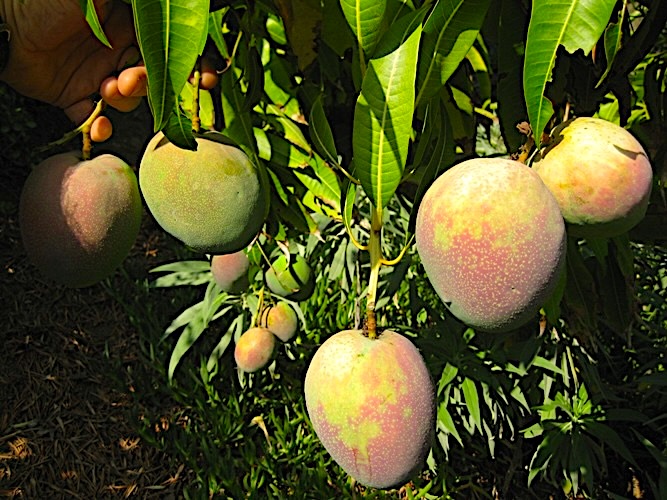
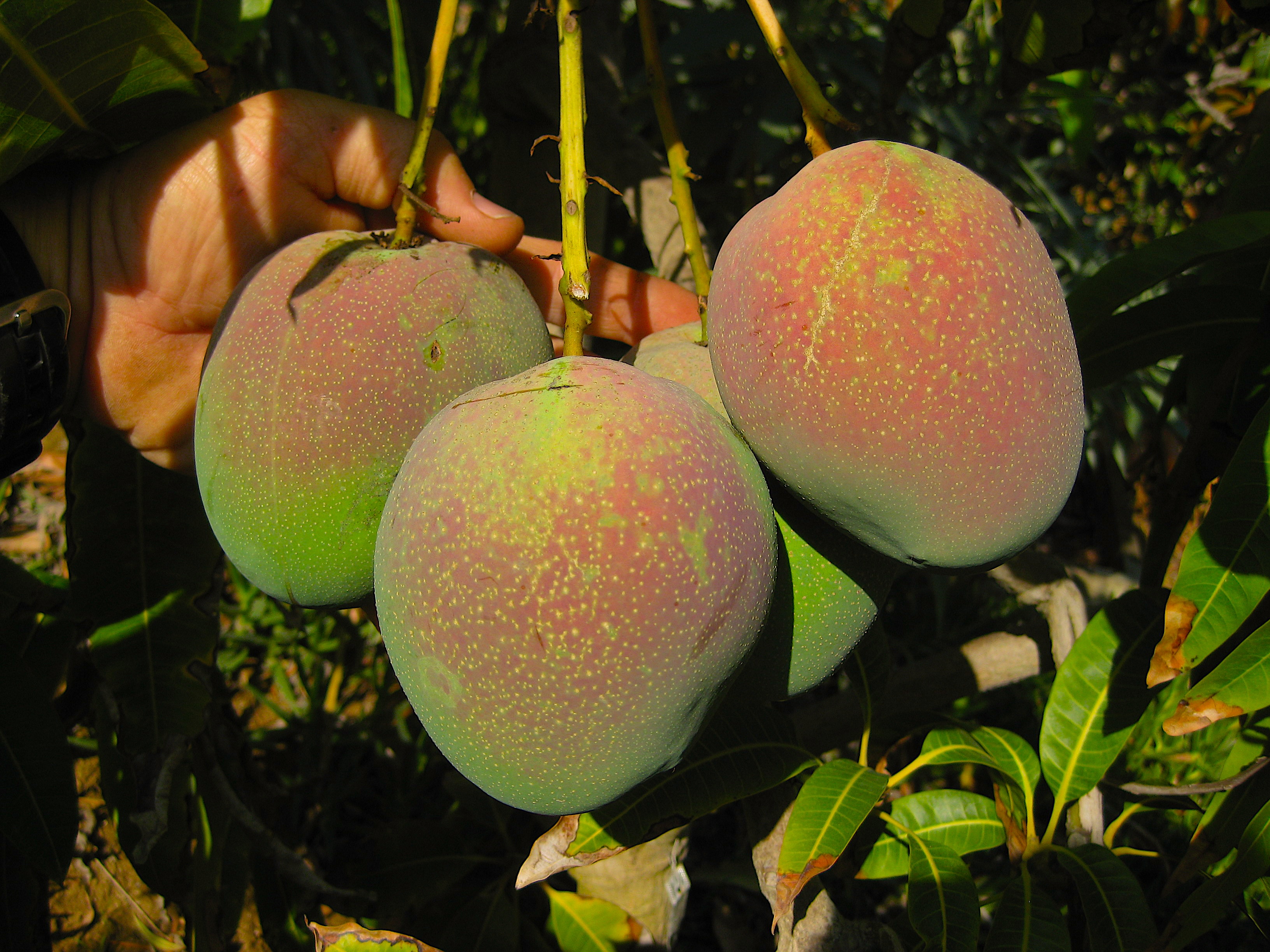
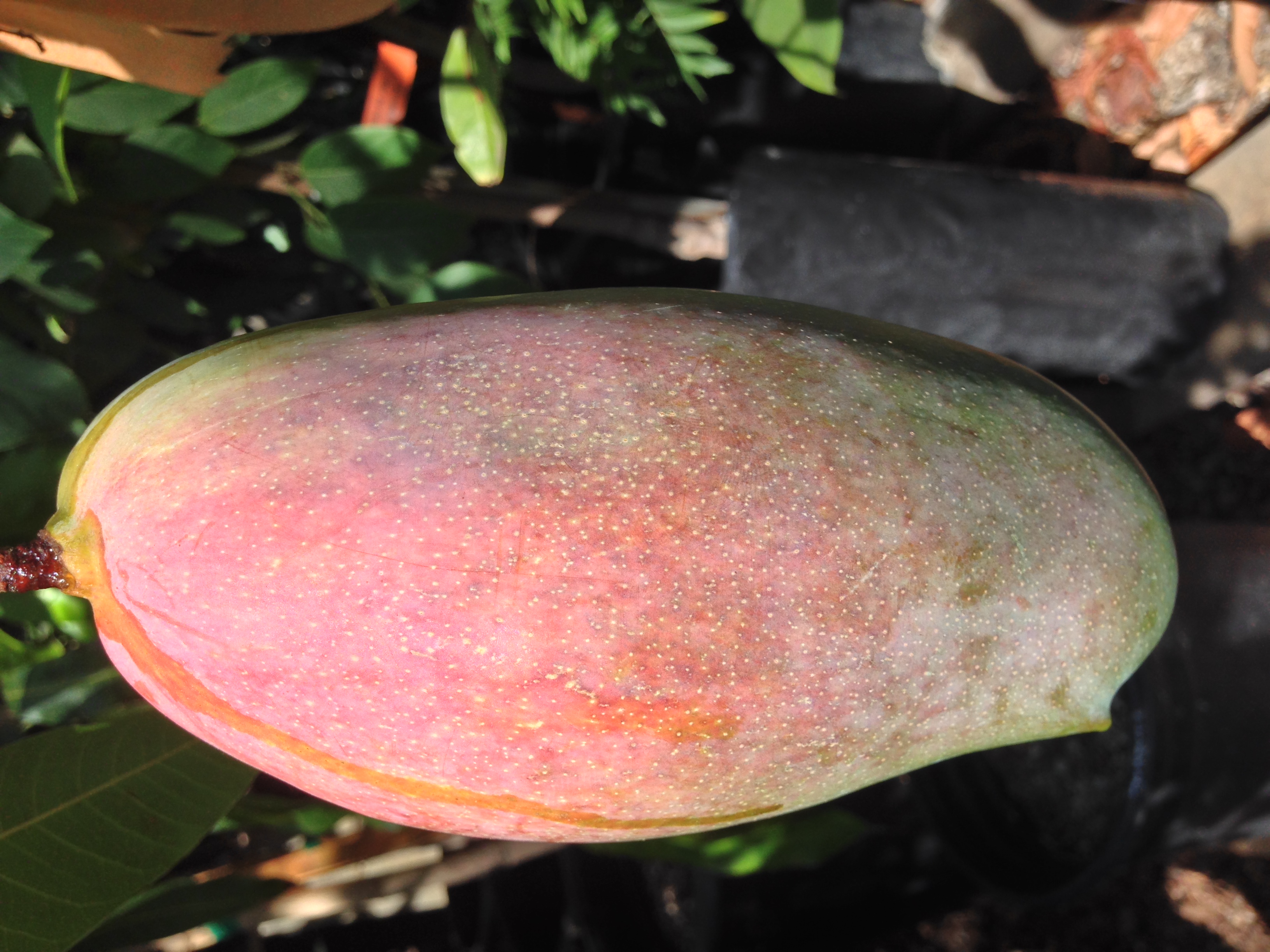
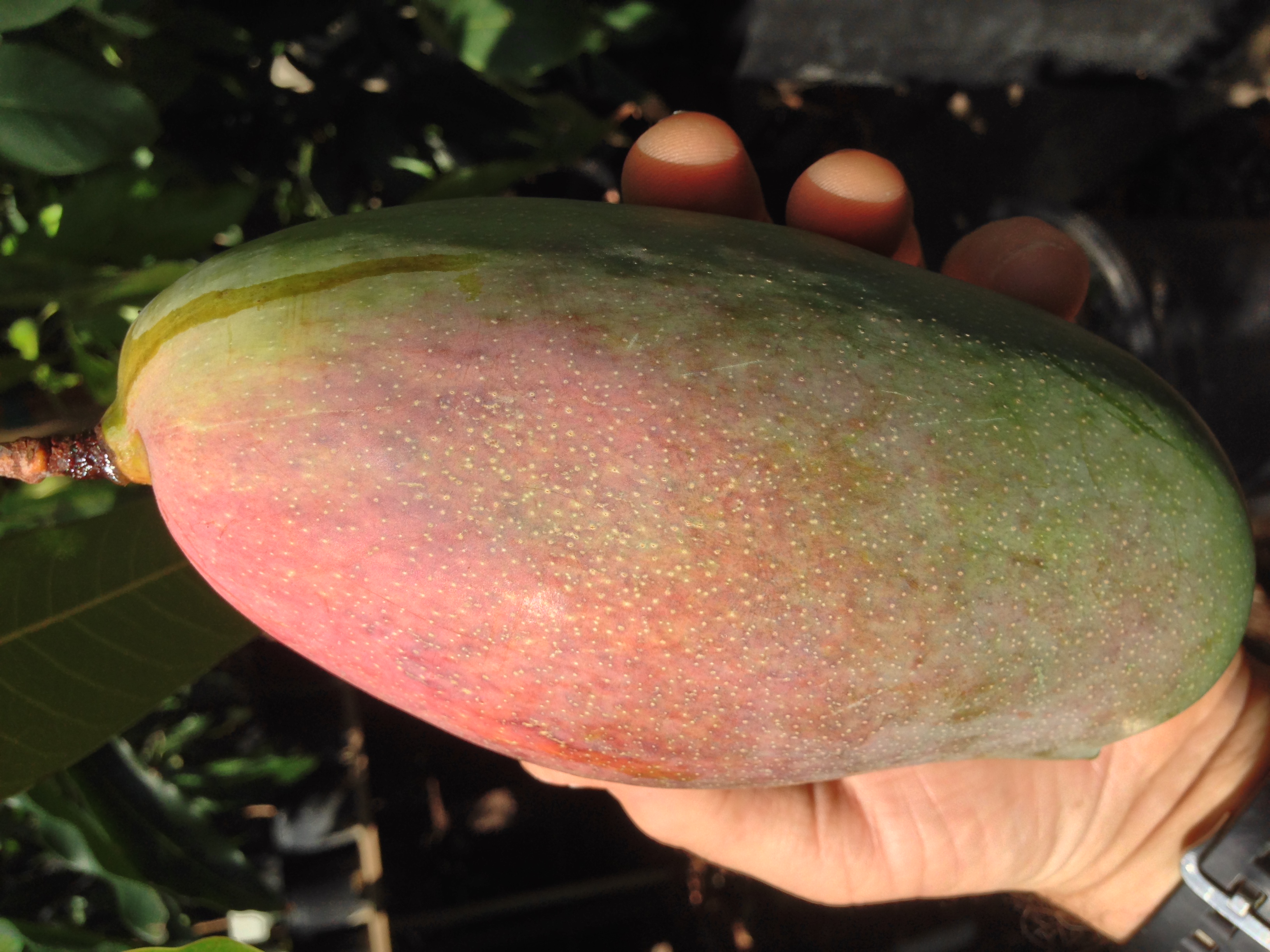
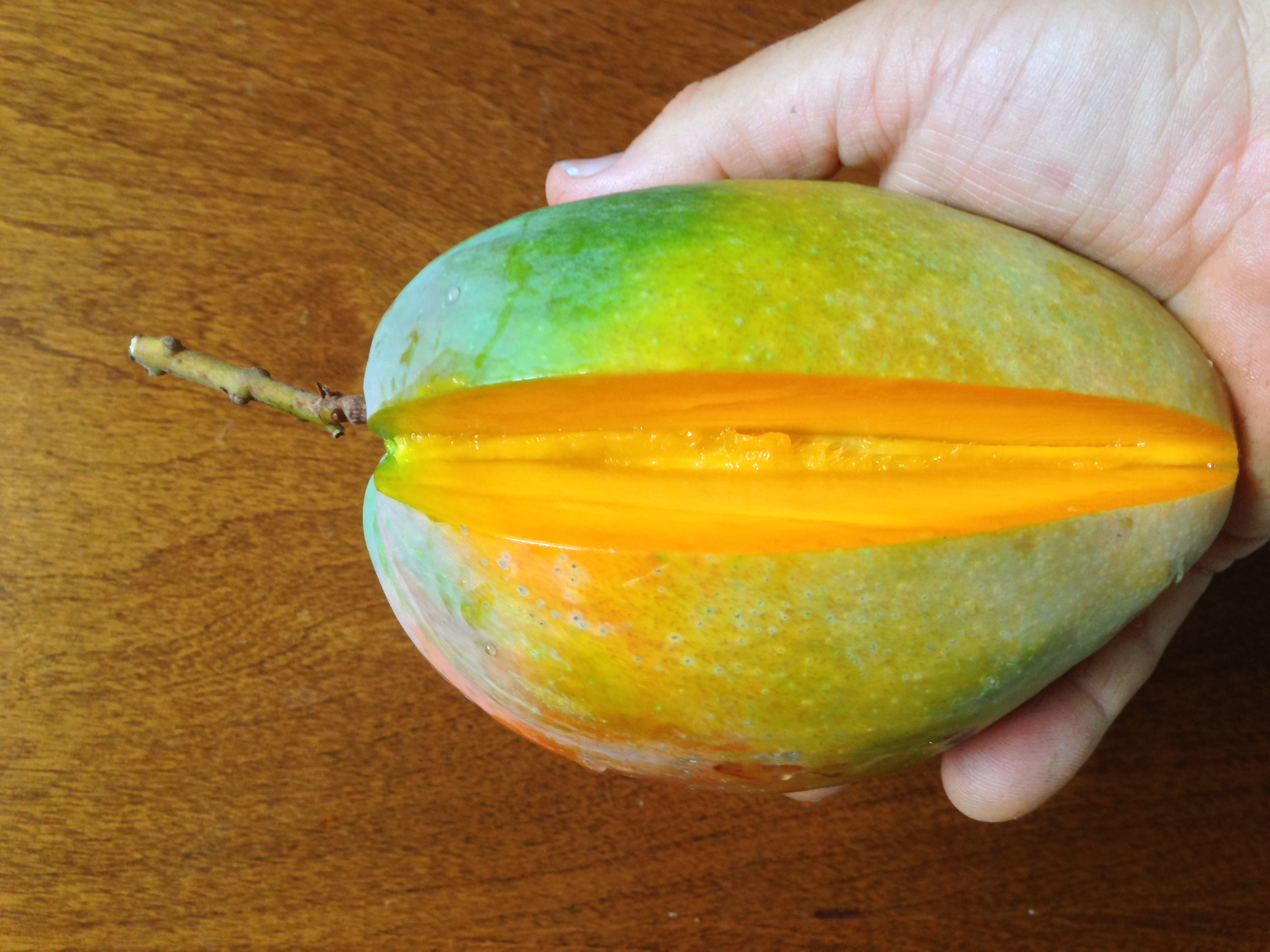
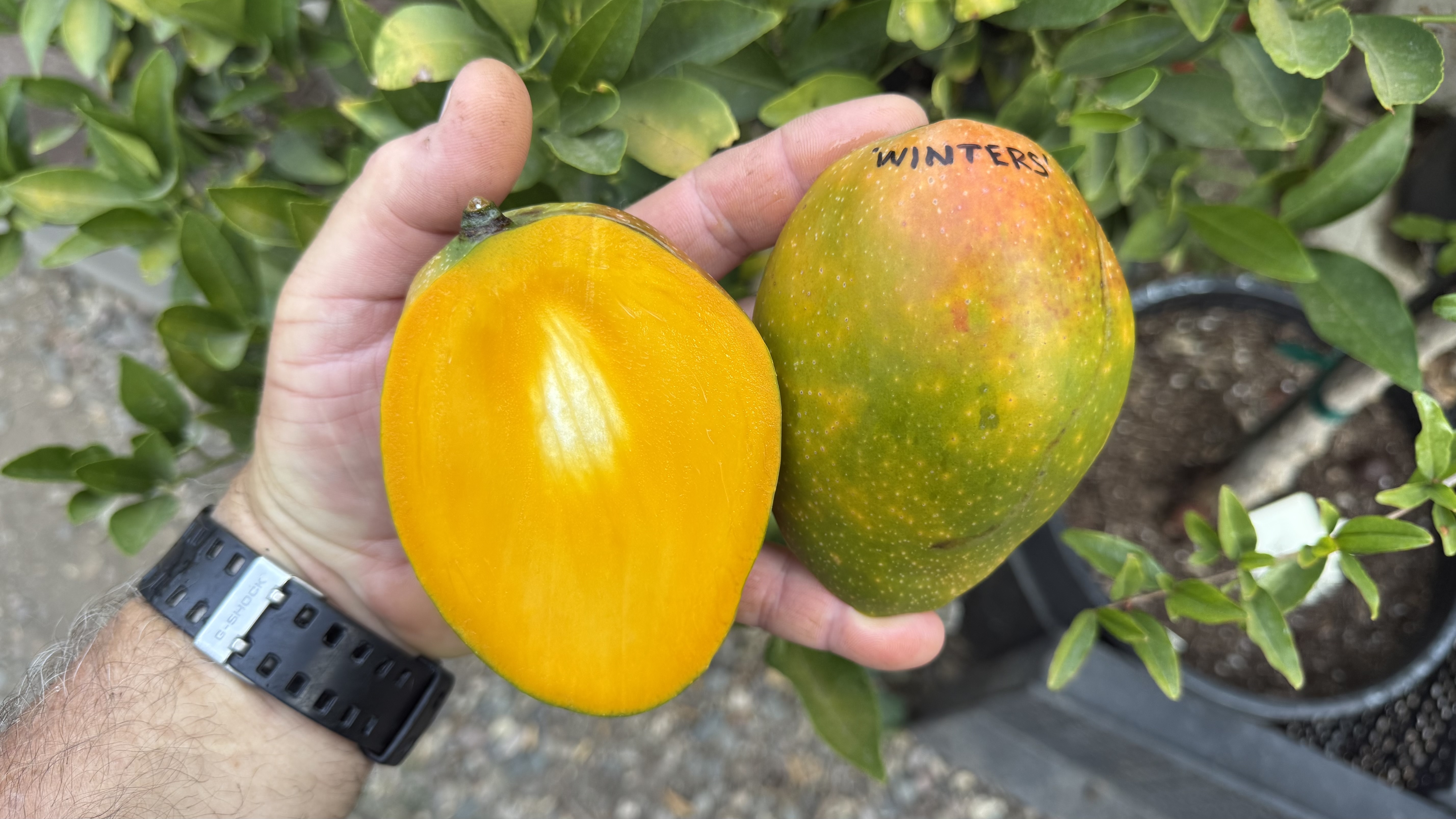
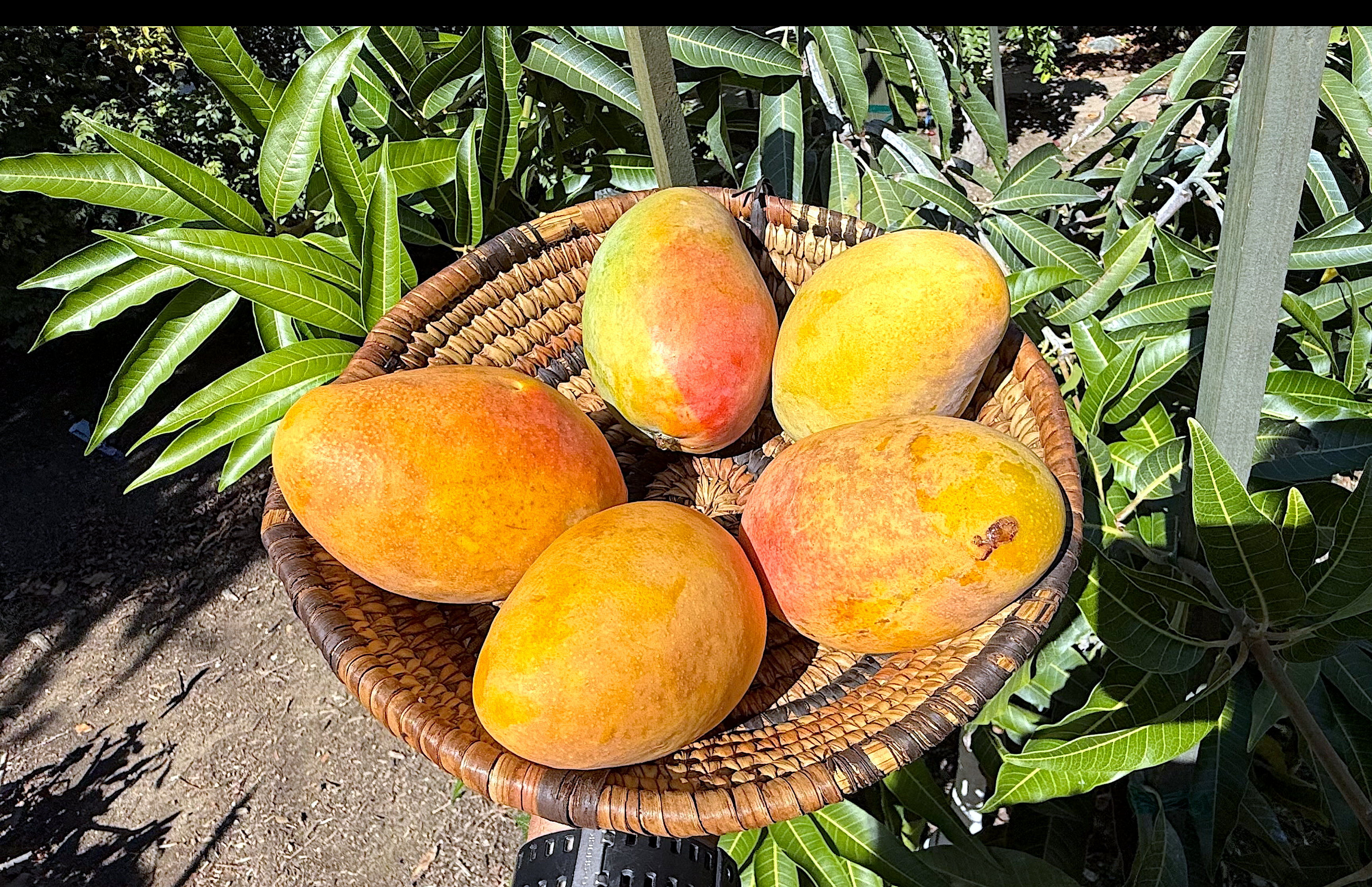
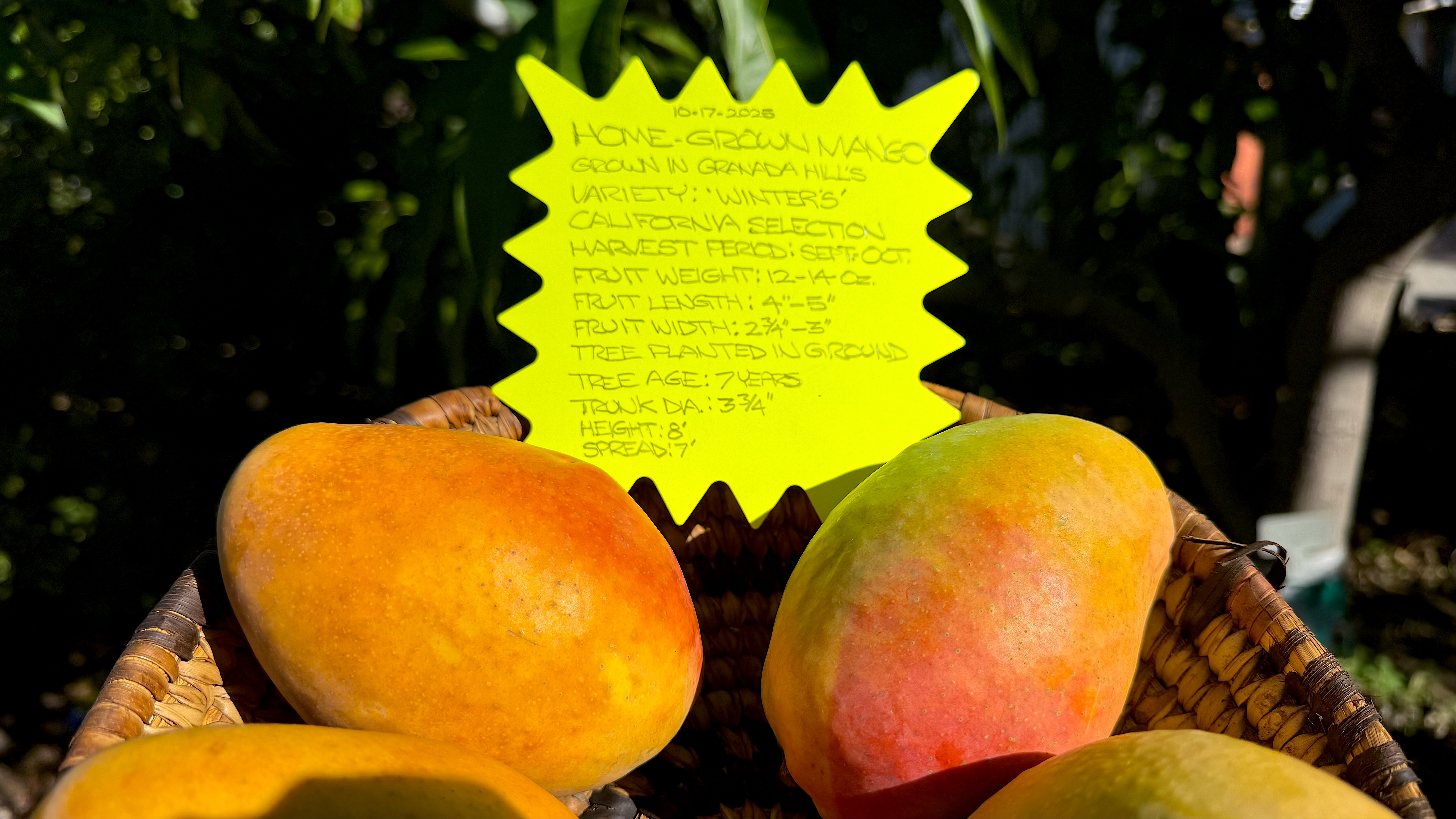
One thing I've learned over the years is that many first-time mango growers harvest their fruit either too early or too late. Learning the proper stage at which each variety should be picked is every bit as important as selecting the right cultivar. Once you become familiar with the ripening characteristics of each variety, you'll discover why fresh, tree-ripened mangoes are considered among the finest fruits in the world. There is simply no comparison between a properly ripened homegrown mango and one that has been picked early for commercial shipping.
| Common Name | Mango |
| Scientific Name/Synonyms | Mangifera indica |
| Cultivars/Varieties | Alphonso, Edward, Glenn, Keitt, Kensington Pride, Kesar, Mallika, Nam Doc Mai, PTN#1, Reliable, Thomson, Valencia Pride, Winters and other named selections |
| Country of Origin | India |
| Native Range | South Asia |
| Also found in other Regions | Bangladesh, Myanmar, Southeast Asia, Tropical Africa, The Caribbean, Central America, South America, Florida, Hawaii, Southern California and Mango Alley, Moorpark! |
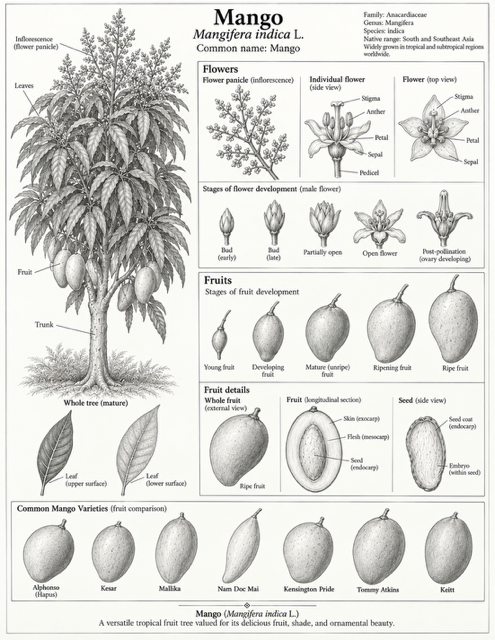
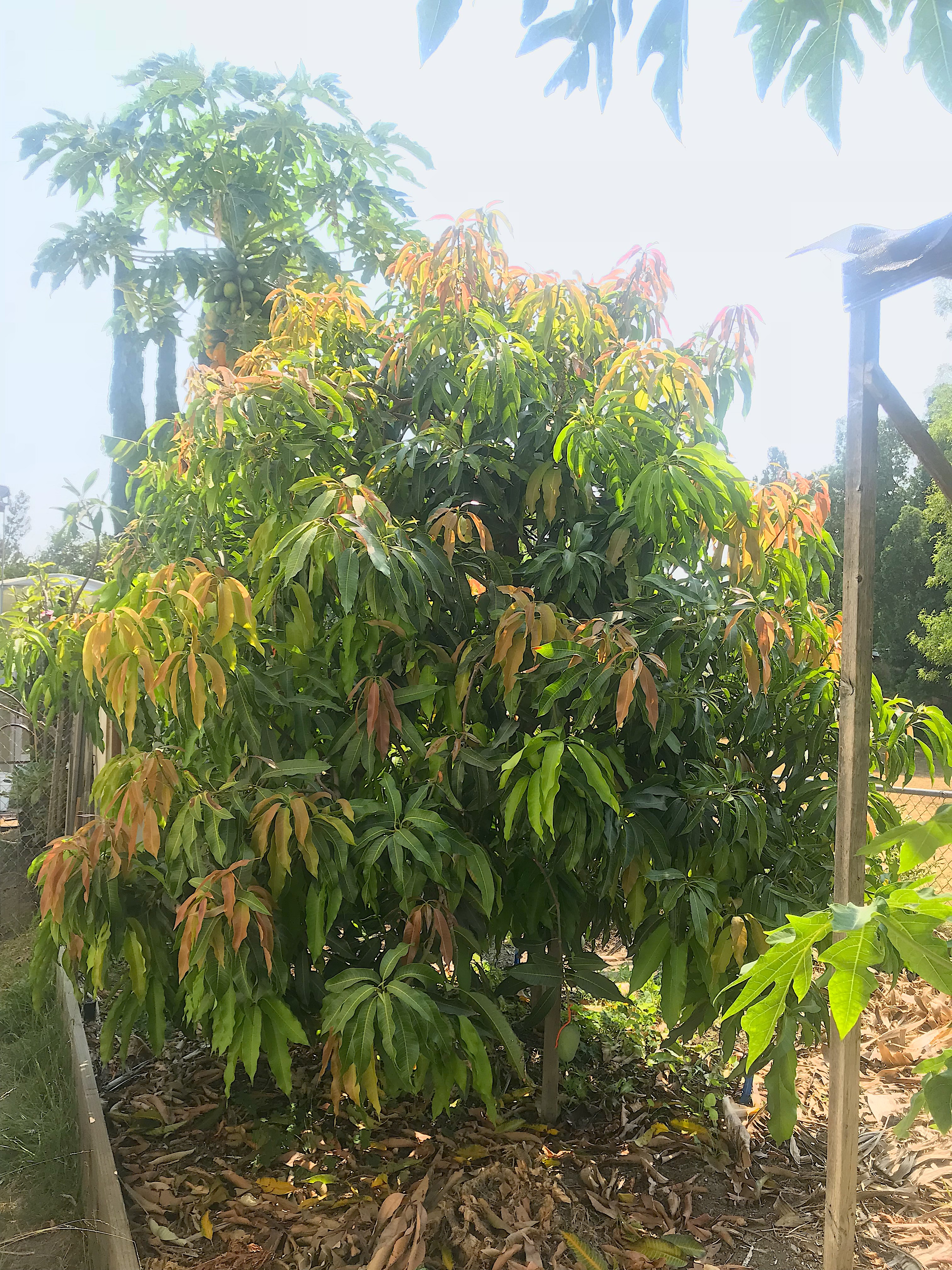
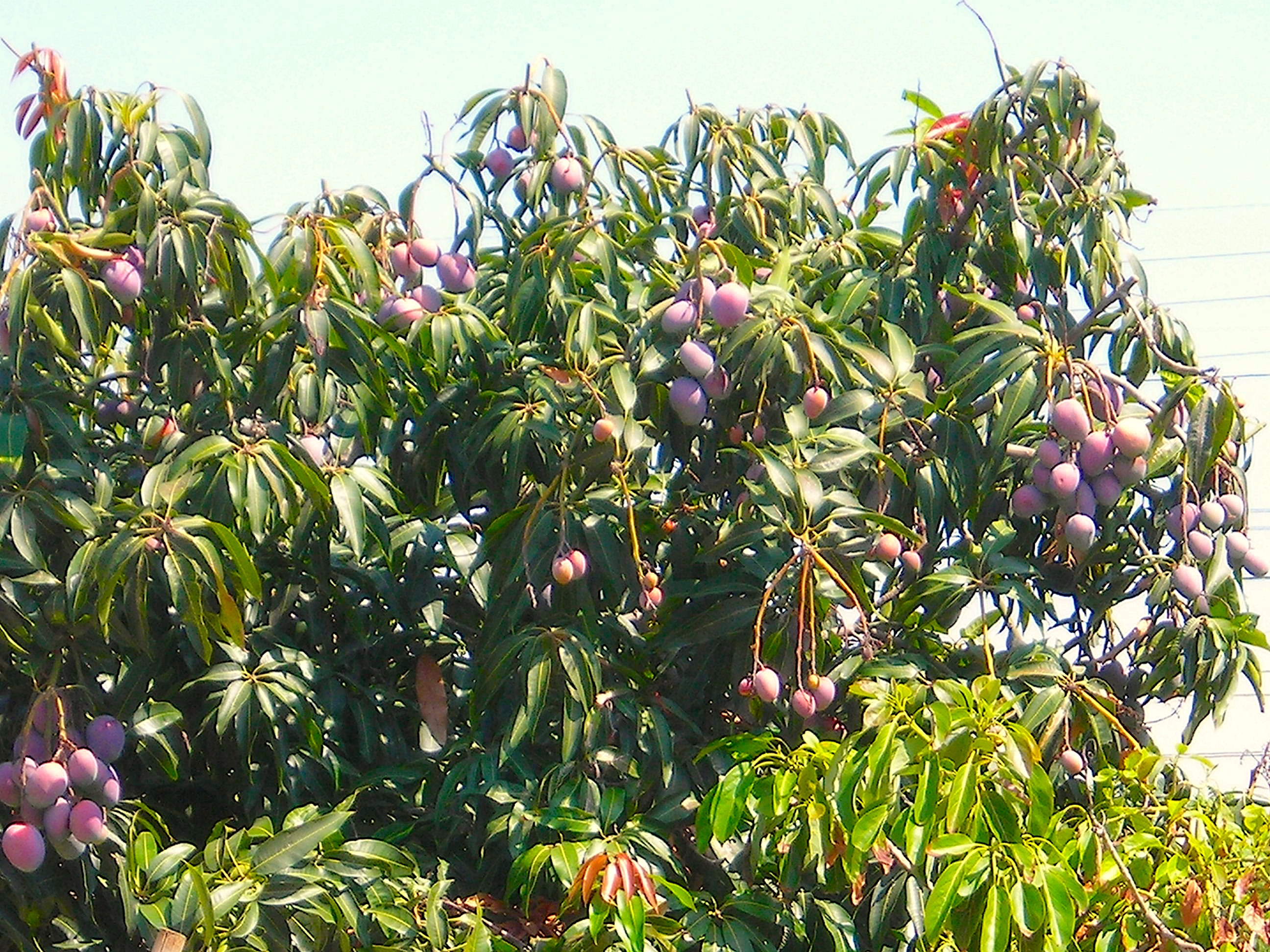
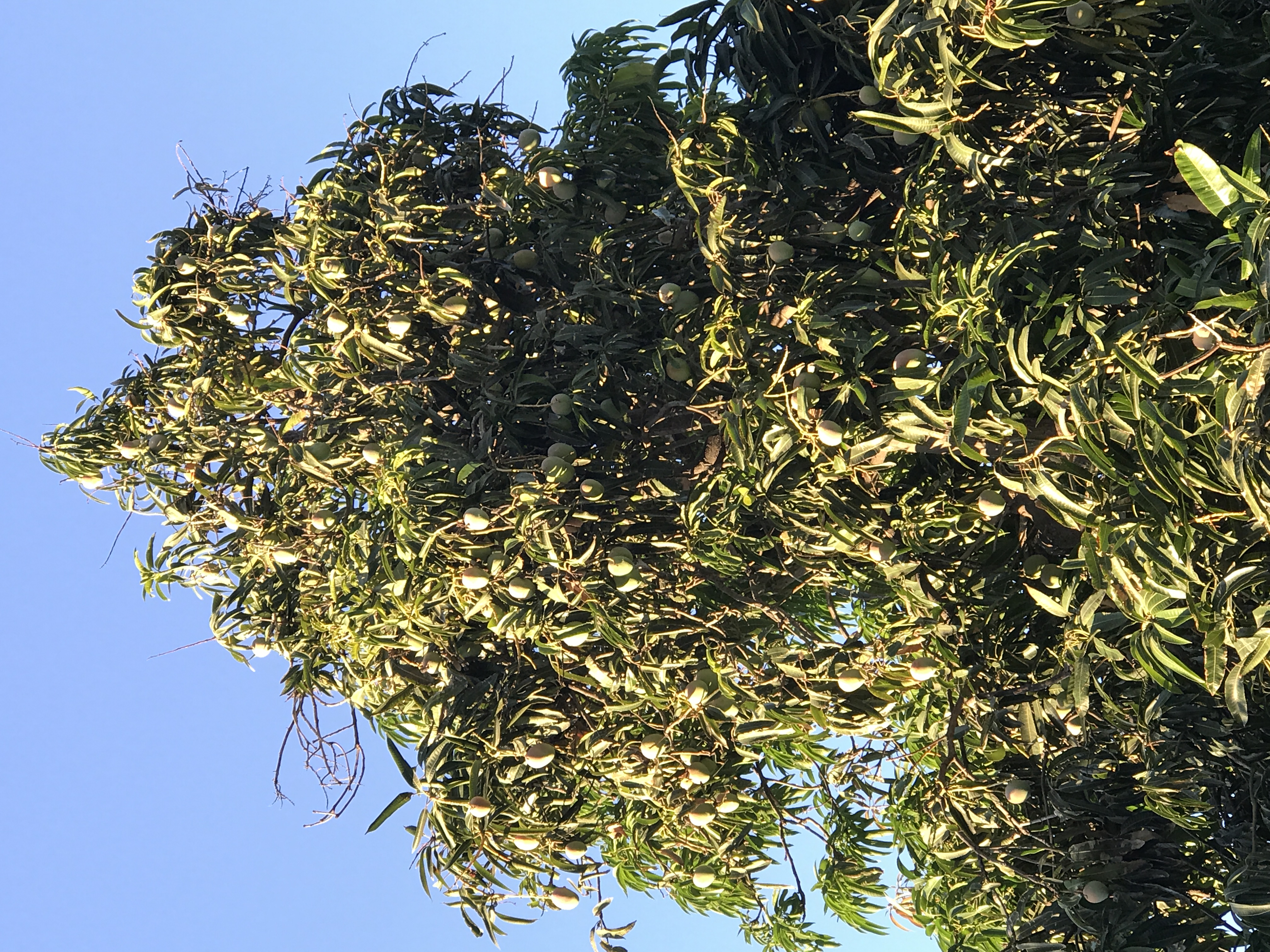
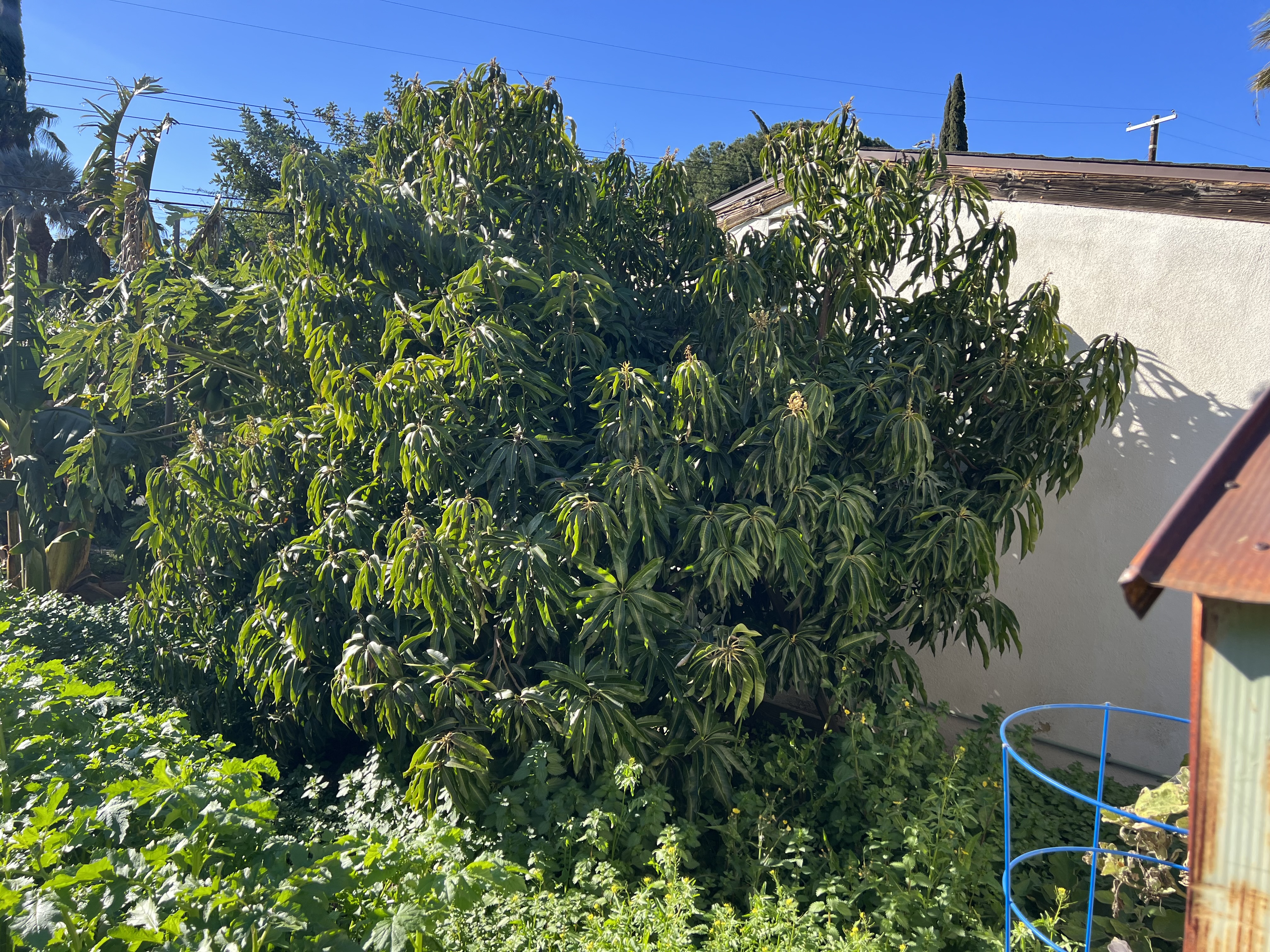
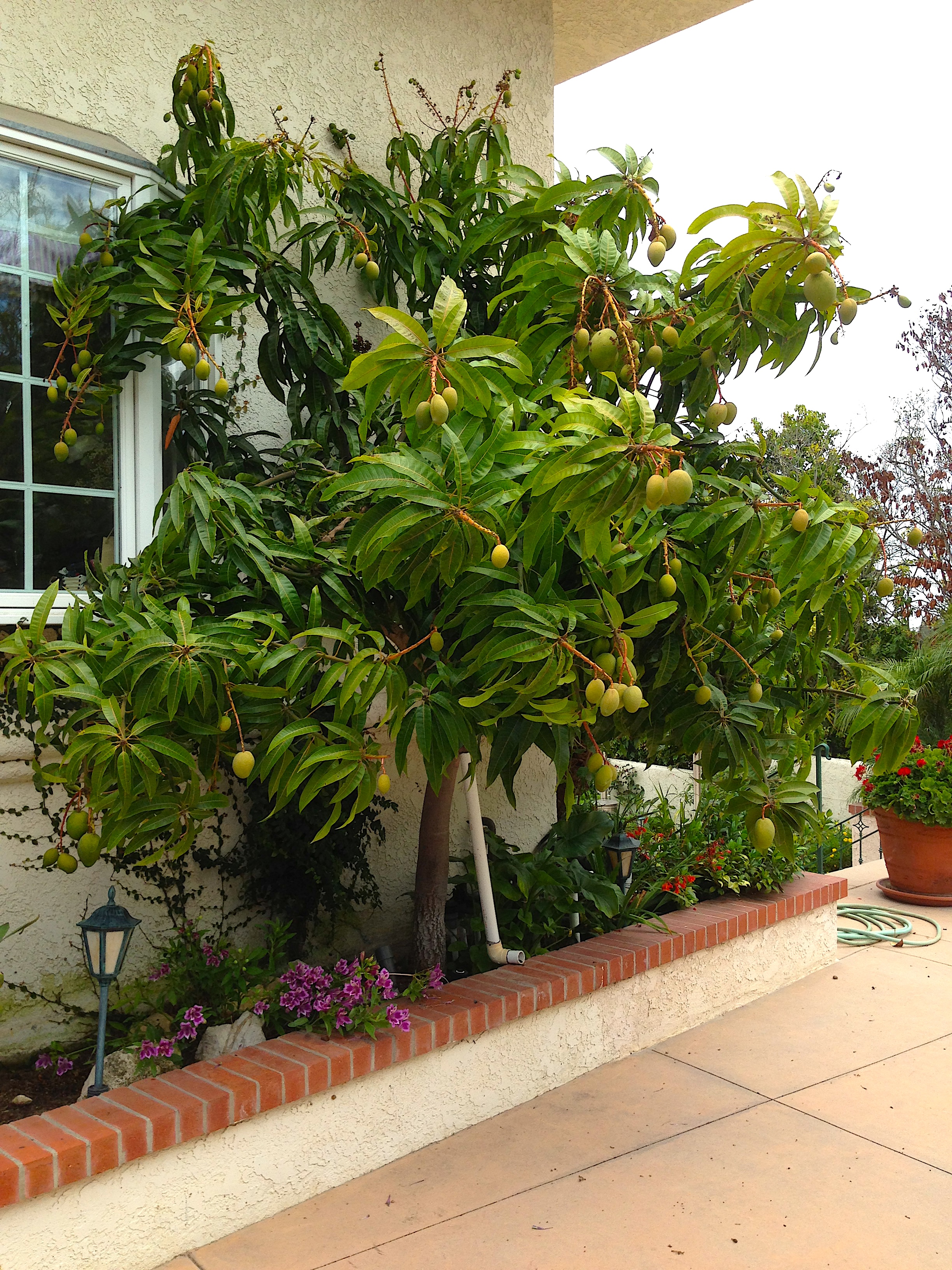
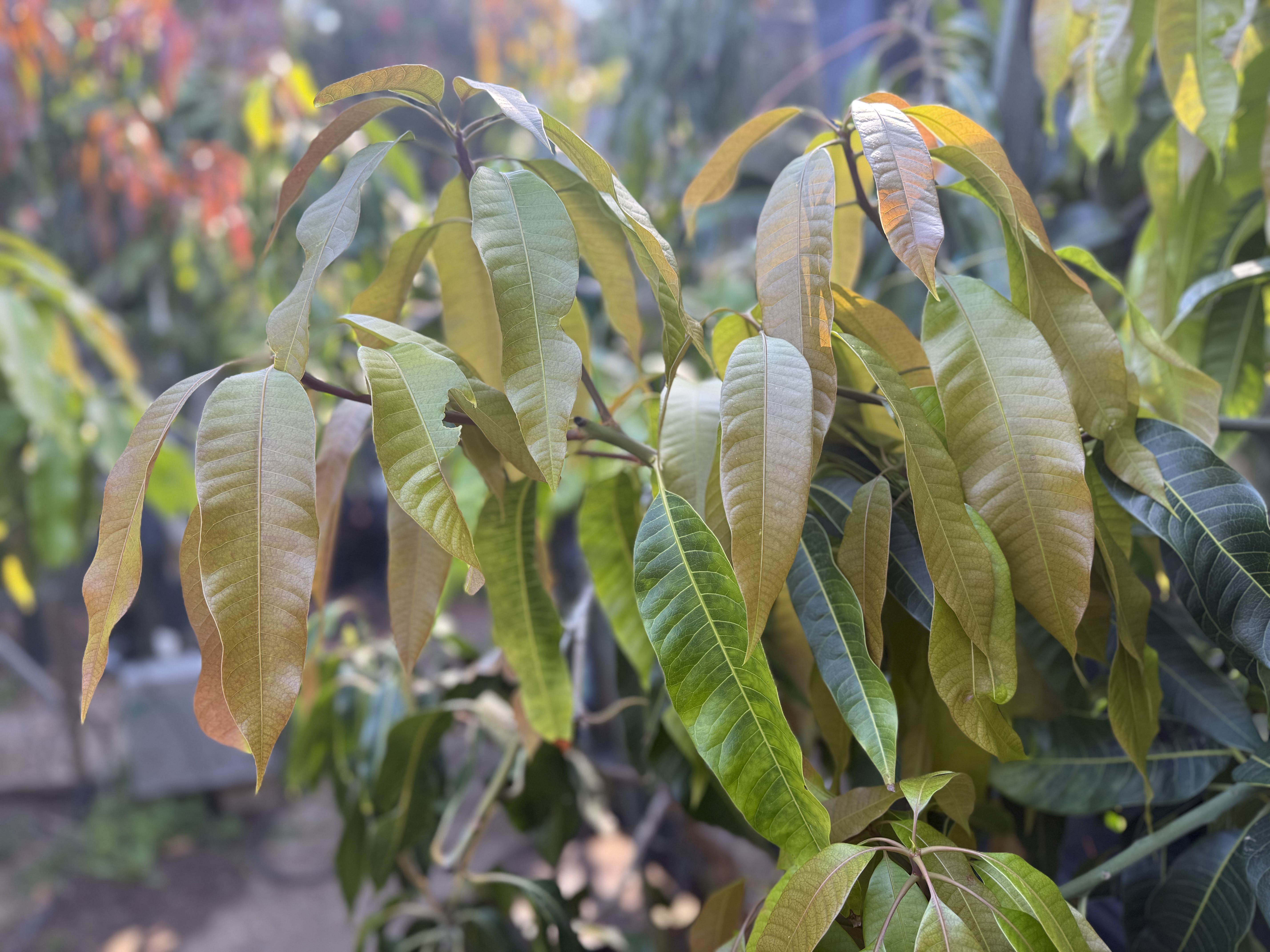
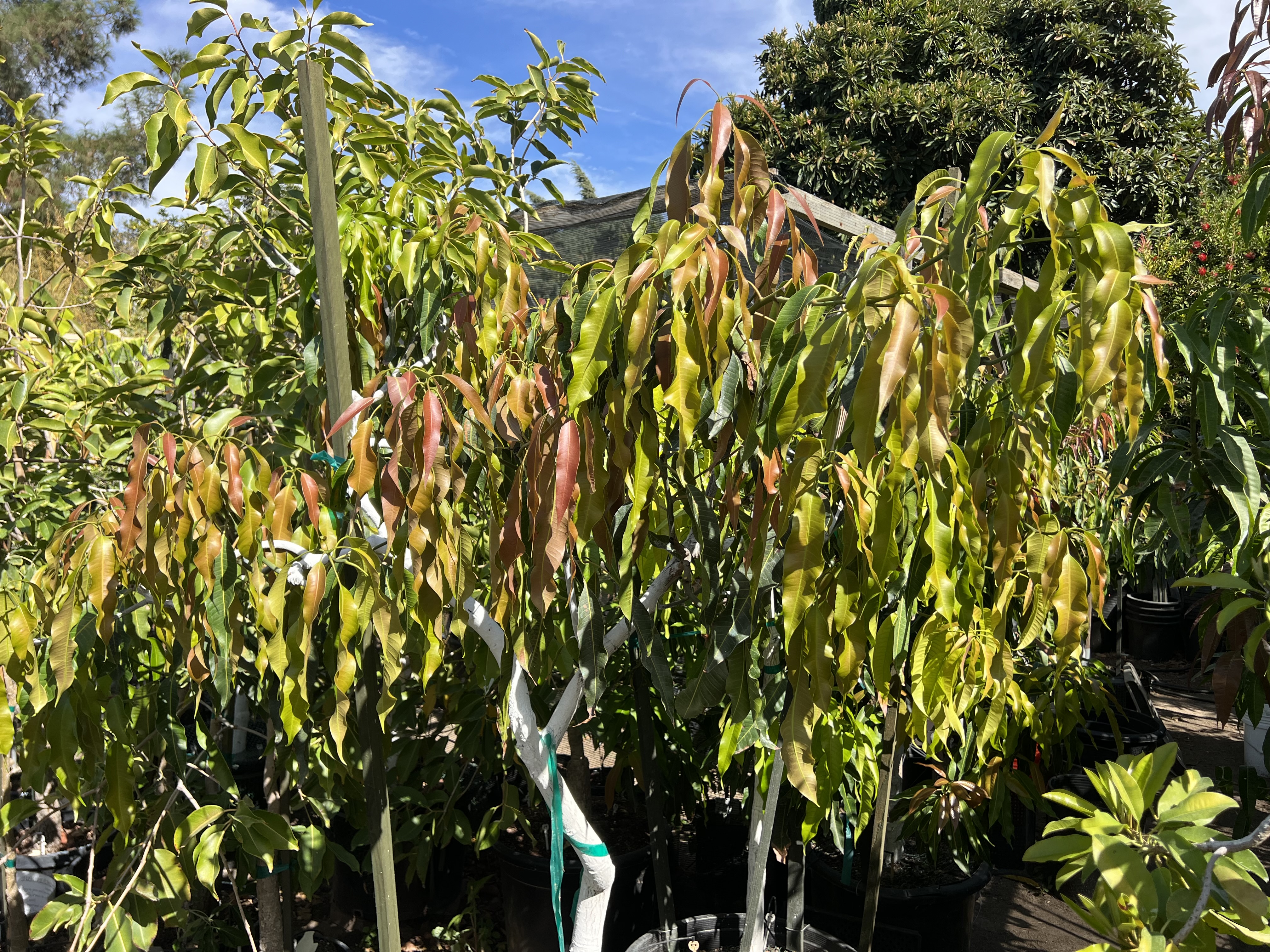
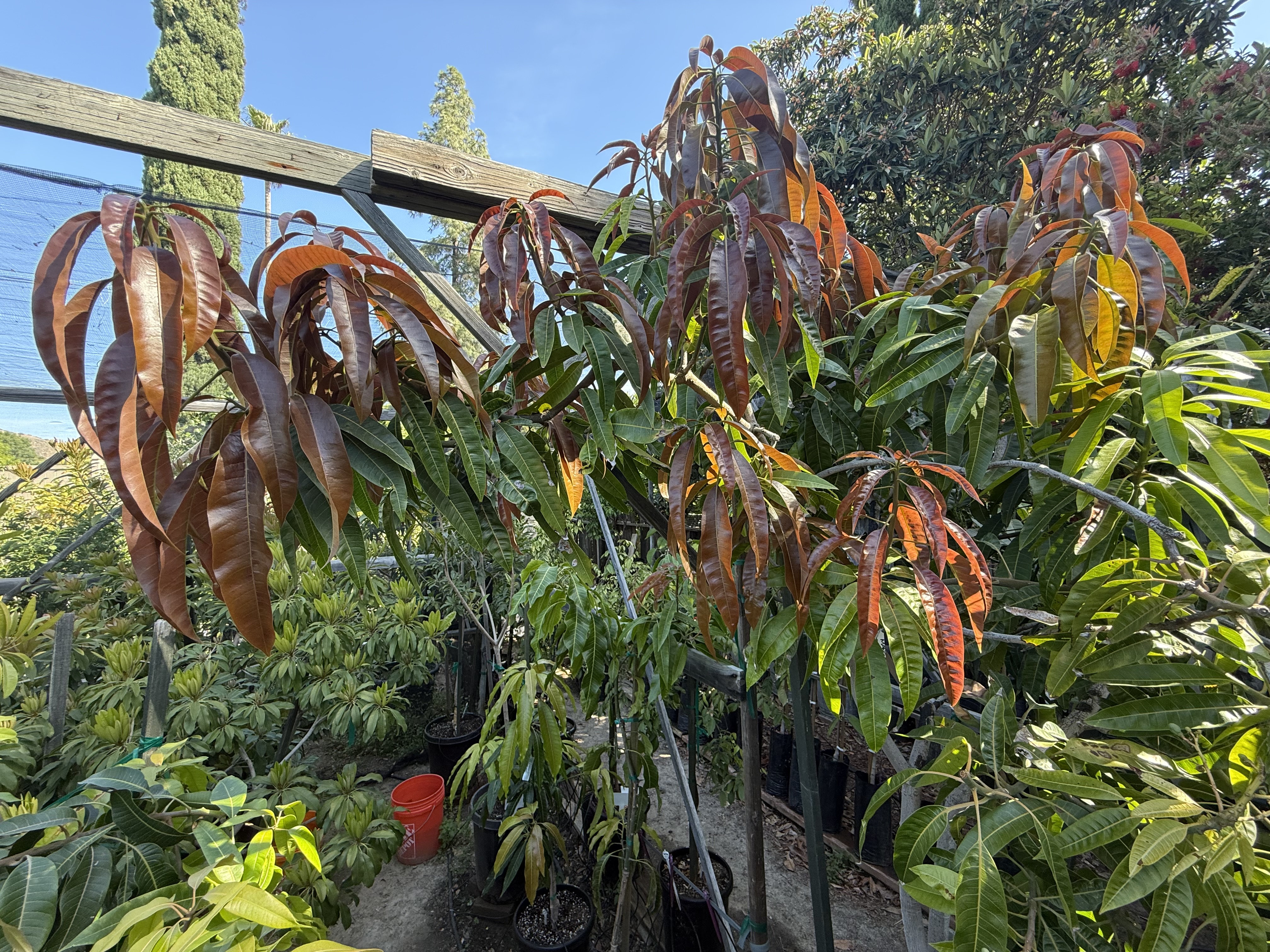
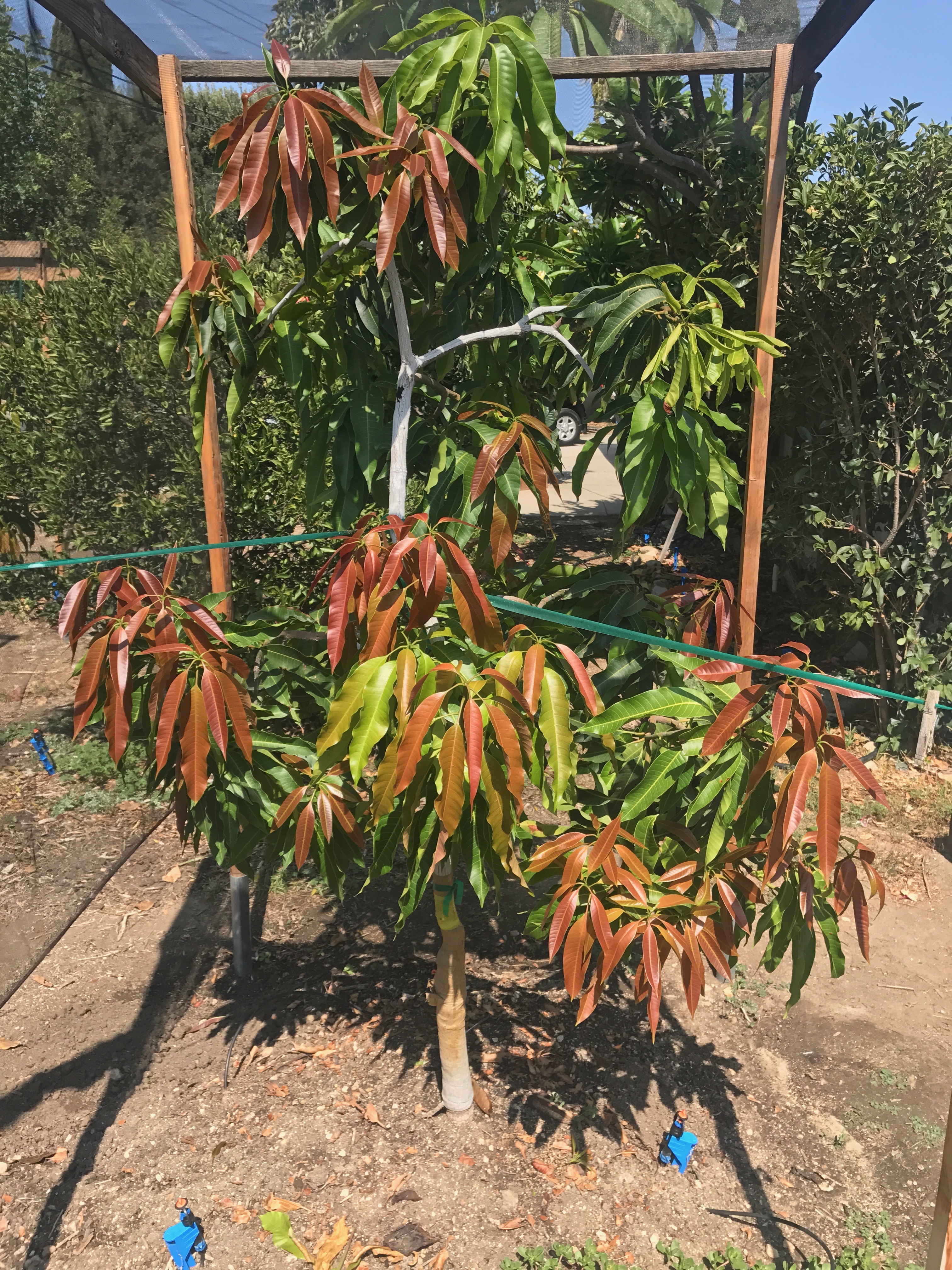
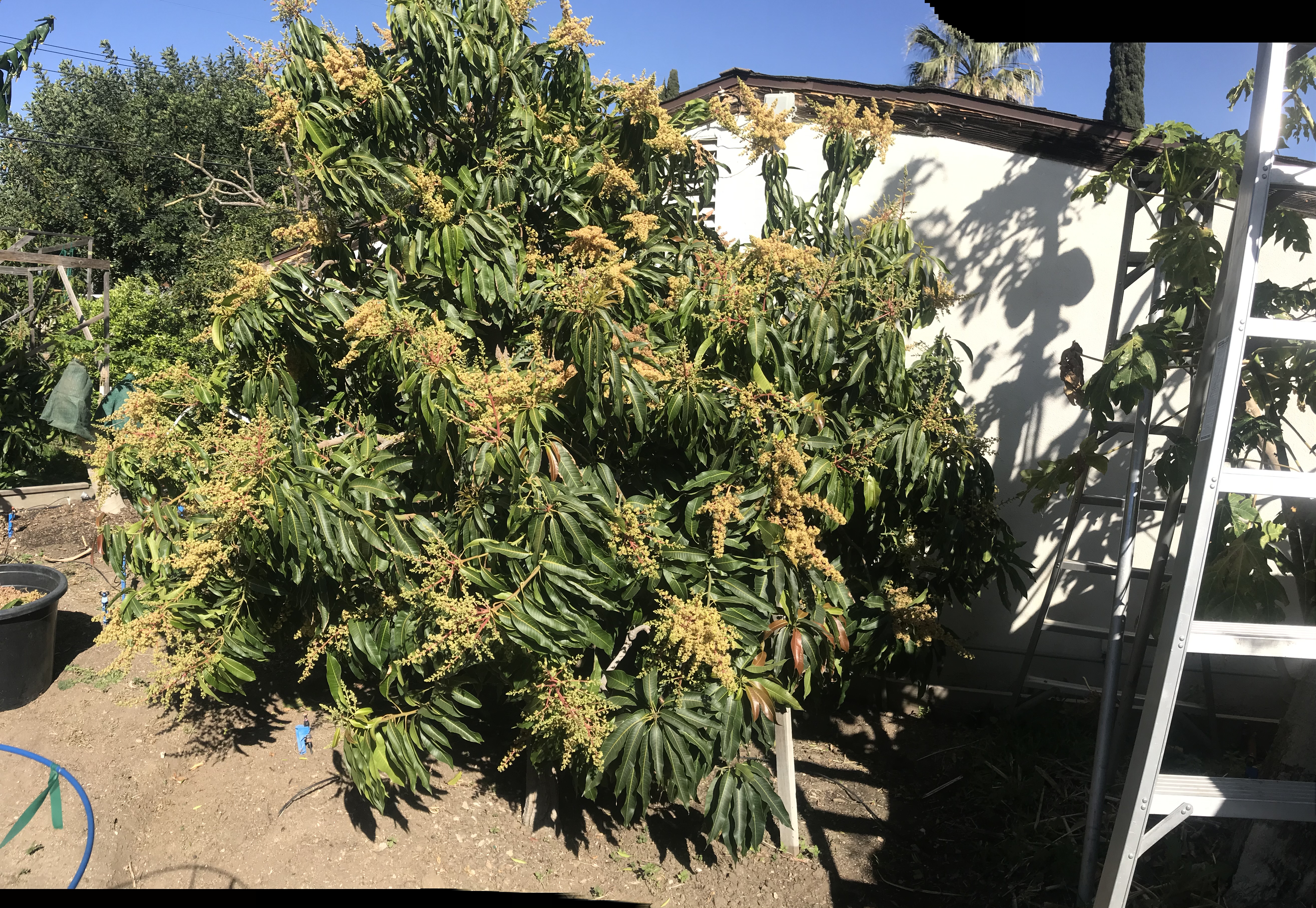
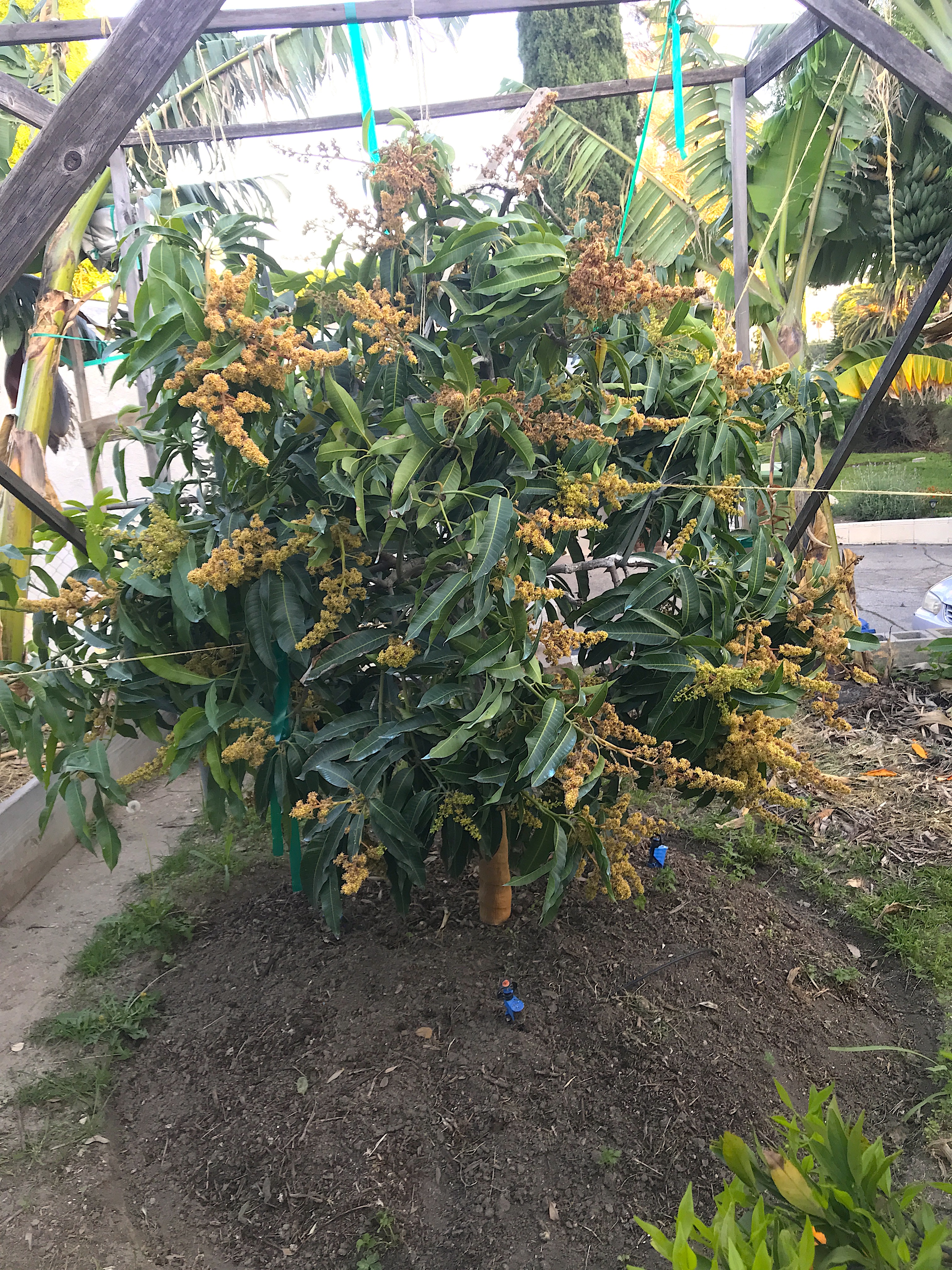
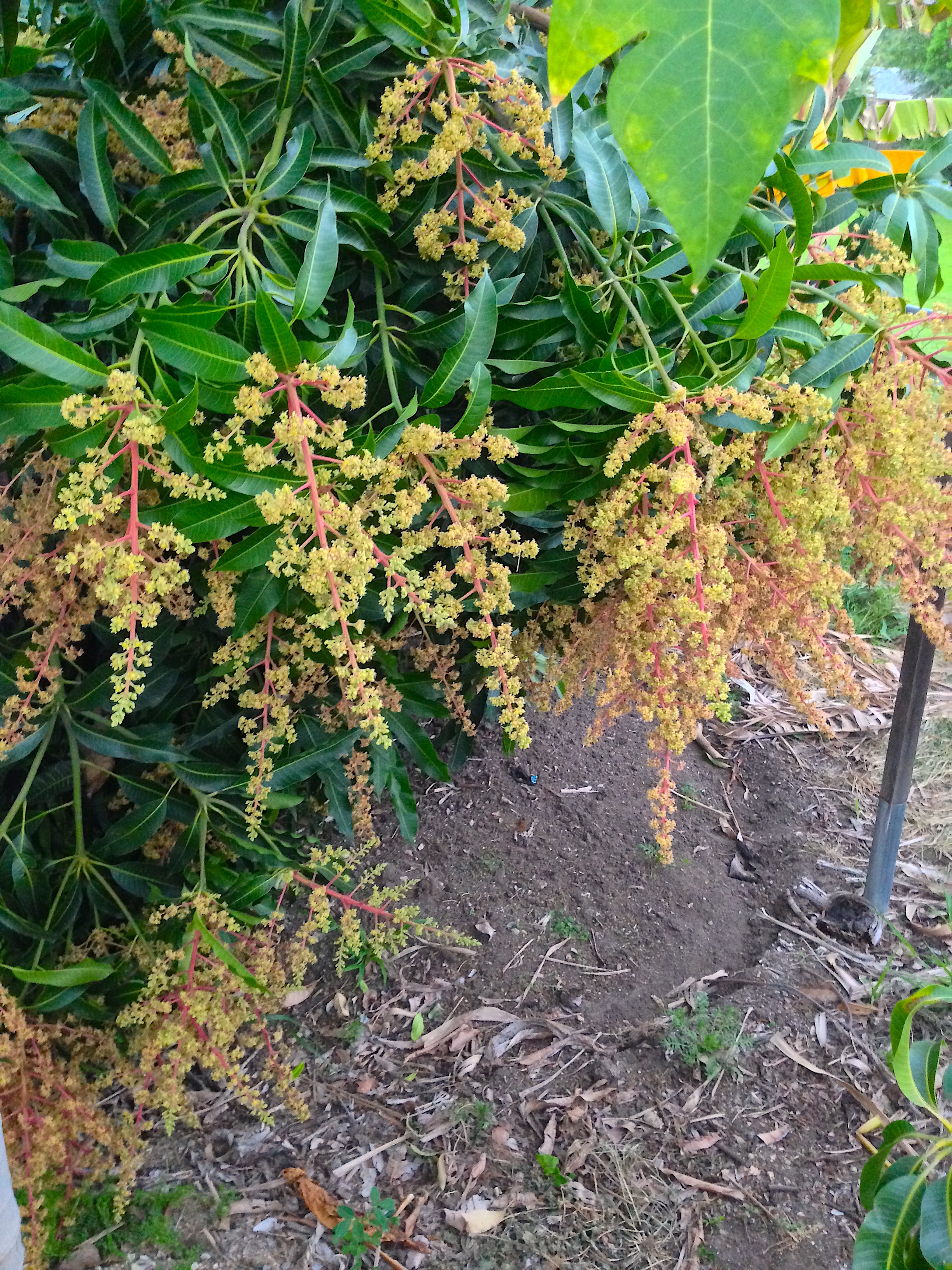
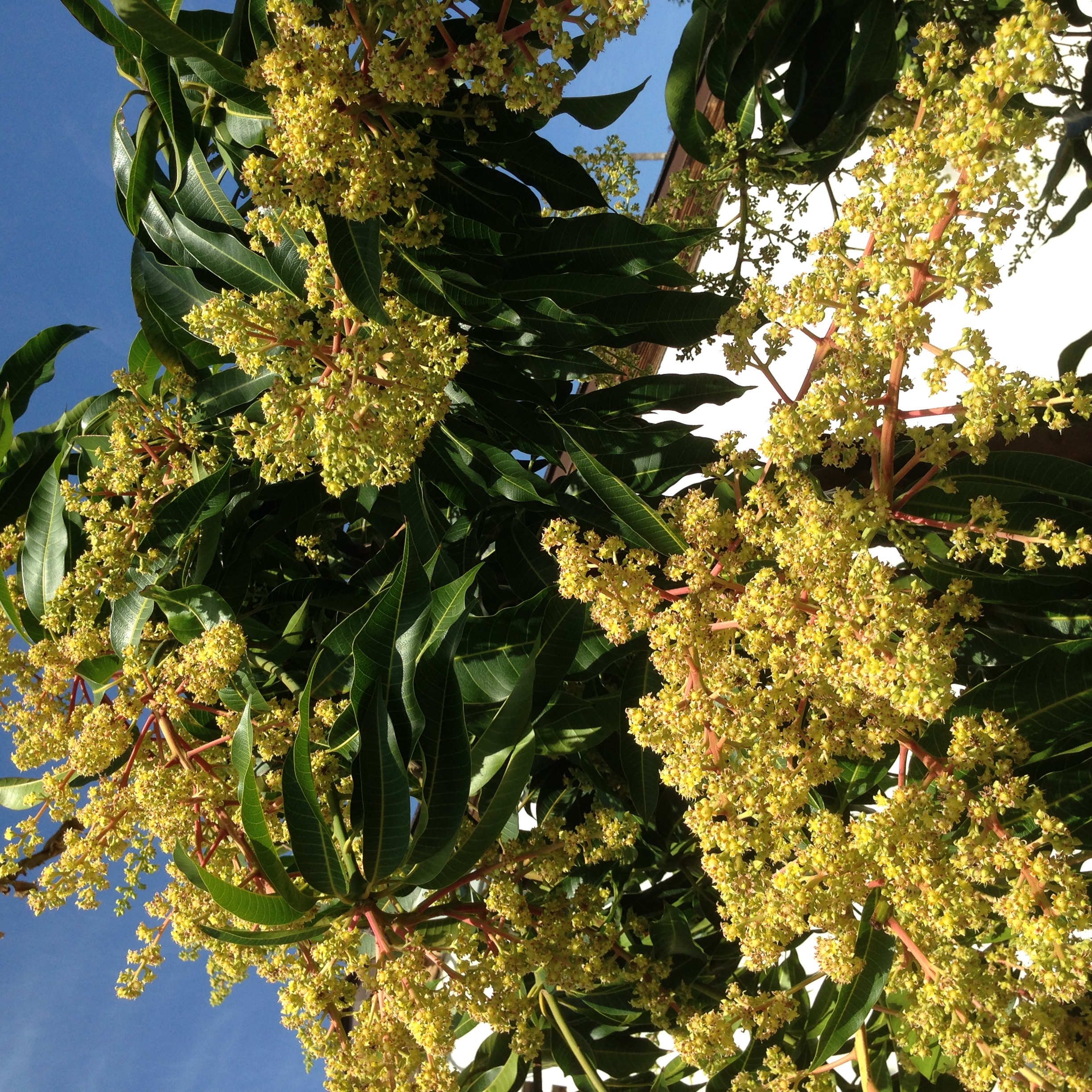
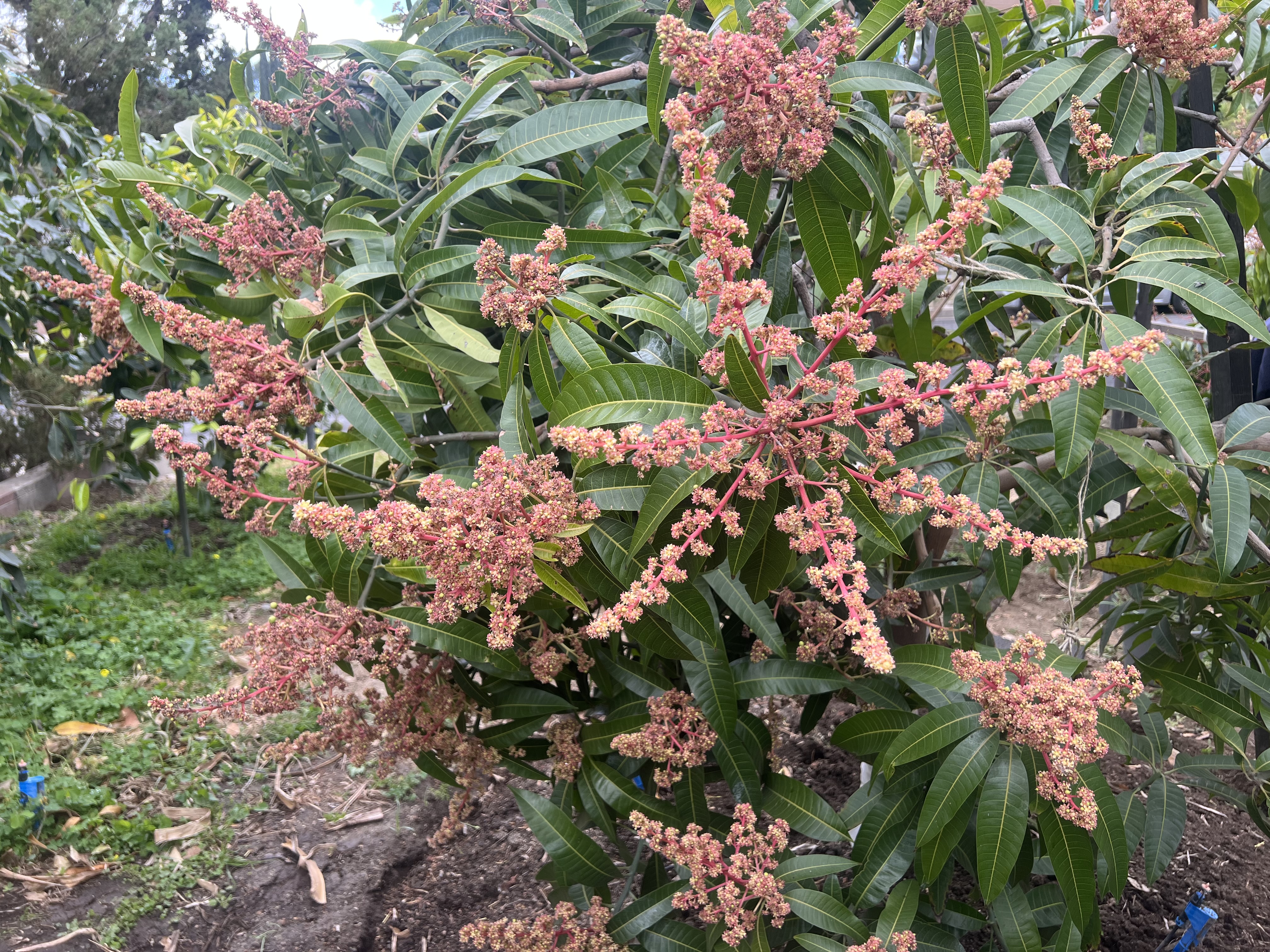
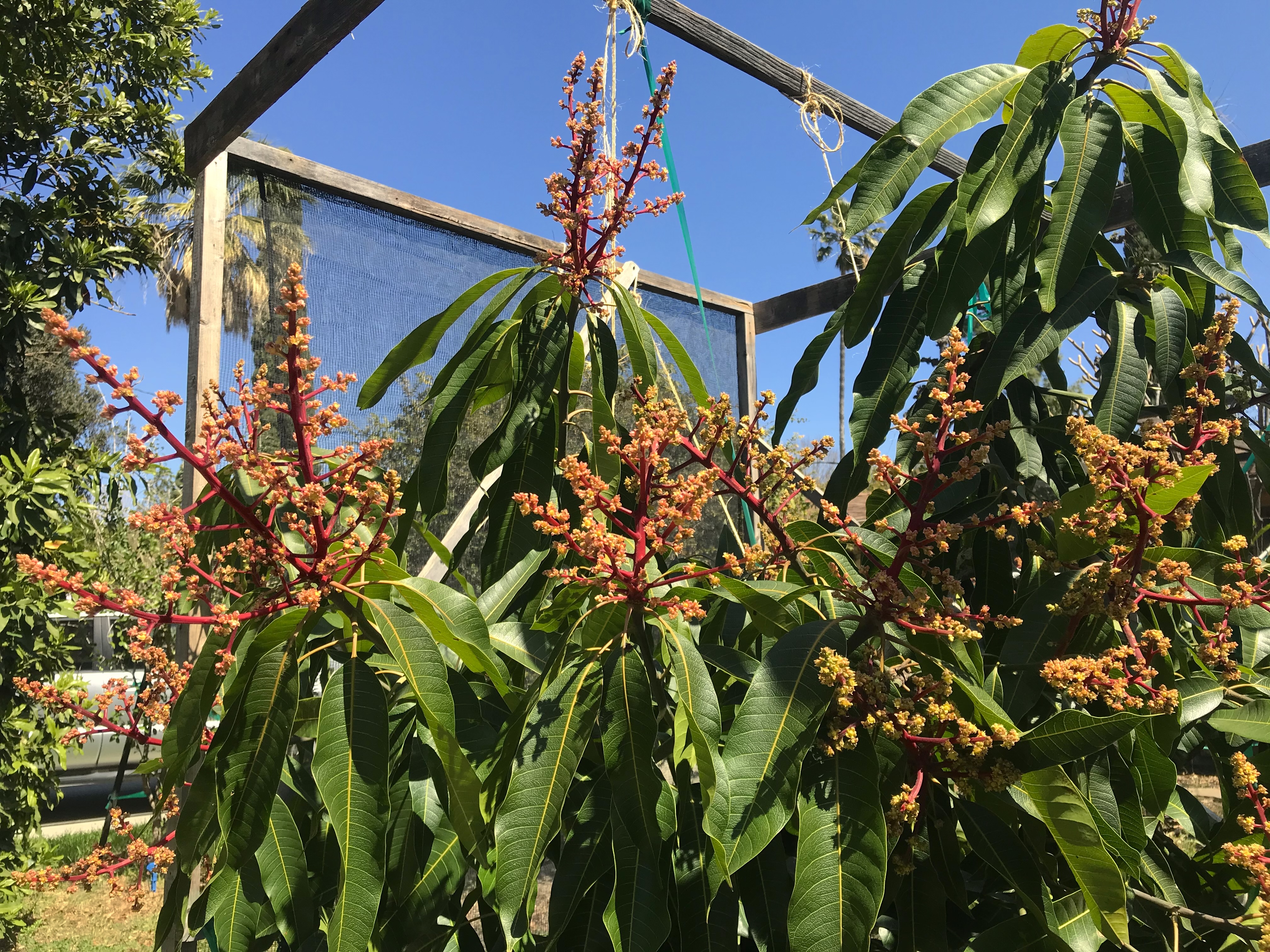
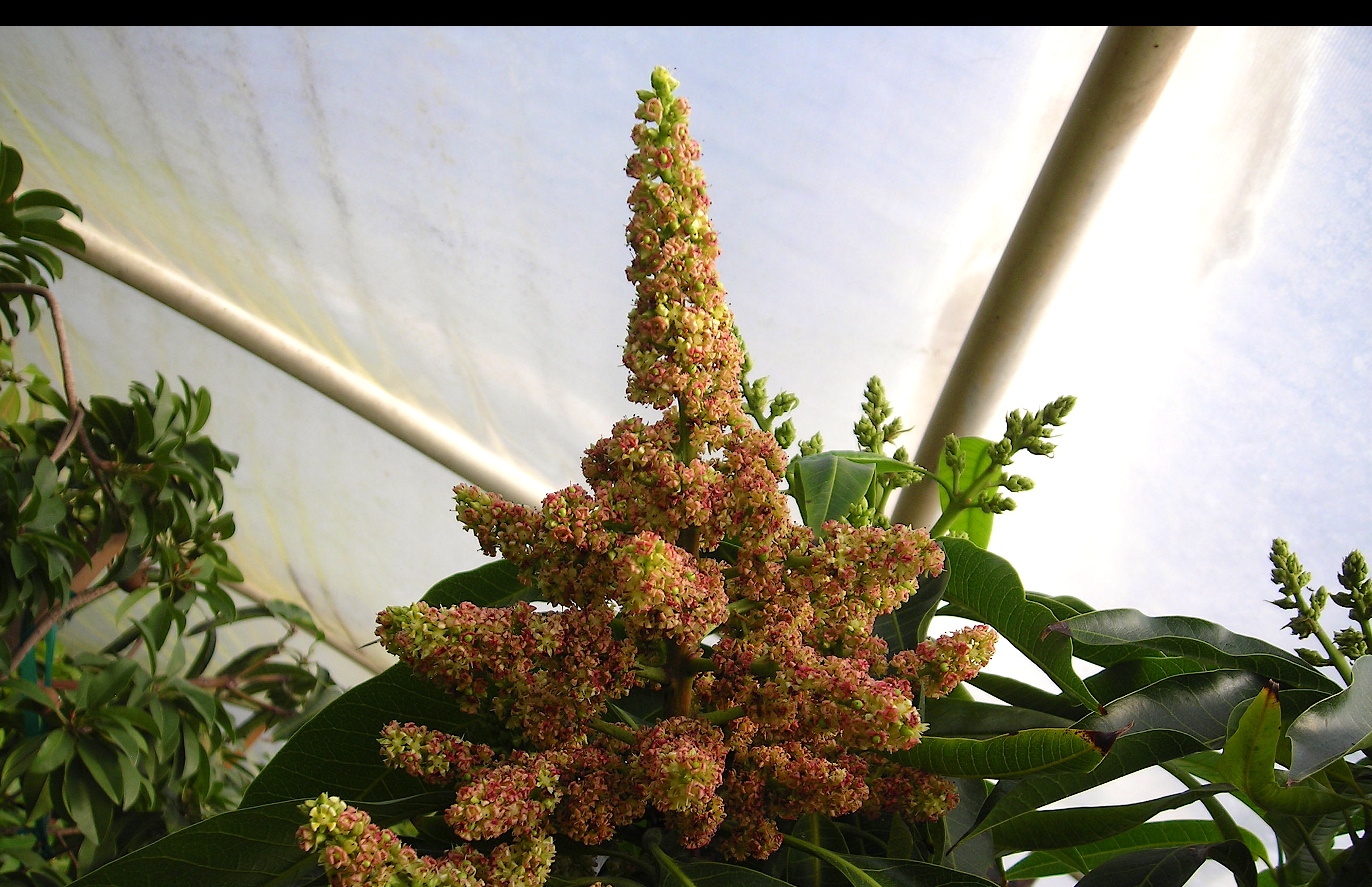
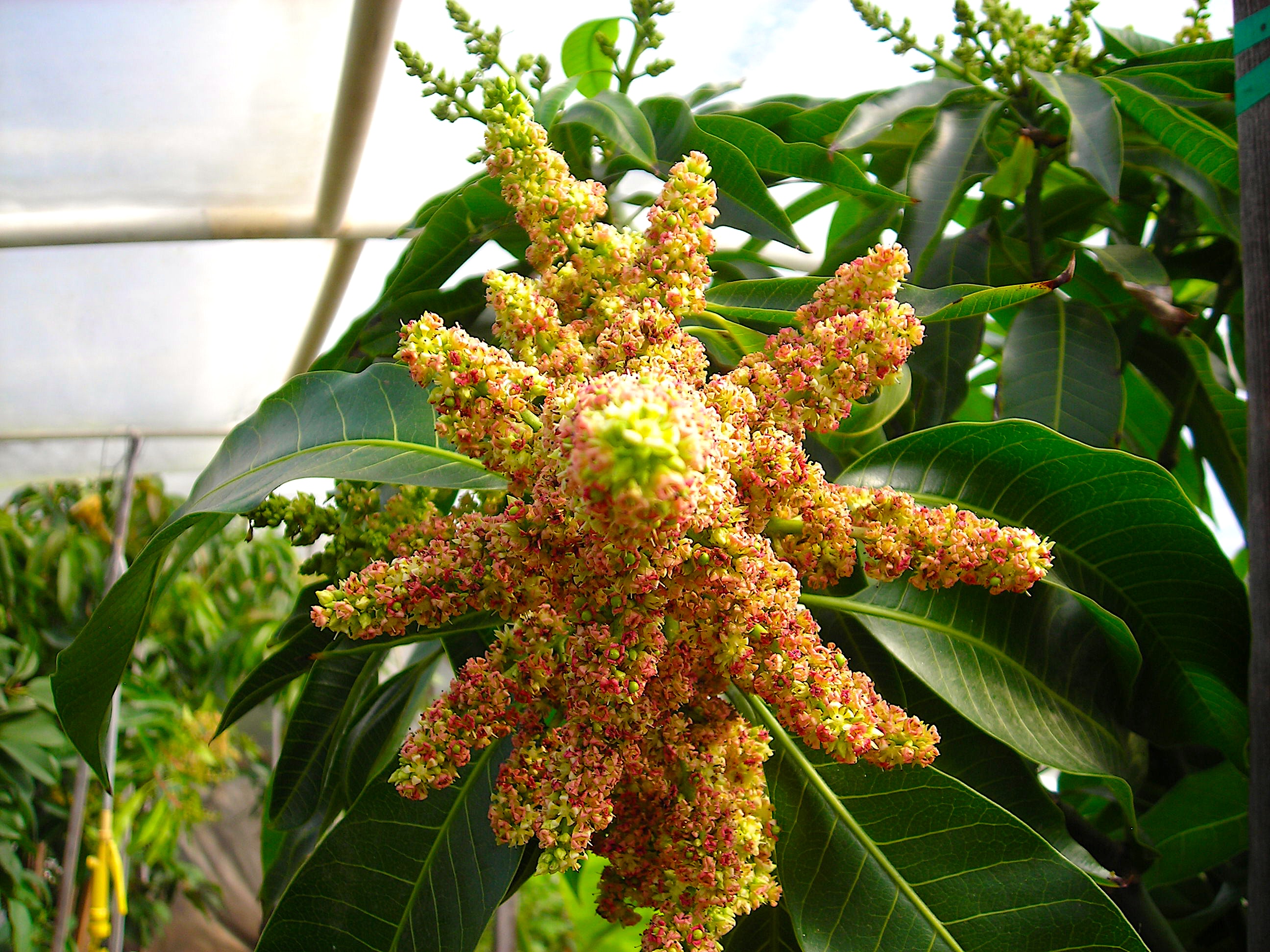
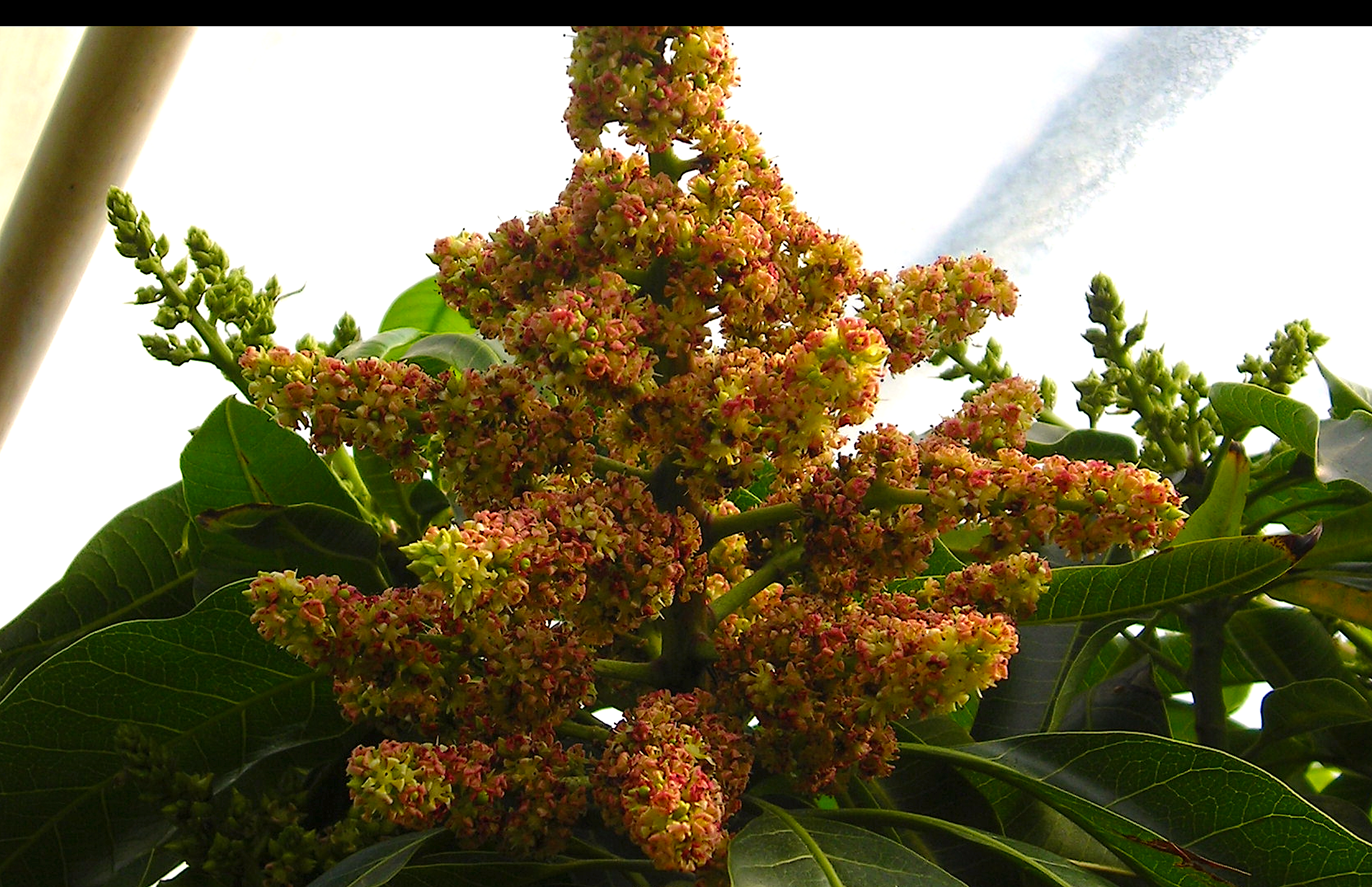
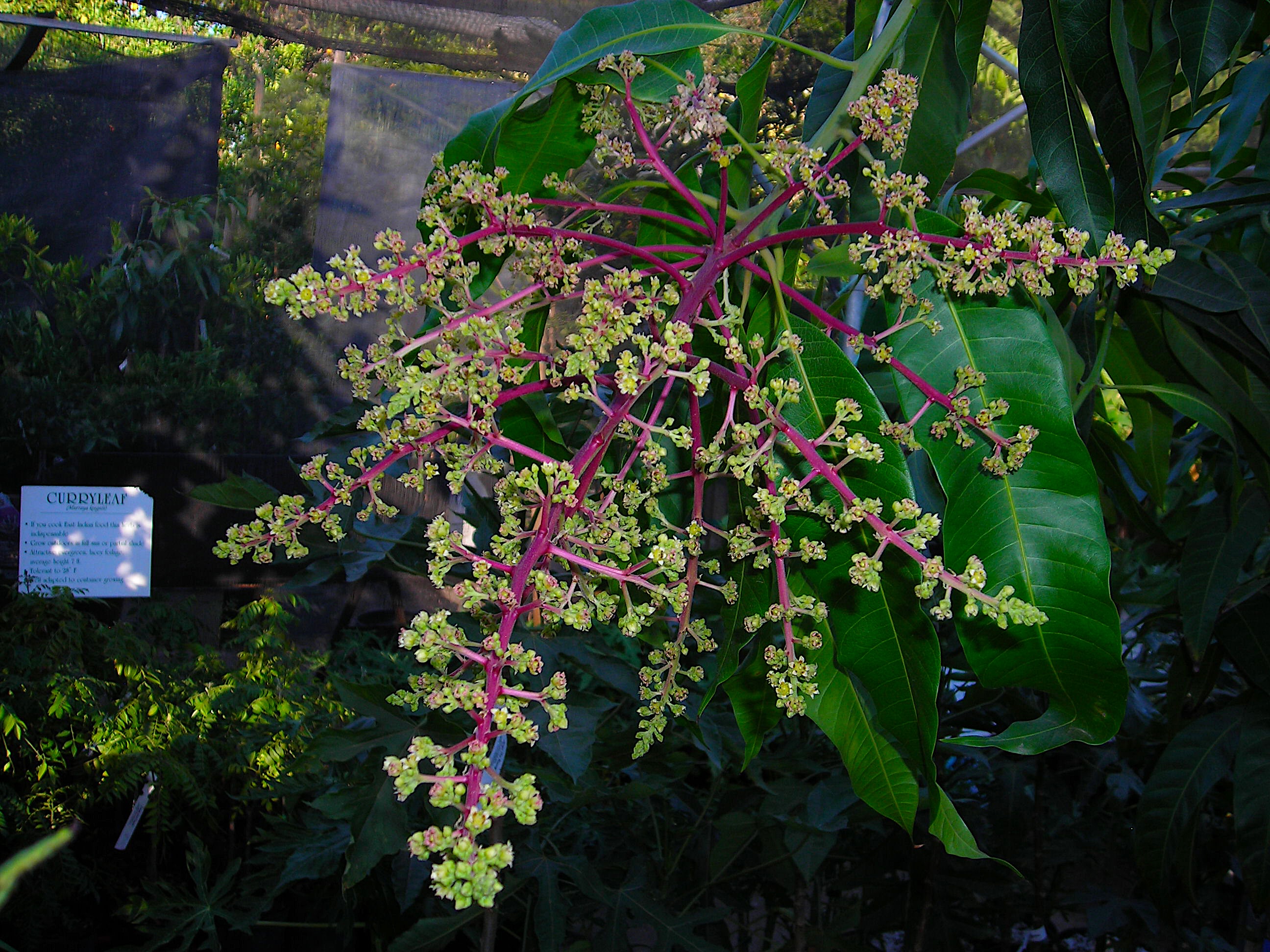
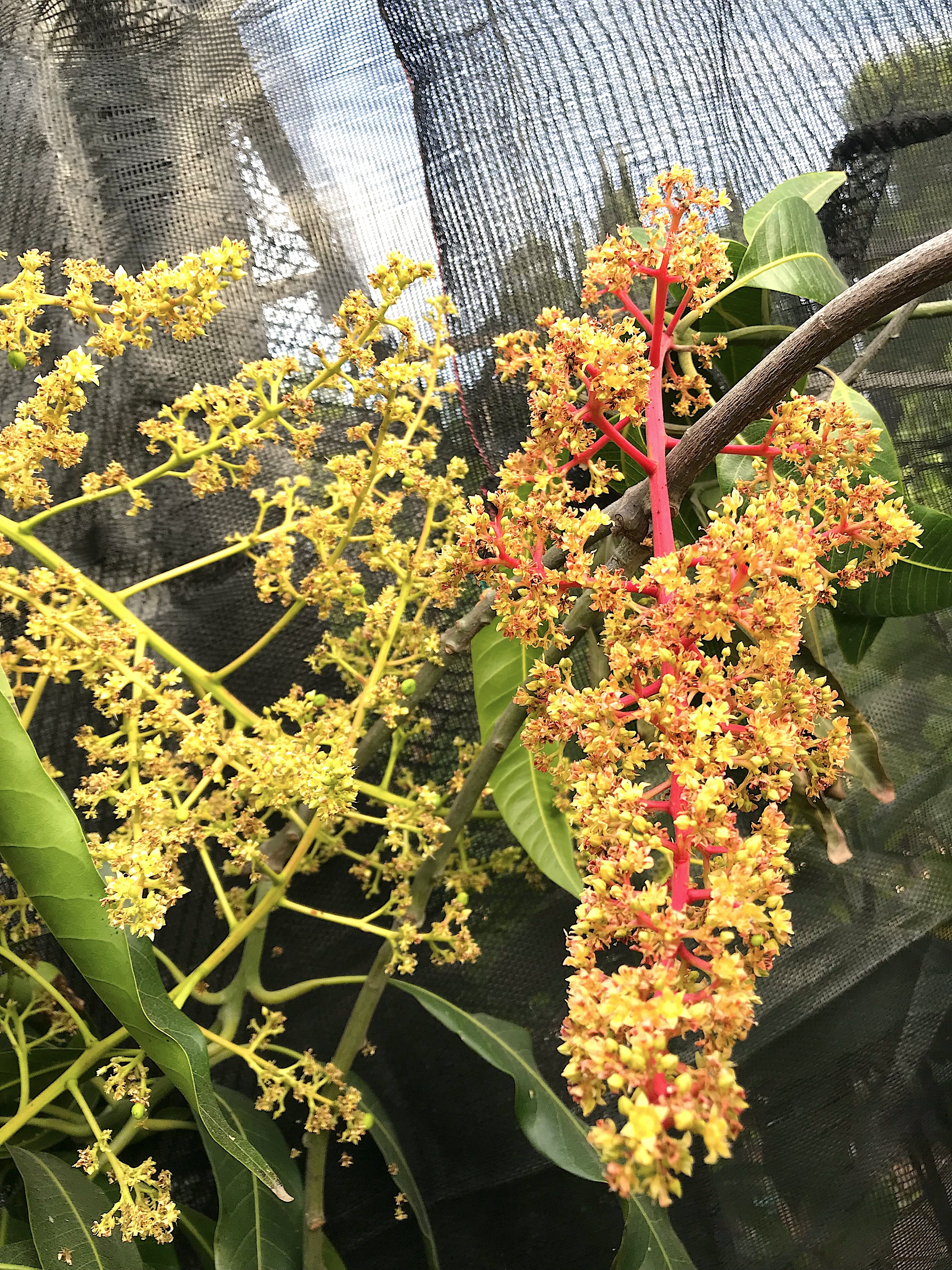
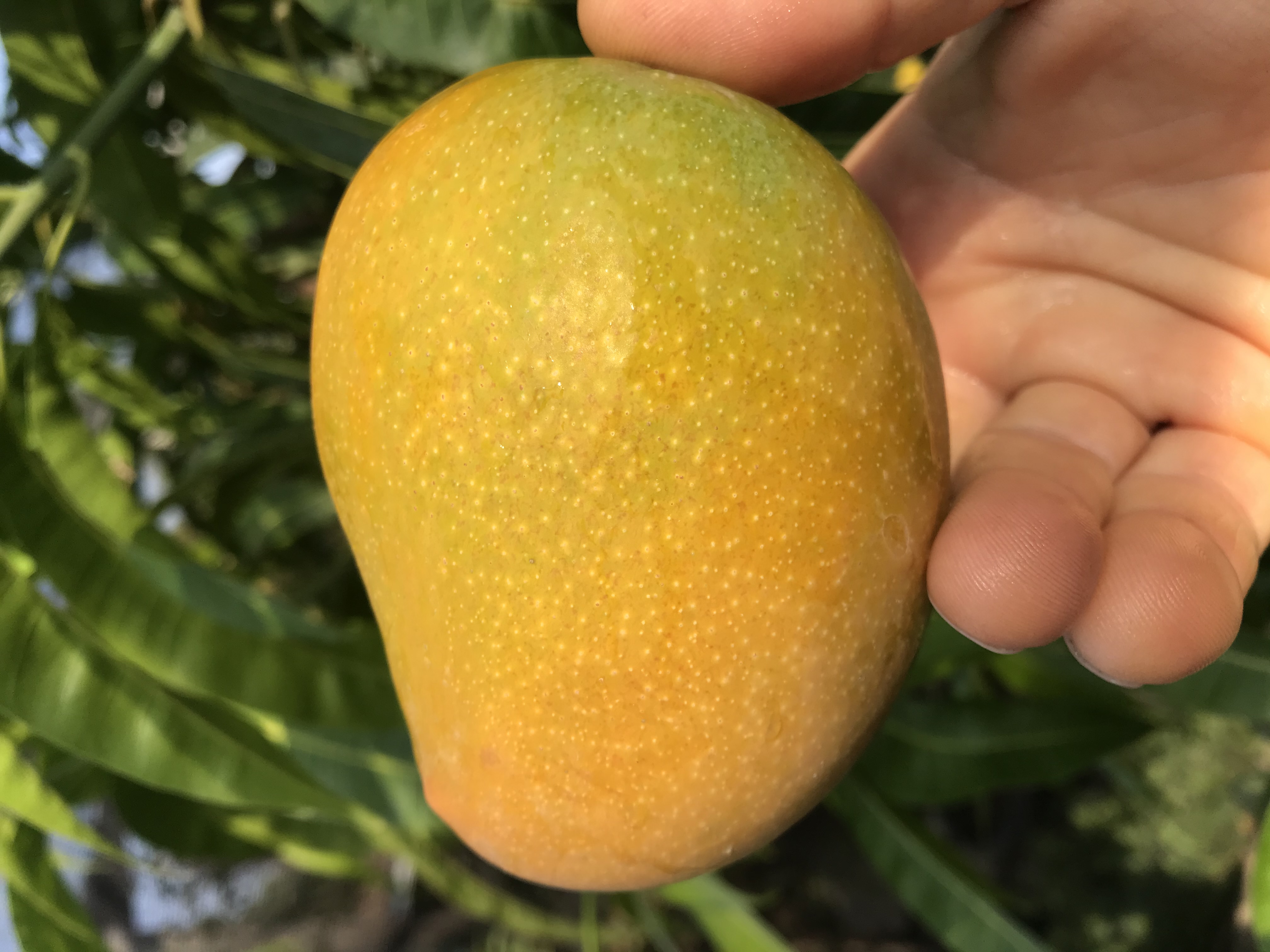
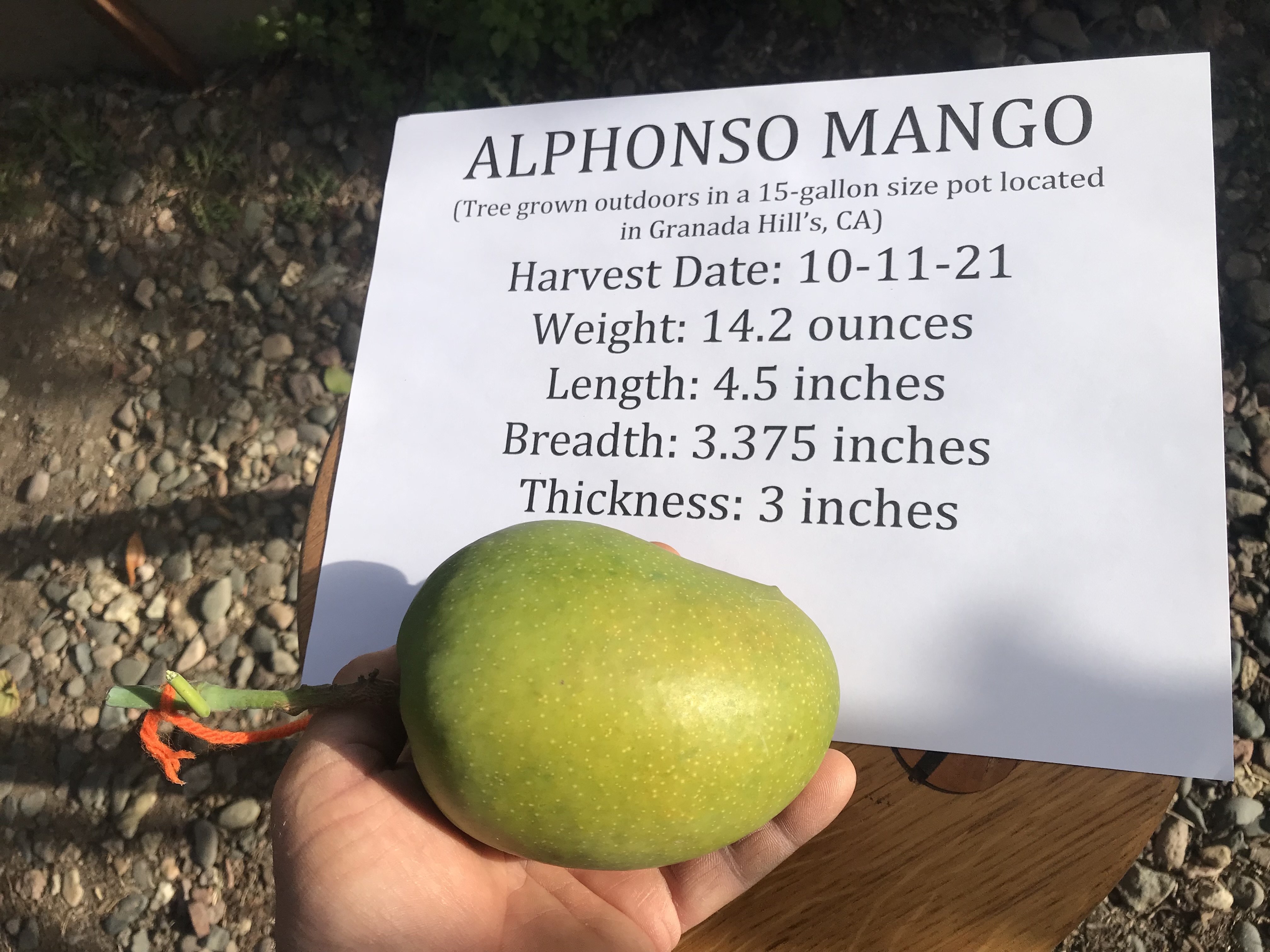
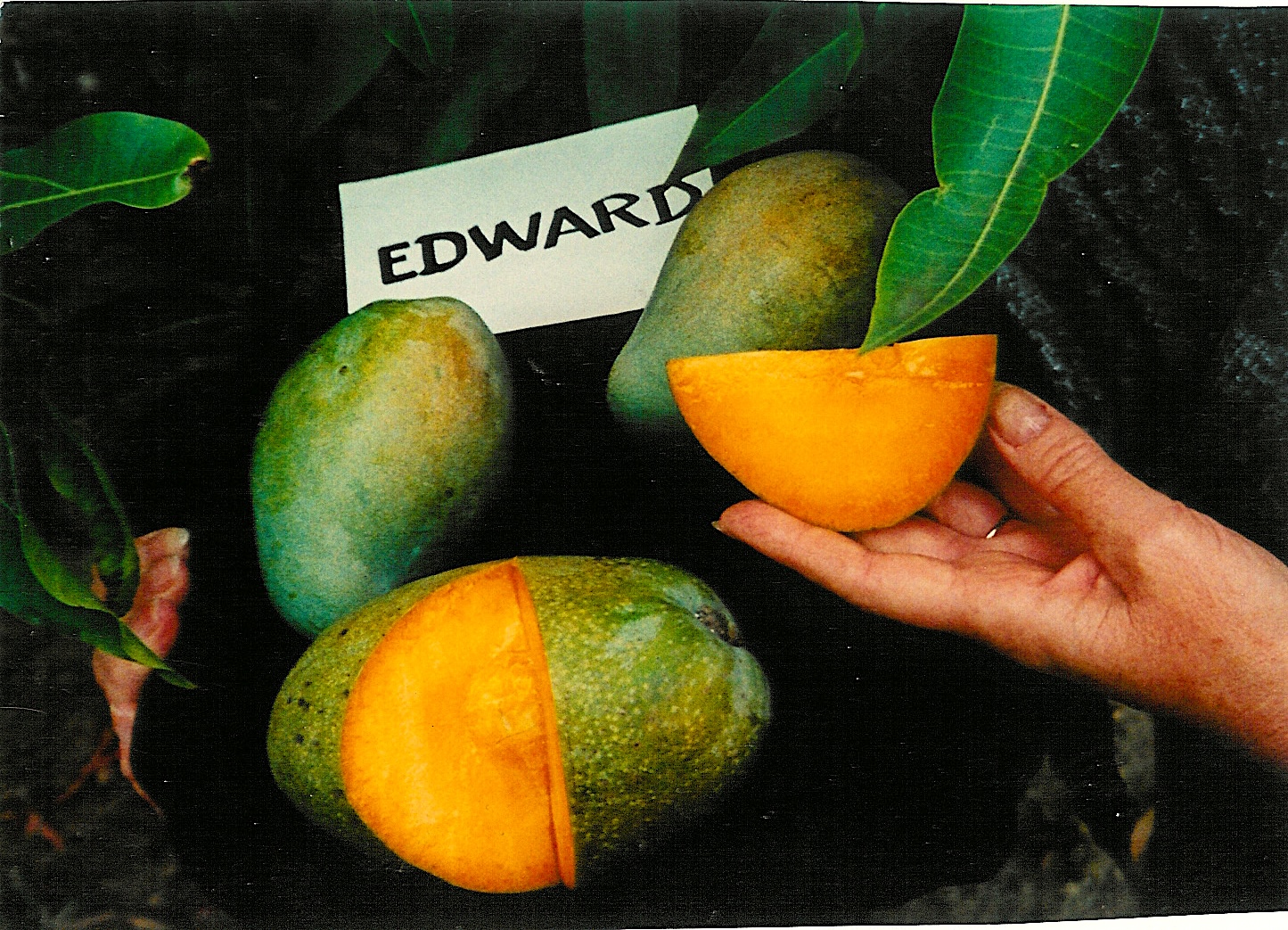
| Description | The Mango is a handsome, long-lived evergreen tree with a native range extending across northeastern India, Bangladesh, and Myanmar. For the purpose of this discussion, however, special emphasis is placed on India, where the mango has been cultivated for well over 4,000 years and holds a unique place in both the agricultural and cultural history of the region. Revered as the "King of Fruits" throughout much of Asia, the mango is among the oldest domesticated fruit trees in the world and remains one of the most widely cultivated tropical fruits today. Over centuries of cultivation and selection, the mango spread throughout Southeast Asia and eventually into tropical and subtropical regions around the globe. Historical records indicate that Buddhist monks helped carry the mango into neighboring countries more than two thousand years ago. Later, traders and explorers introduced the species to eastern Africa, the Middle East, the Caribbean, Central and South America, and eventually to tropical and subtropical regions of the United States, including Hawaii, Southern Florida, and Southern California. For the purpose of clarification, it is important to distinguish between seedling-grown mango trees and the improved, asexually propagated cultivars commonly offered today. Seedling mango trees can develop into very large specimens, often exceeding forty feet in height and width under favorable conditions. While such trees can be impressive landscape specimens, they may require substantial space and can be difficult to harvest and maintain. Modern grafted selections, on the other hand, offer significant advantages, including more predictable fruit quality, earlier bearing age, improved disease resistance, and in many cases a more compact growth habit better suited to residential landscapes. Now for the fruit itself: There is considerable variability among mango cultivars in regard to size, shape, color, fiber content, aroma, and flavor. Fruit may range from less than half a pound to several pounds in weight and can exhibit skin colors varying from green and yellow to shades of orange, red, and purple. The flesh is typically golden yellow to deep orange and may be either nearly fiberless or moderately fibrous depending upon the variety. Flavor profiles can range from rich and intensely sweet to pleasantly balanced with hints of citrus, peach, pineapple, coconut, or even resinous-like undertones. The true enthusiast and those that grew up with old mango trees nearby, know that the mango fruit is at its best when consumed fresh out of hand, yet its versatility extends far beyond simple fresh consumption. Ripe fruit is widely used in beverages, smoothies, desserts, ice creams, preserves, pastries, and fruit salads. In many parts of Asia, immature green mangoes are equally valued and are incorporated into chutneys, pickles, relishes, sauces, and savory dishes. The fruit has played an important role in regional cuisines for centuries and continues to be celebrated throughout the tropical world.In addition to producing exceptional fruit, the mango is also an attractive ornamental tree. Mature specimens develop a dense, rounded canopy of glossy evergreen foliage capable of providing generous shade. New vegetative growth often emerges in striking shades of bronze, red, purple, or copper before gradually maturing to deep green, adding seasonal interest even when the tree is not in fruit. So whether your interest lies in growing one of the world's most celebrated fruits, enhancing the beauty of your landscape, or simply enjoying the satisfaction of harvesting your own homegrown tropical delicacies, the mango deserves serious consideration. With the availability of numerous improved cultivars adapted to a variety of growing conditions, there has never been a better time to discover why the mango has been treasured for thousands of years and continues to captivate fruit enthusiasts around the globe. Fortunately for Southern California growers, careful cultivar selection combined with proper siting and care has made successful mango cultivation increasingly attainable, allowing local enthusiasts the opportunity to harvest premium-quality fruit from their own backyard tree. |
| Evergreen/Deciduous | Evergreen |
| Height x Width | 10–18' x 8–12'(Varies significantly by cultivar and pruning practices) |
| Growth Habit | Dense, rounded canopy |
| Growth Rate | Moderate |
| Sun Exposure | Full Sun |
| Cold Hardiness | Approximately 30–32°F |
| Fruit Bearing Age/Height | Approximately 3–5 years if grafted |
| Suitable To Container Culture | Yes (Dwarf selections) |
| Harvest Period | Summer |
| Video | Coming Soon |
When growing mango trees in Southern California's hotter inland valleys, one consideration worth noting is protecting the trunk and major branches from intense summer sun. I've personally seen healthy mango trees with trunks over 3 inches in diameter suffer such severe sunburn that they eventually had to be cut back by nearly half their height. Fortunately, this type of damage is almost entirely preventable with proper trunk protection during the tree's early years.
One of the most common problems I see isn't with the mango tree itself—it's how the tree is planted. I often refer to this as "The Mistake on Day One." Unfortunately, I've seen too many newly planted mango trees decline simply because they weren't planted correctly from the very beginning. Many of these trees were purchased elsewhere, where little emphasis was placed on proper planting techniques. To help prevent this, I provide a complimentary handout explaining the planting method I've found to be most successful over the years.