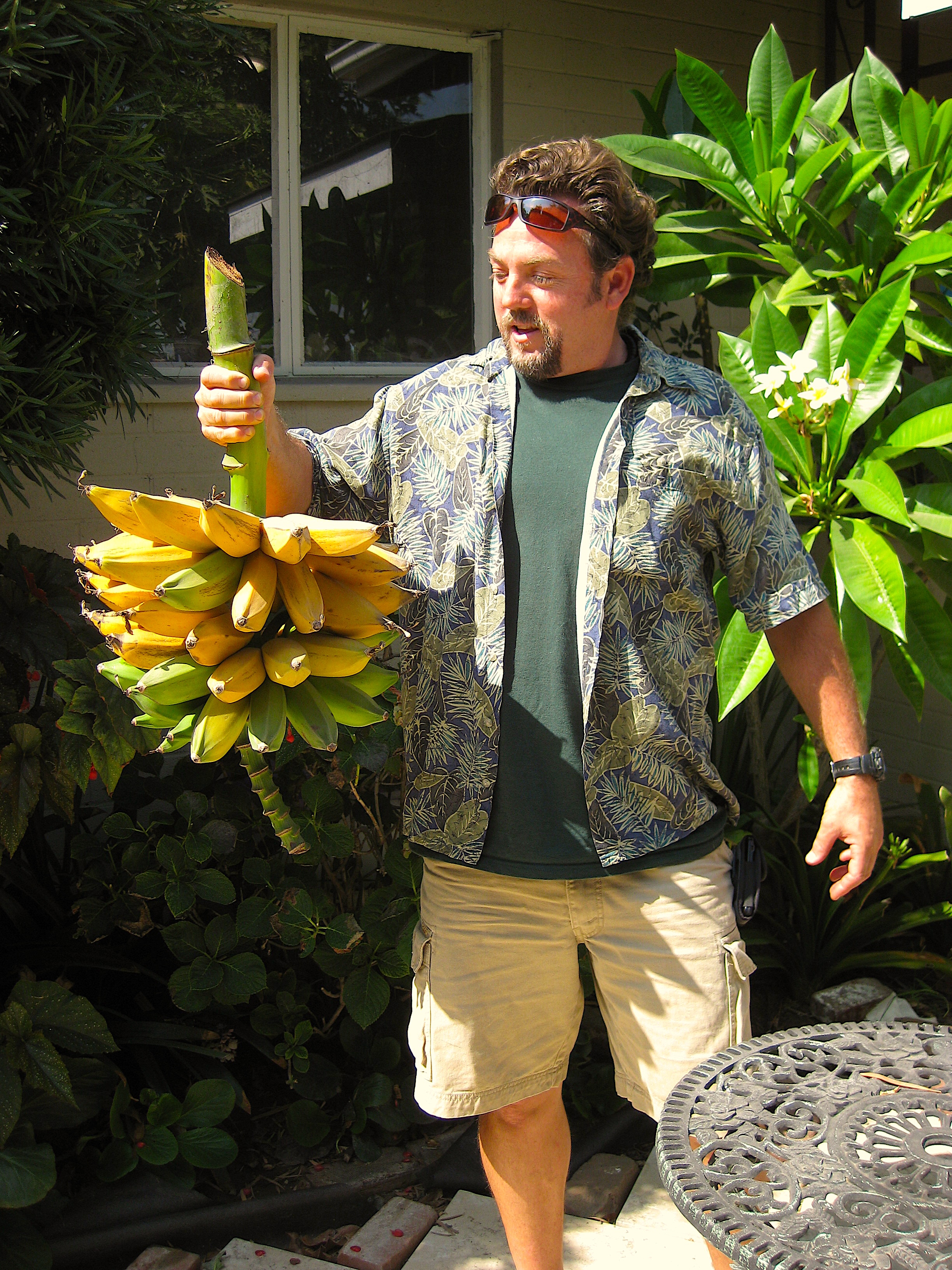
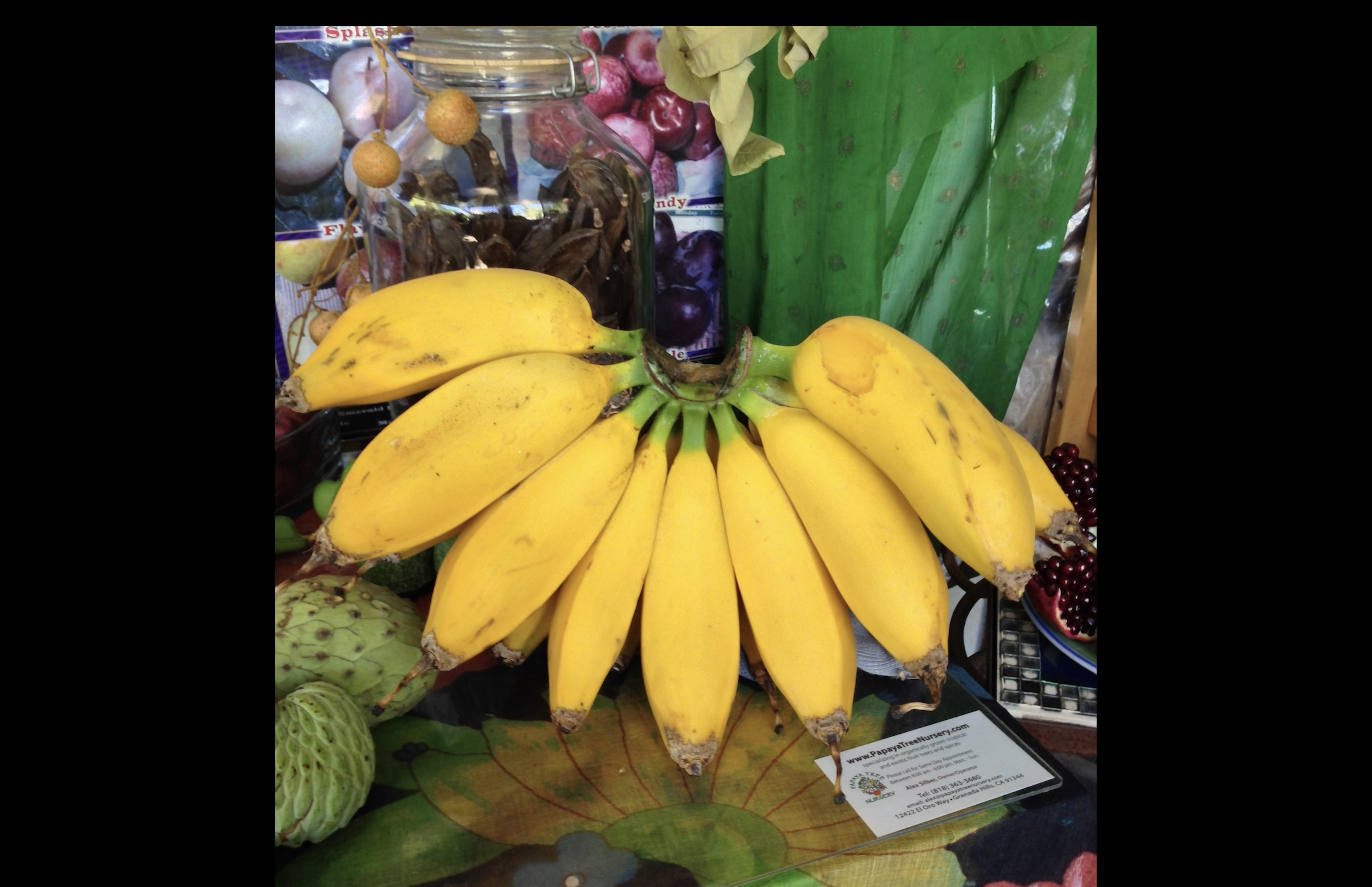
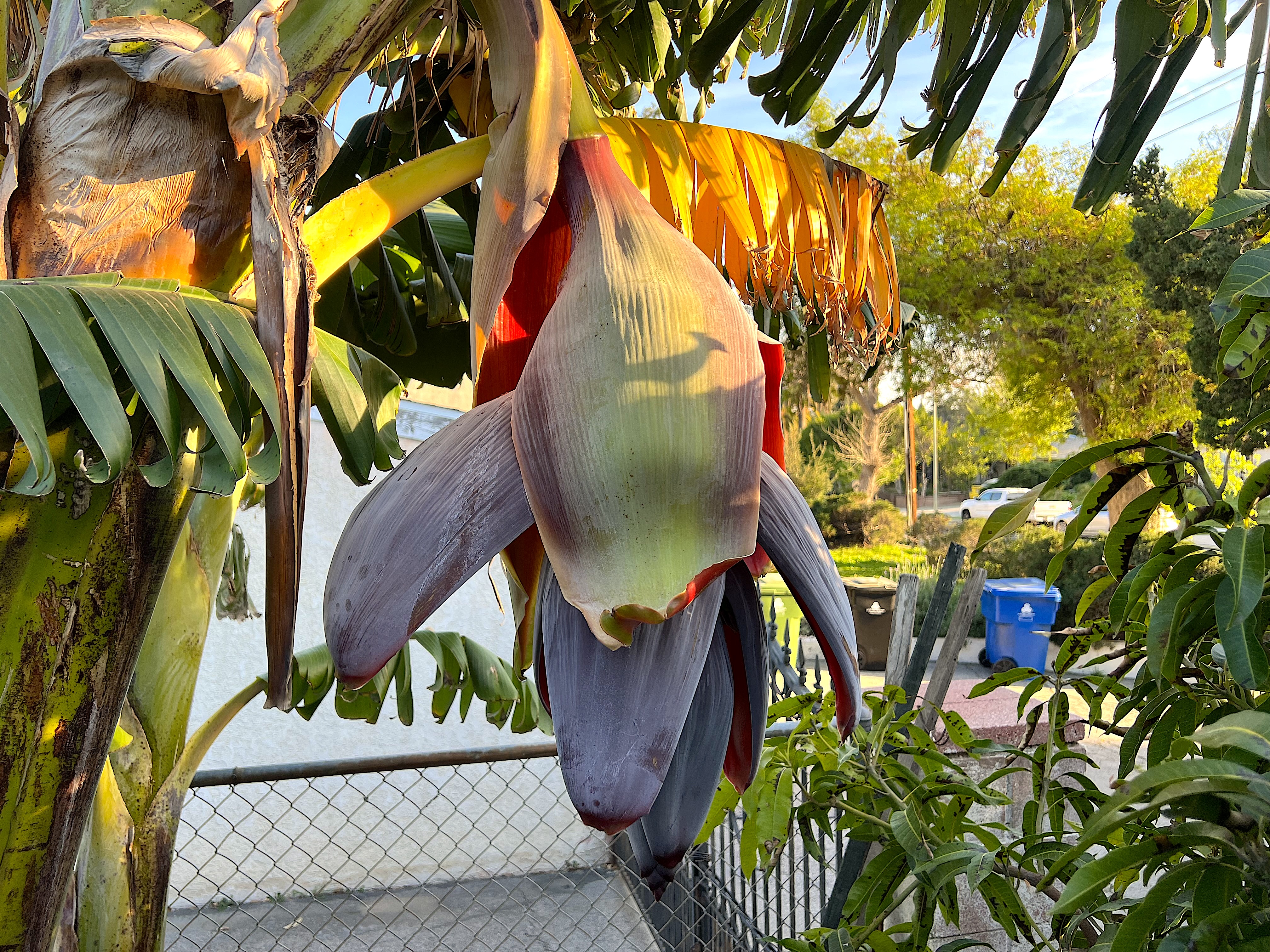
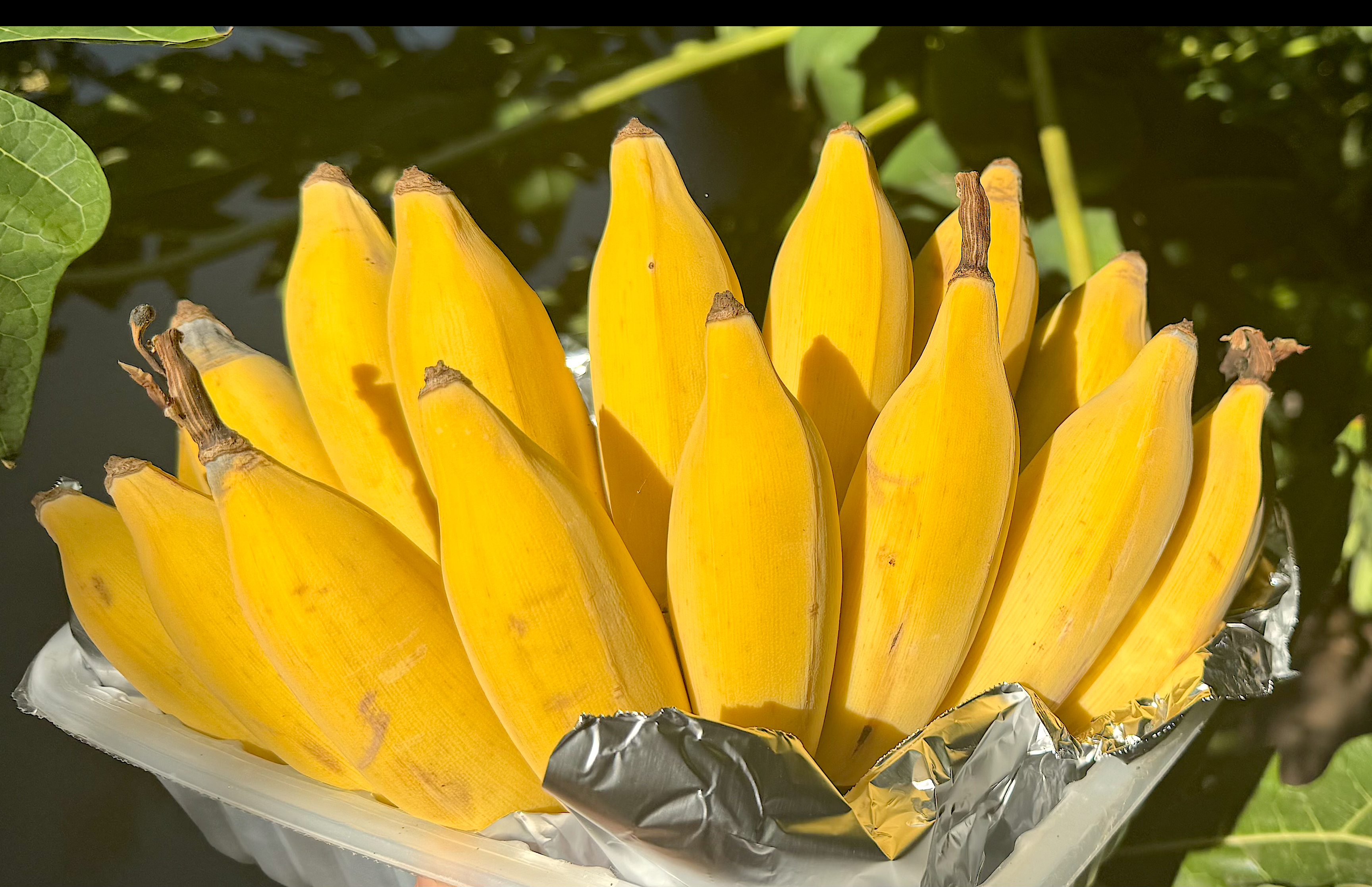
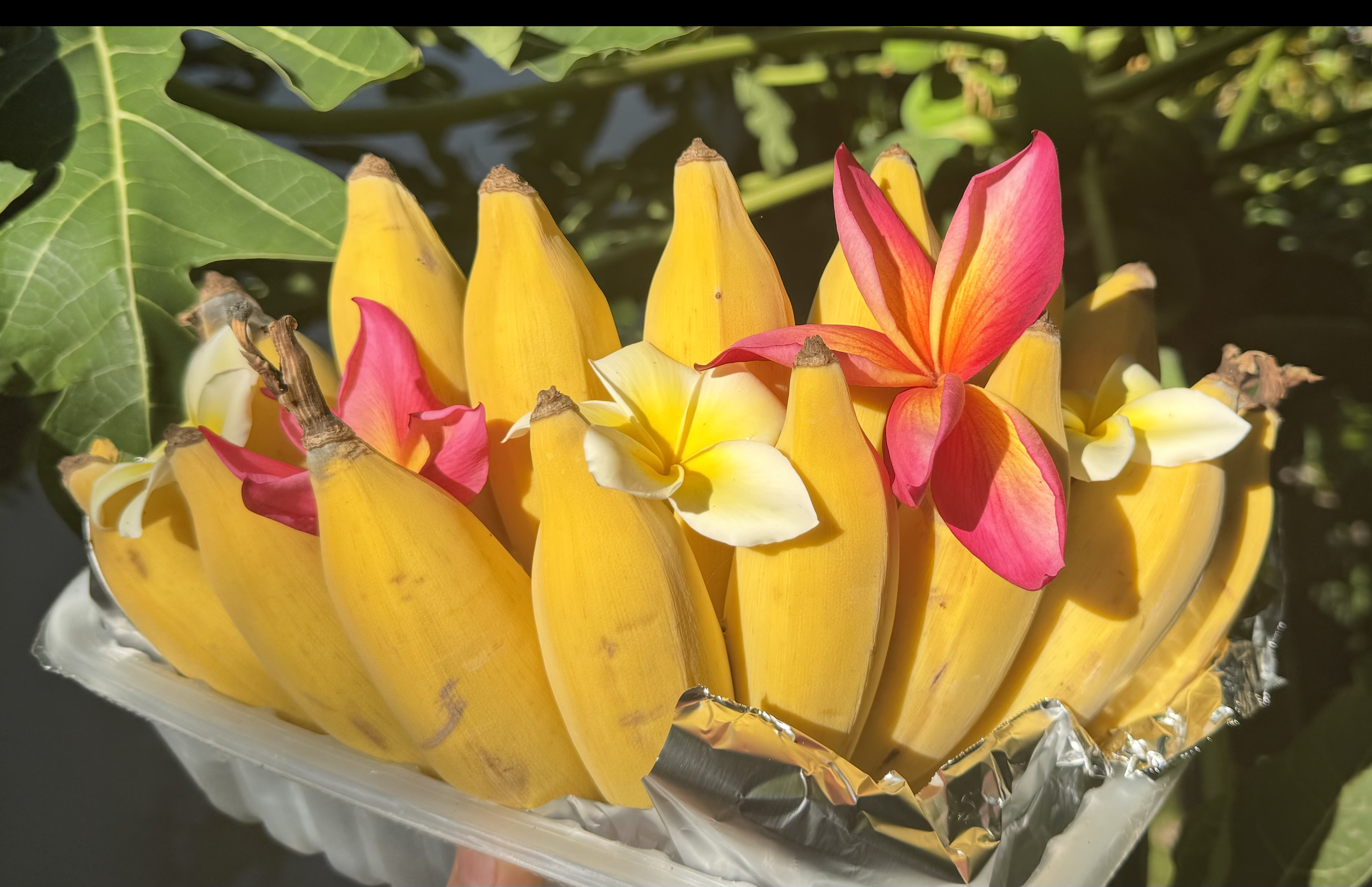
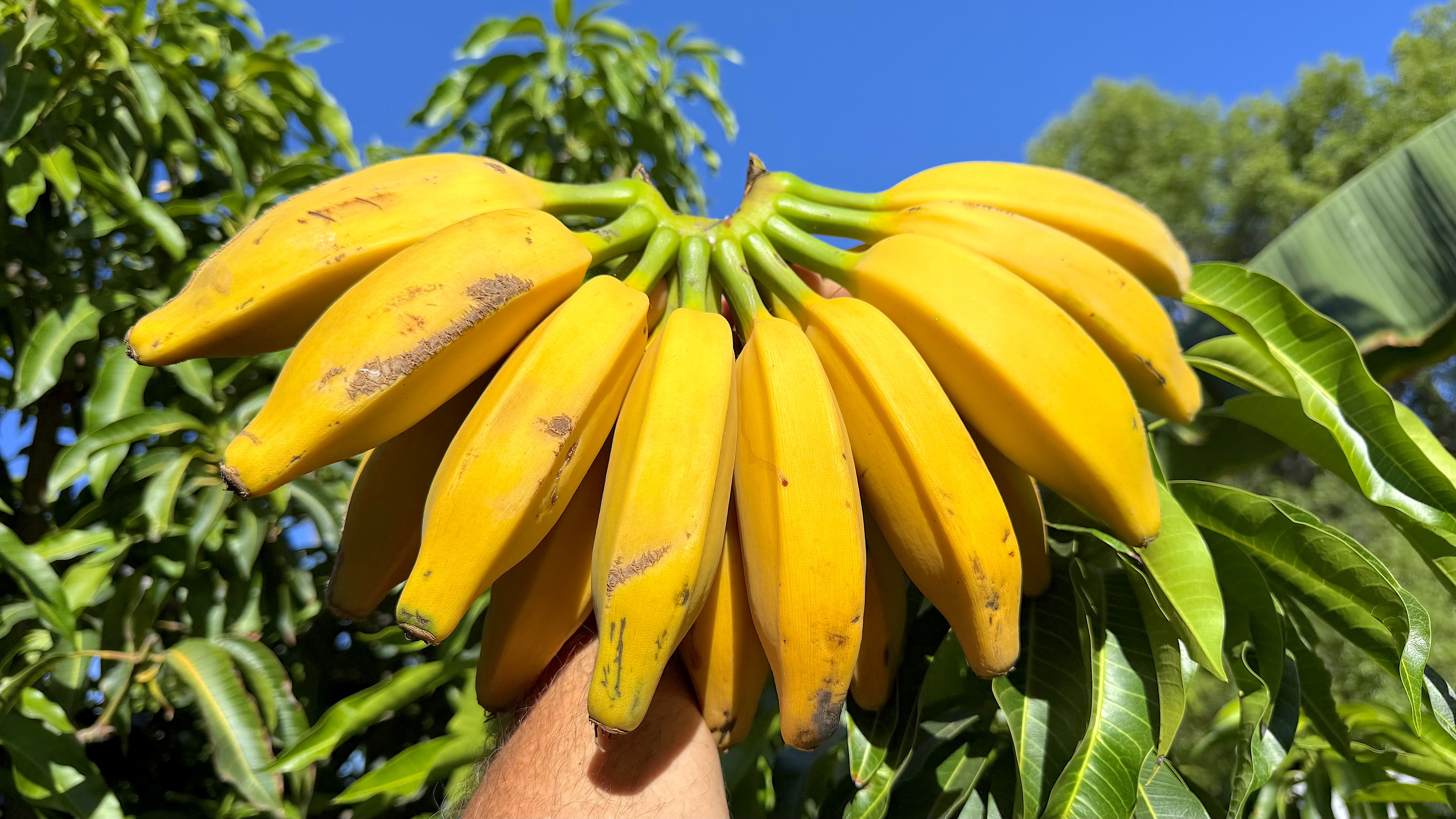
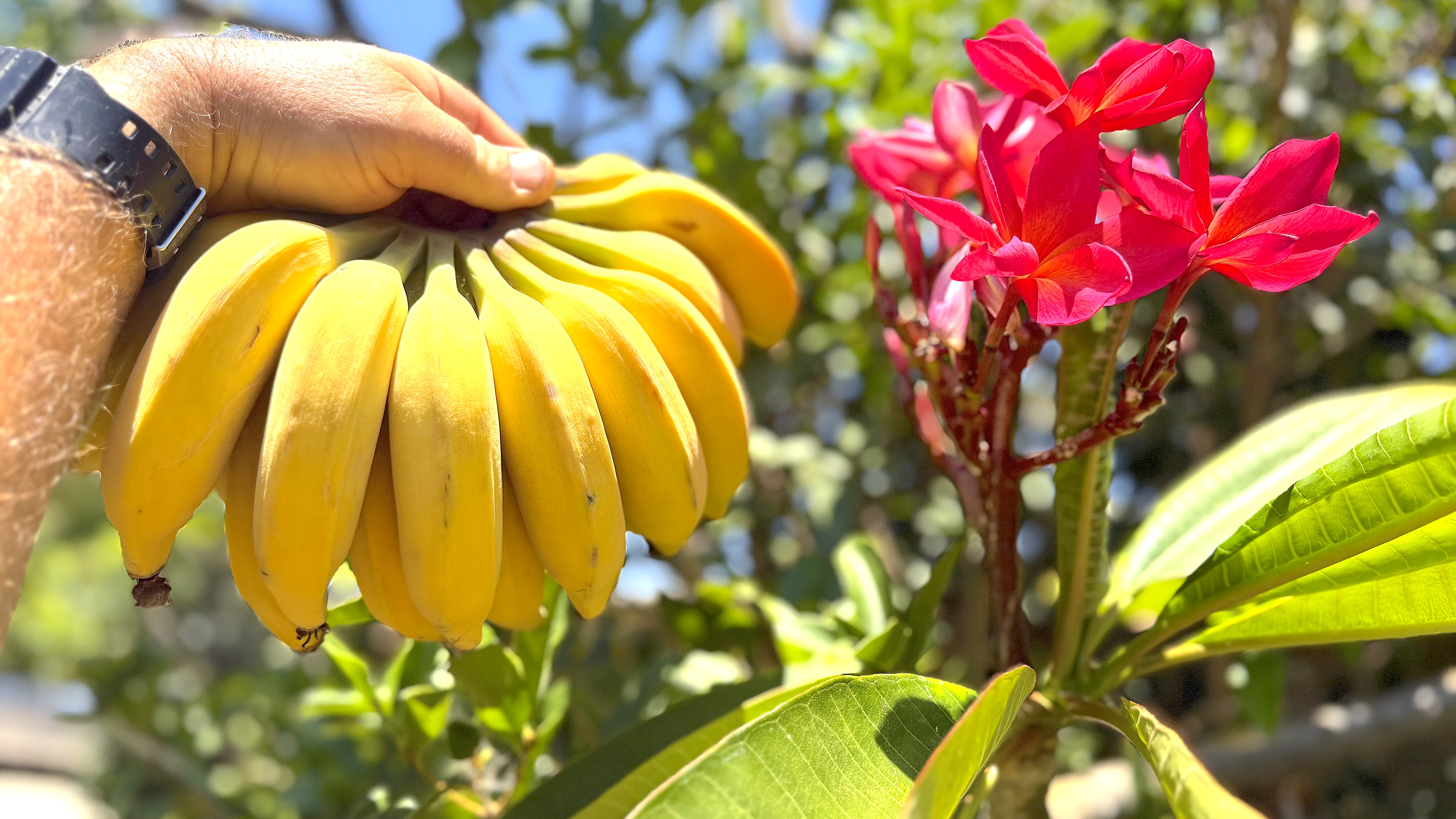
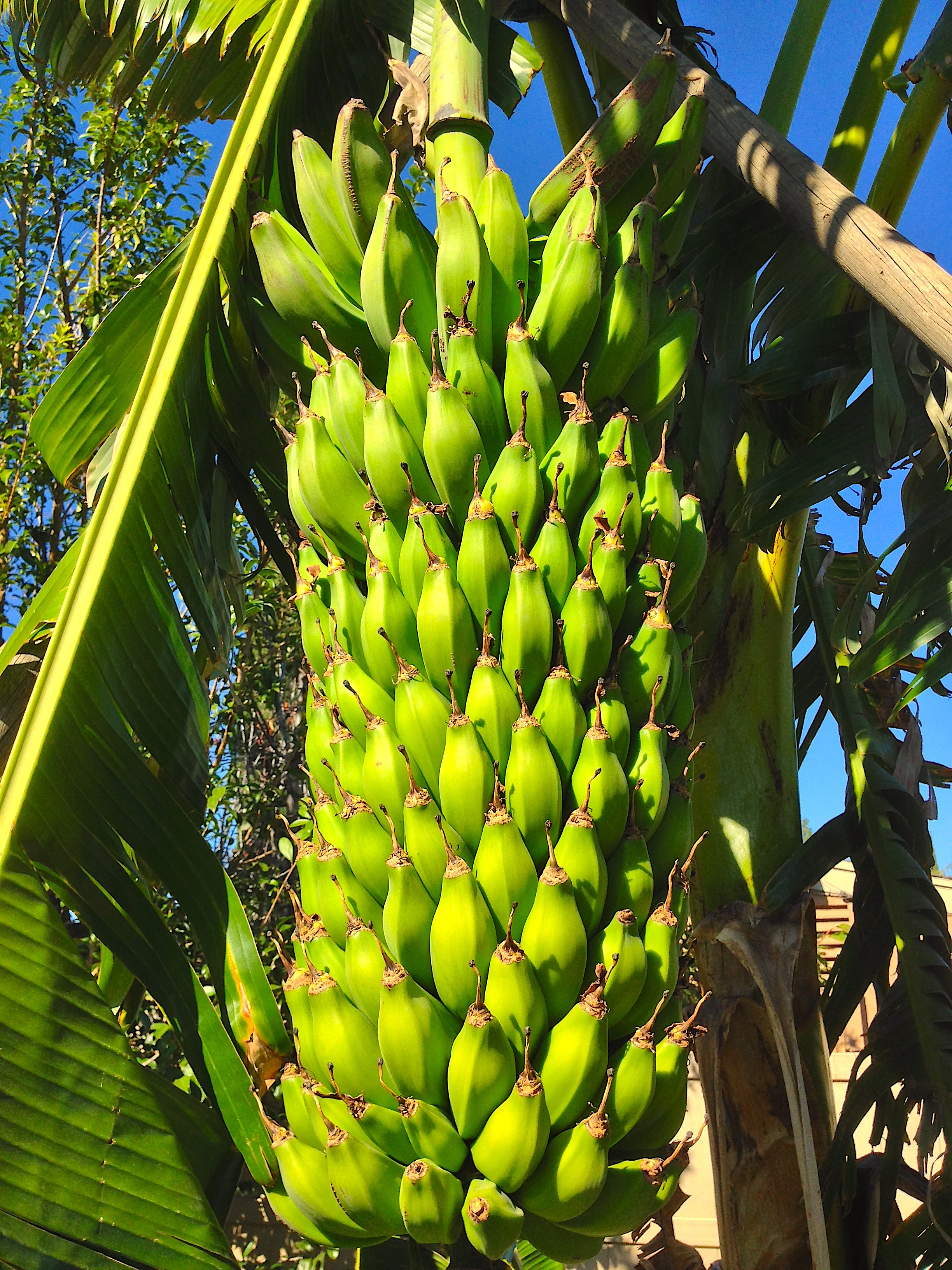
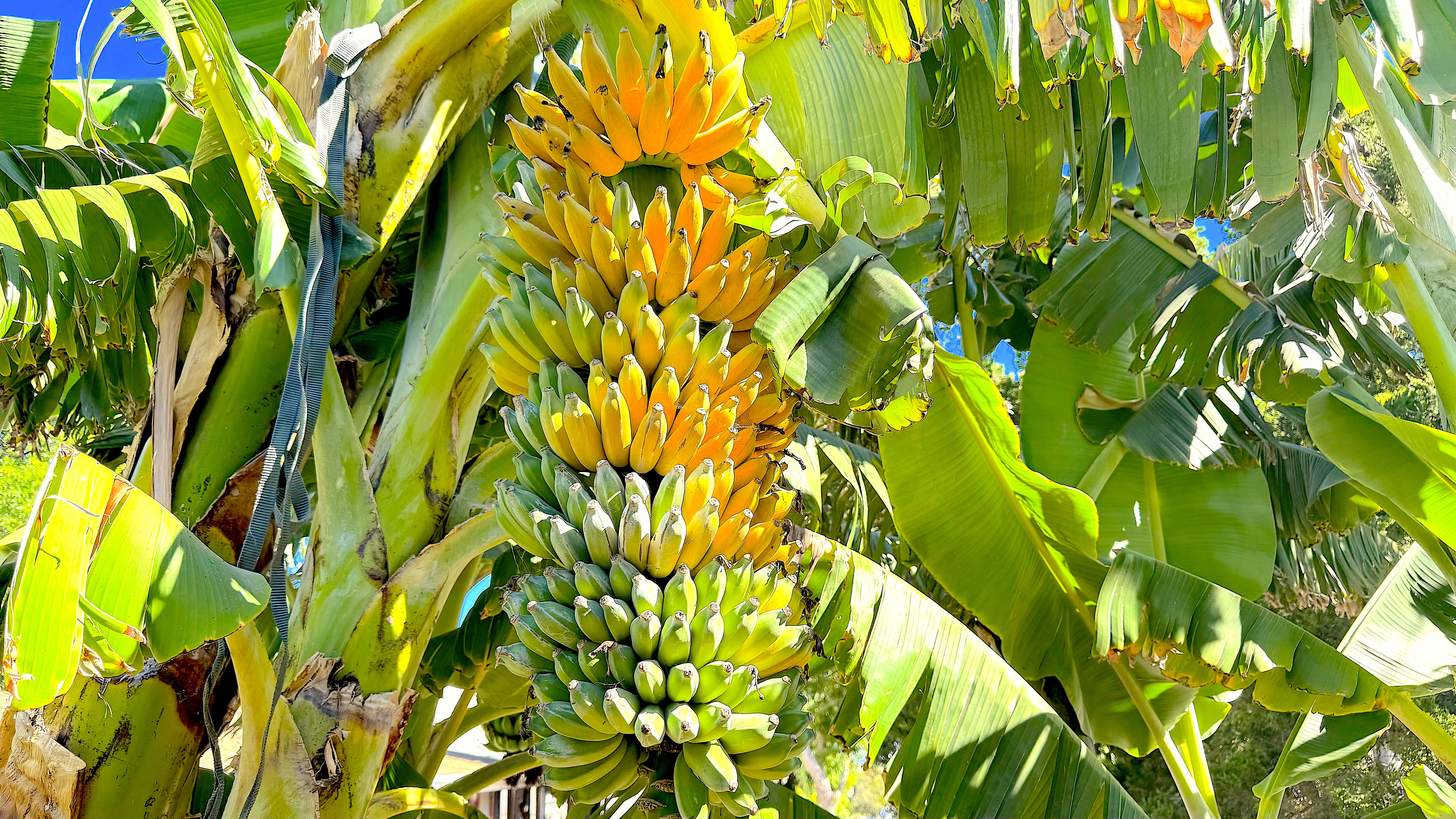
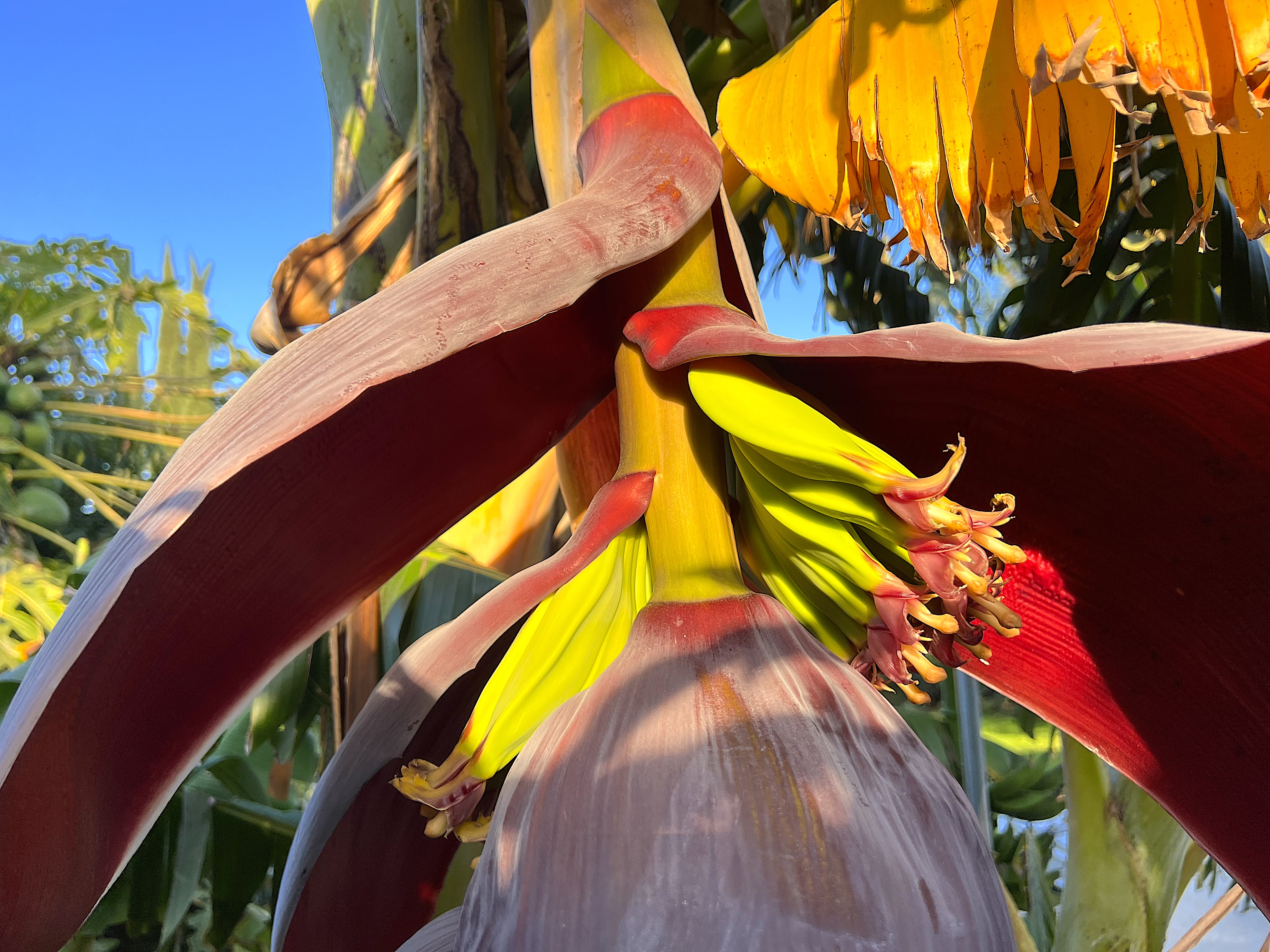
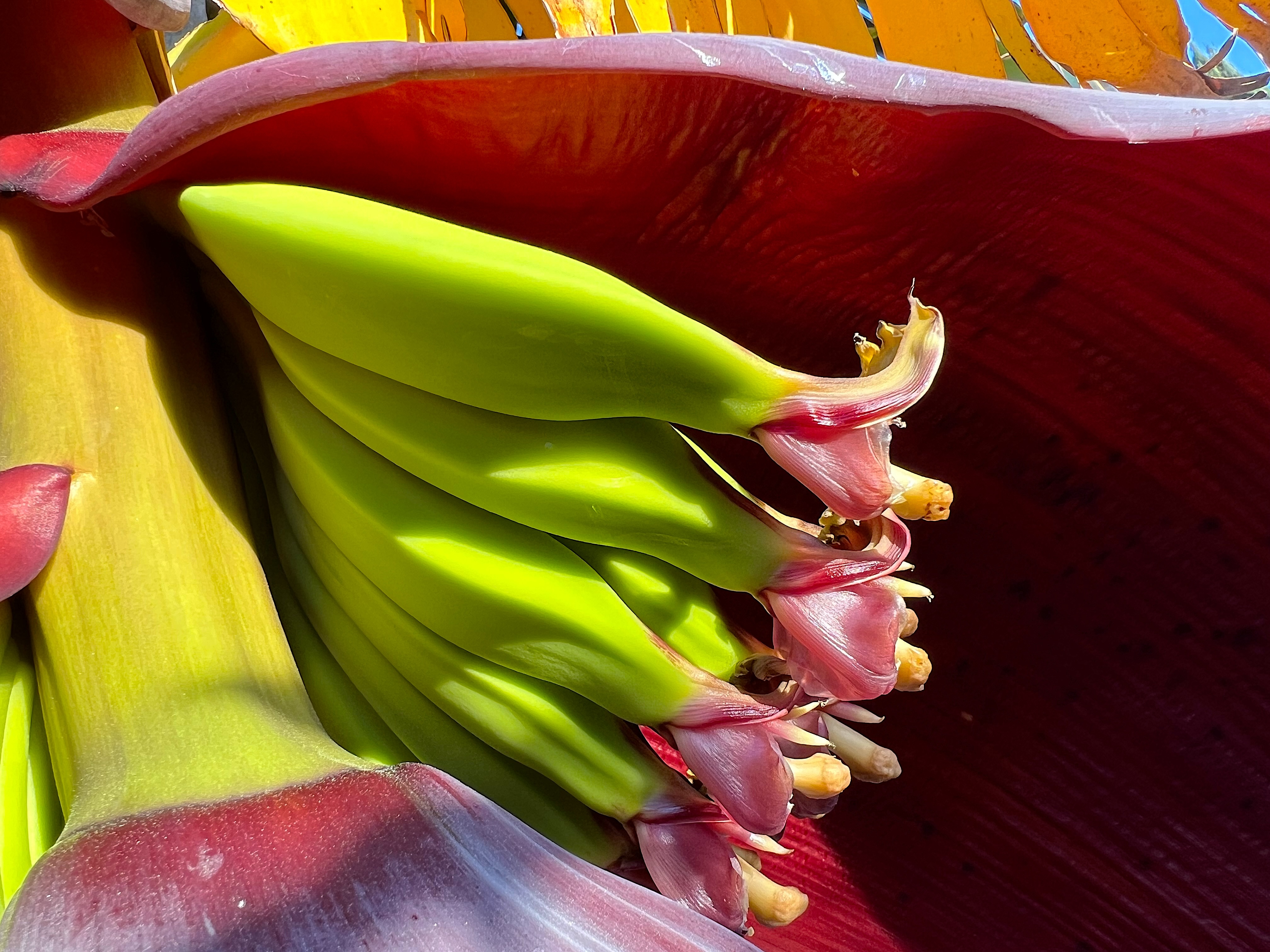
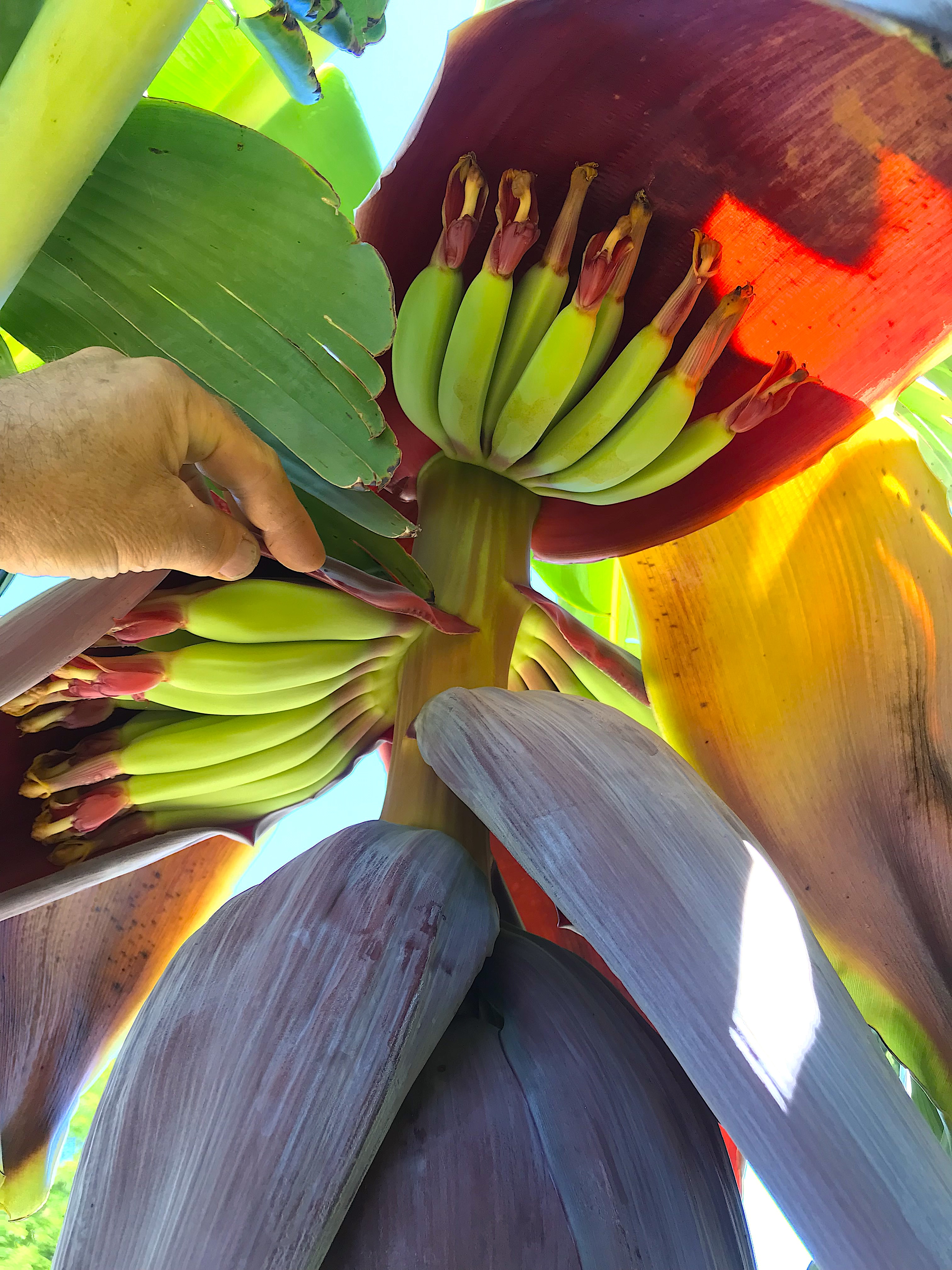
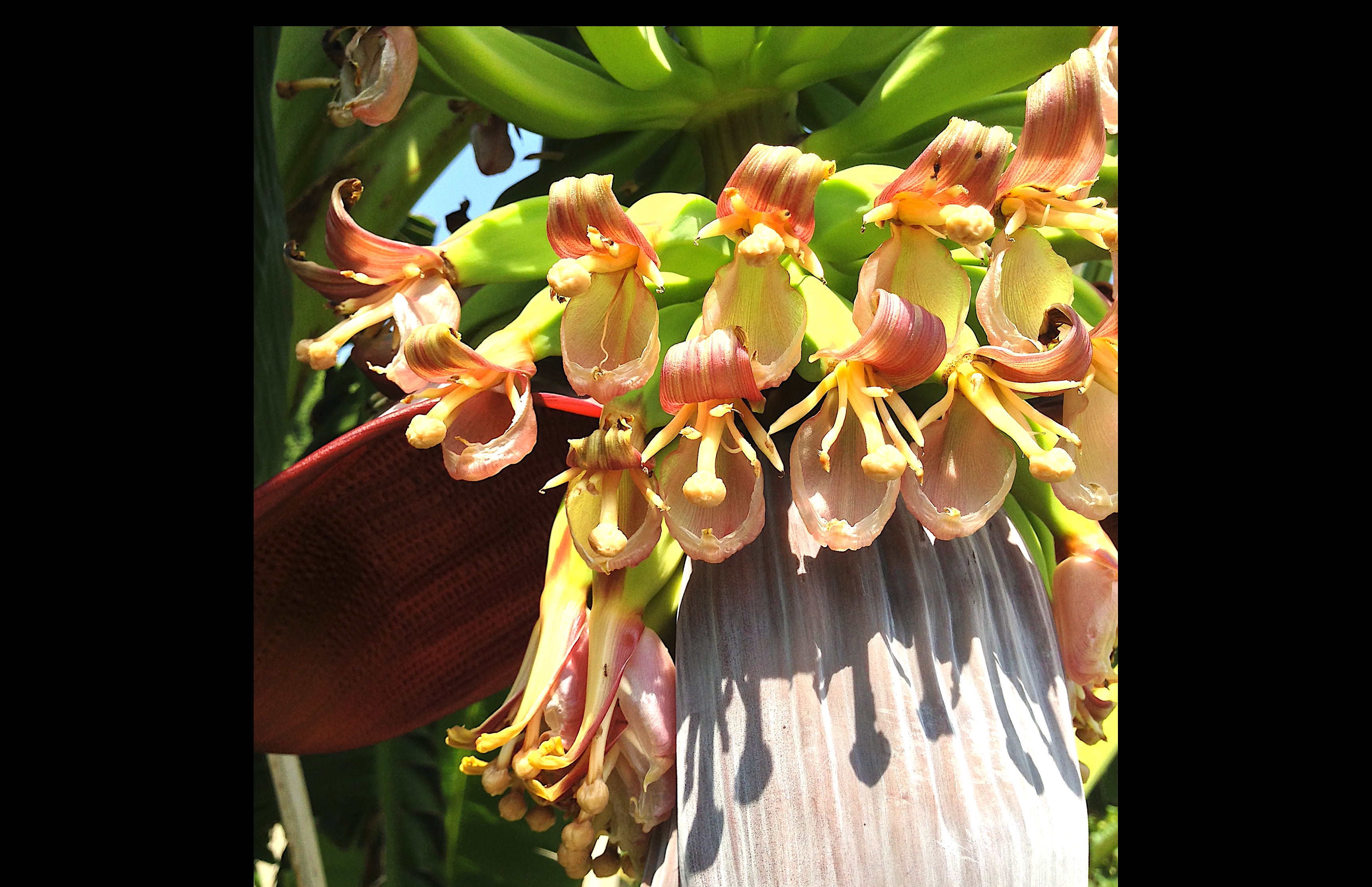
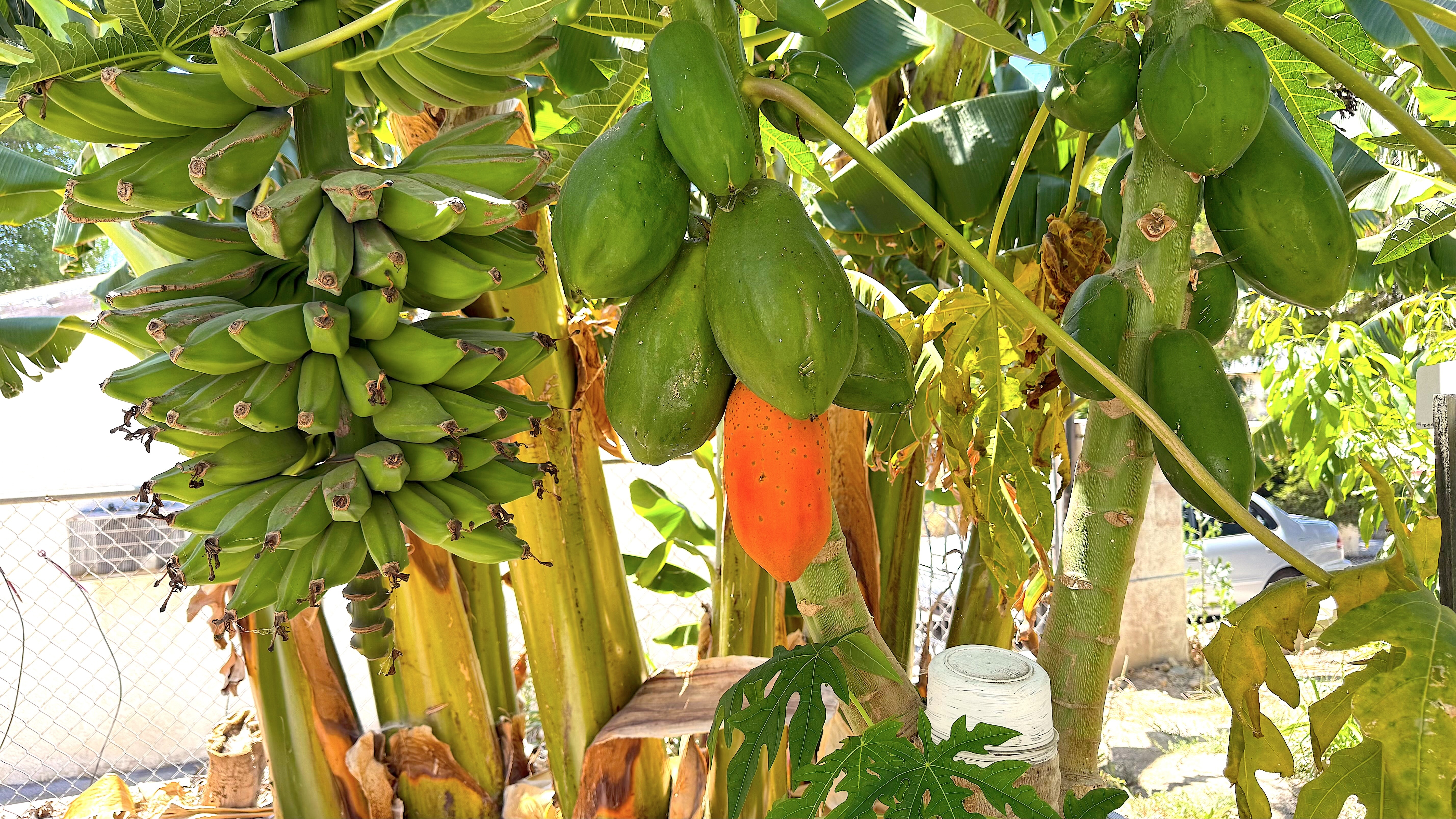
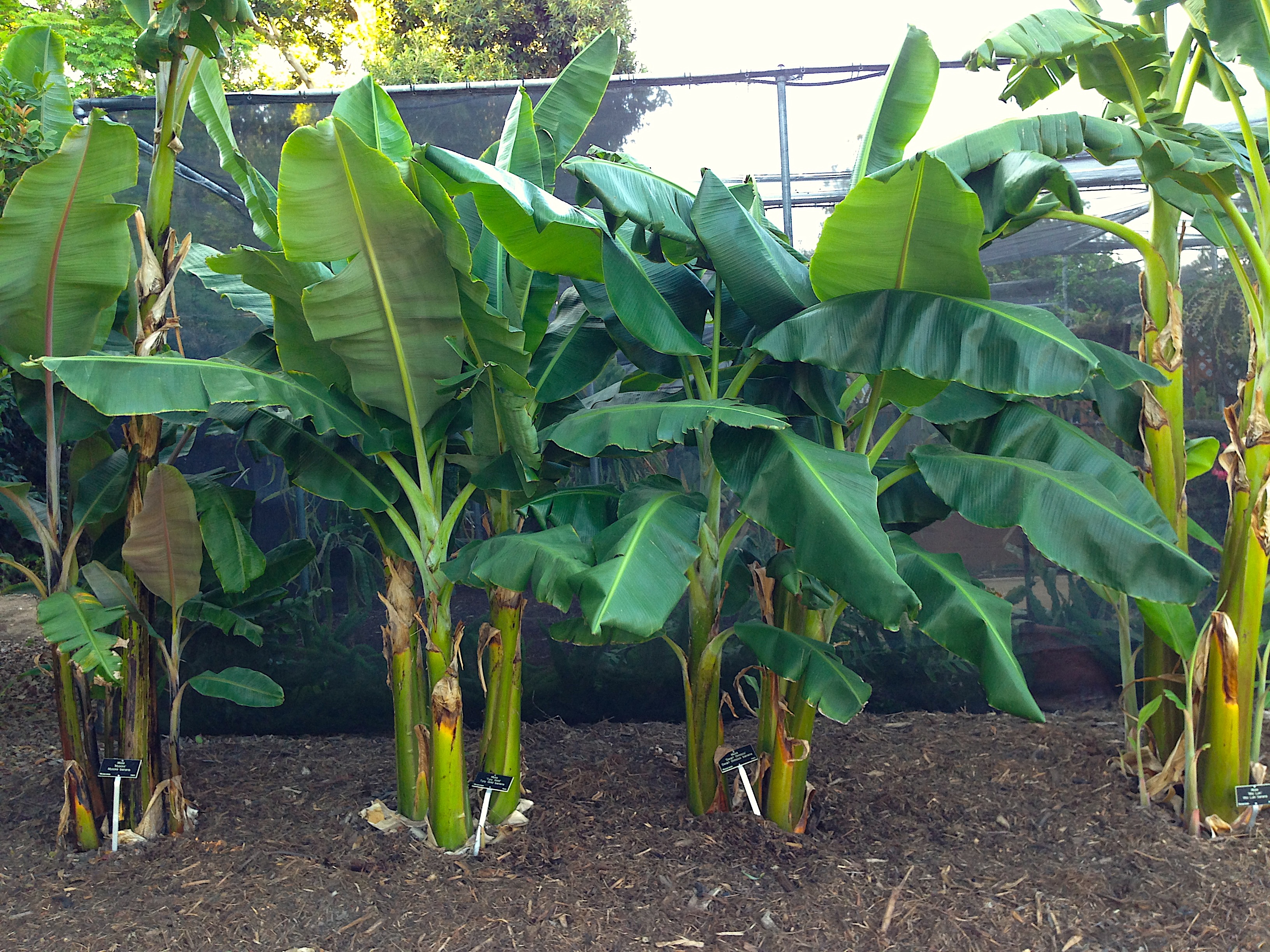
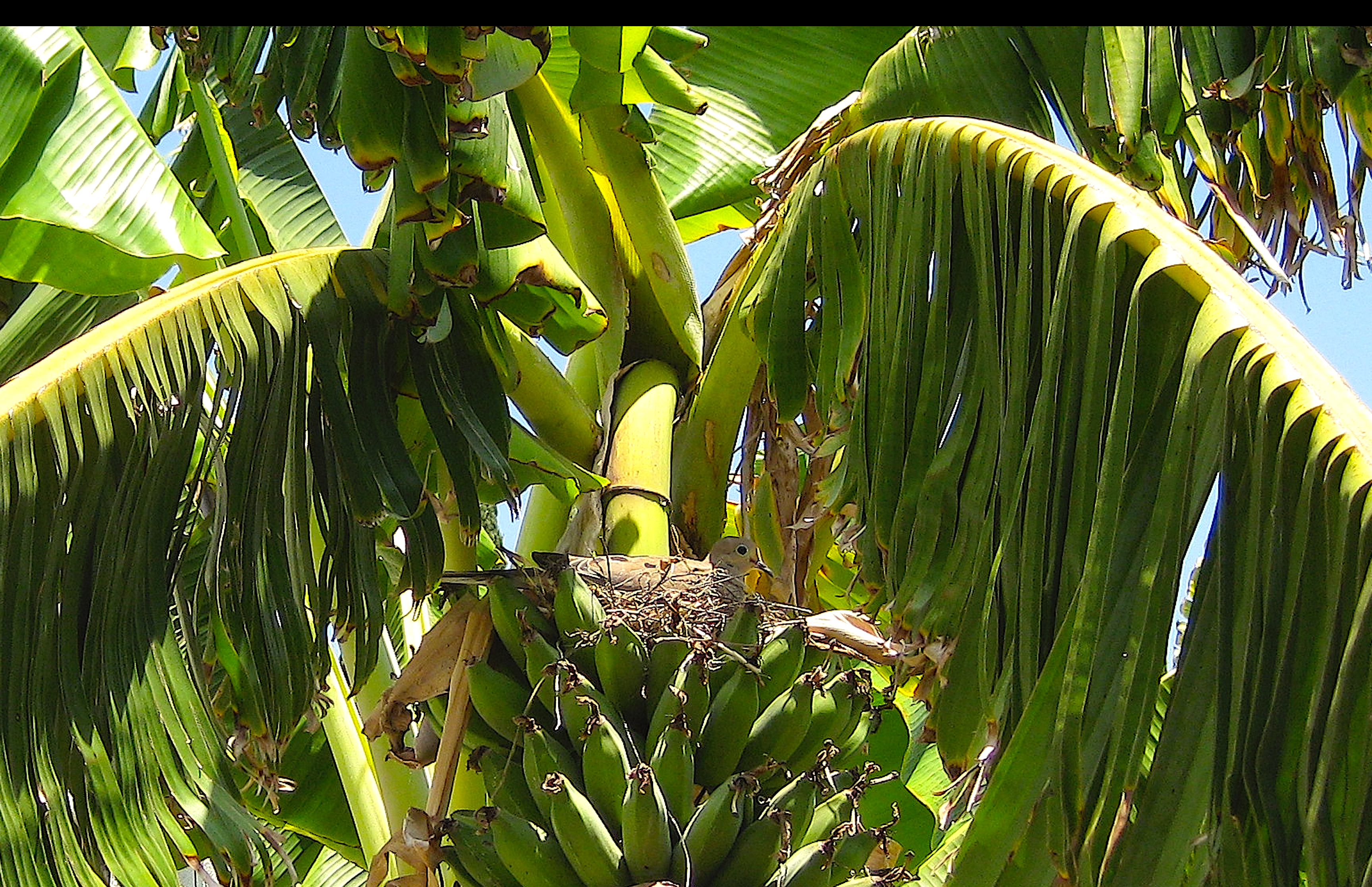
Bananas have always impressed me with their ability to perform relatively well under less-than-ideal care. Every once in a while, I'll come across an attractive clump of fruiting bananas growing in an ideal coastal or semi-coastal location that receives very little attention from the homeowner. Thanks to the banana's naturally vigorous growth habit and favorable growing conditions, the plants often appear healthy and productive despite this hands-off approach. Because the plants continue to grow and produce fruit, it's easy for the grower to think, "If it isn't broken, why fix it?" While this approach usually results in a harvest, the quality and size of the crop often fall well short of the plant's true potential. It is not uncommon to see bunches weighing only 10 to 15 pounds, with smaller, less flavorful individual fruit. In my experience, relatively small improvements in care can produce significantly different results. Regular applications of a balanced fertilizer, generous mulching, proper irrigation, and a few simple cultural practices often increase bunch weights to 30 to 45 pounds or more. Just as importantly, the individual bananas are typically larger, better filled, and of noticeably higher quality. One of the reasons I enjoy growing dessert bananas is that few fruiting plants respond so dramatically to good care. The additional effort is modest, but the improvement in both yield and fruit quality can be truly impressive.
| Common Name | Banana (Dessert Types) |
| Scientific Name/Synonyms | Musa × paradisiaca |
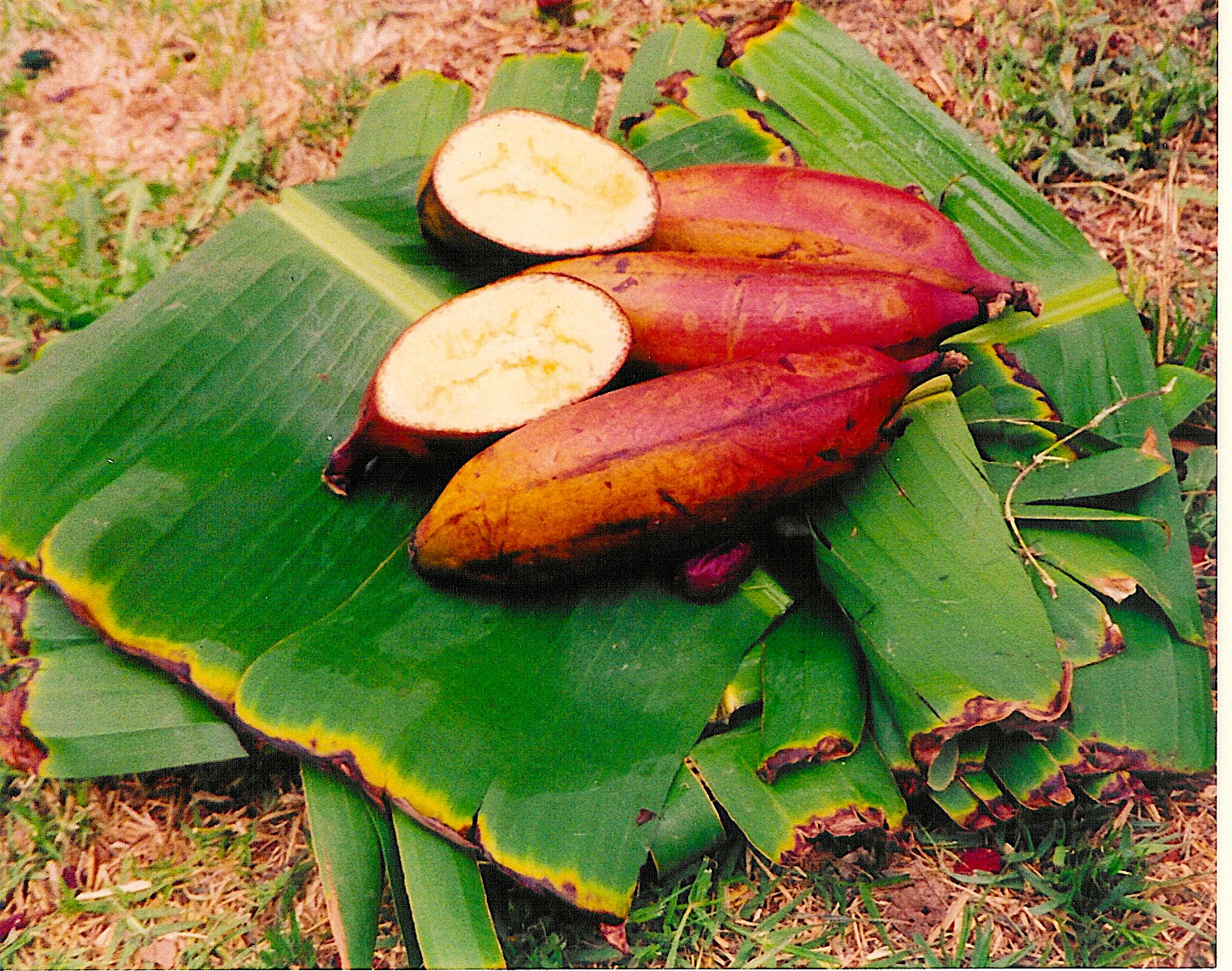
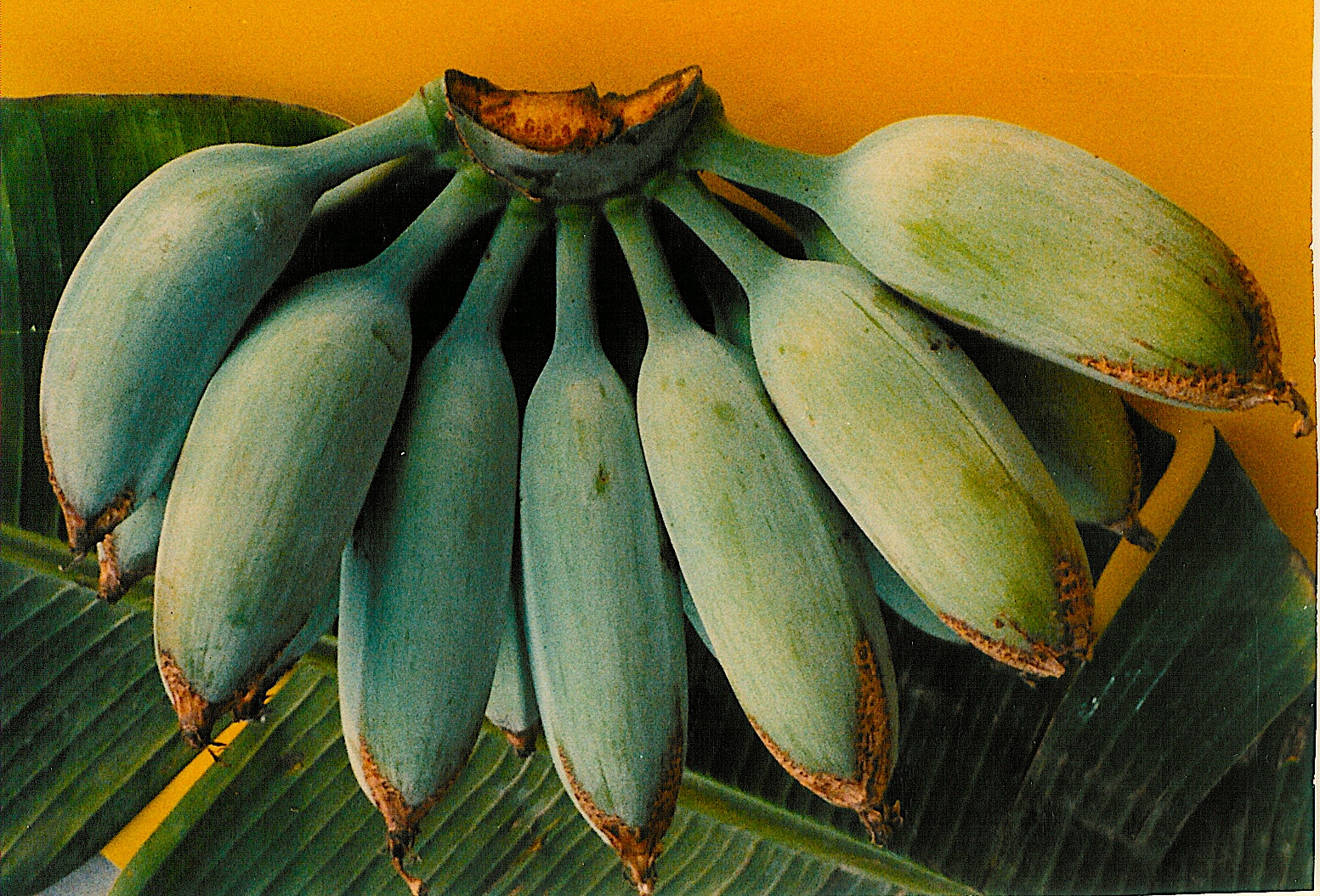
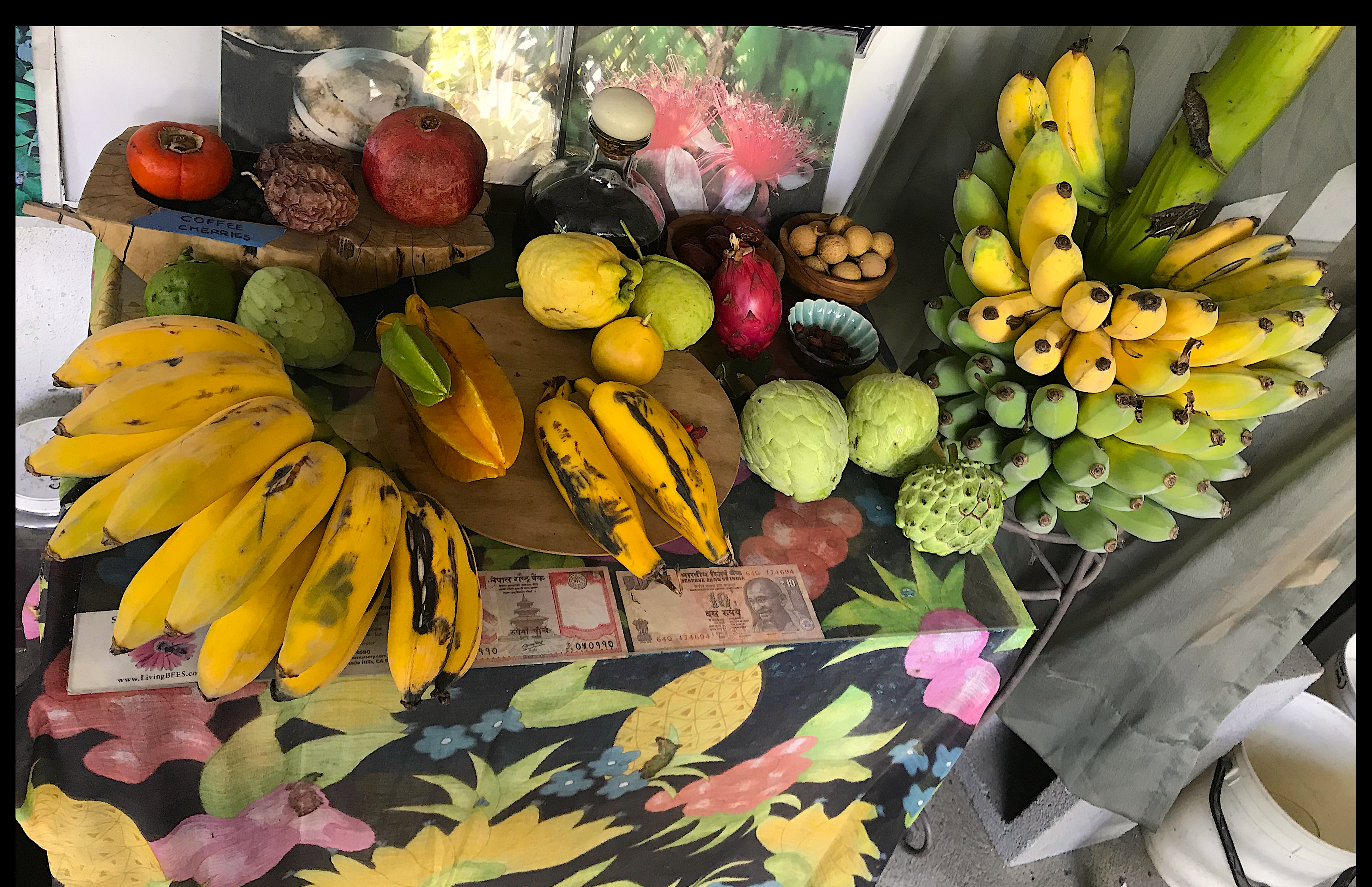
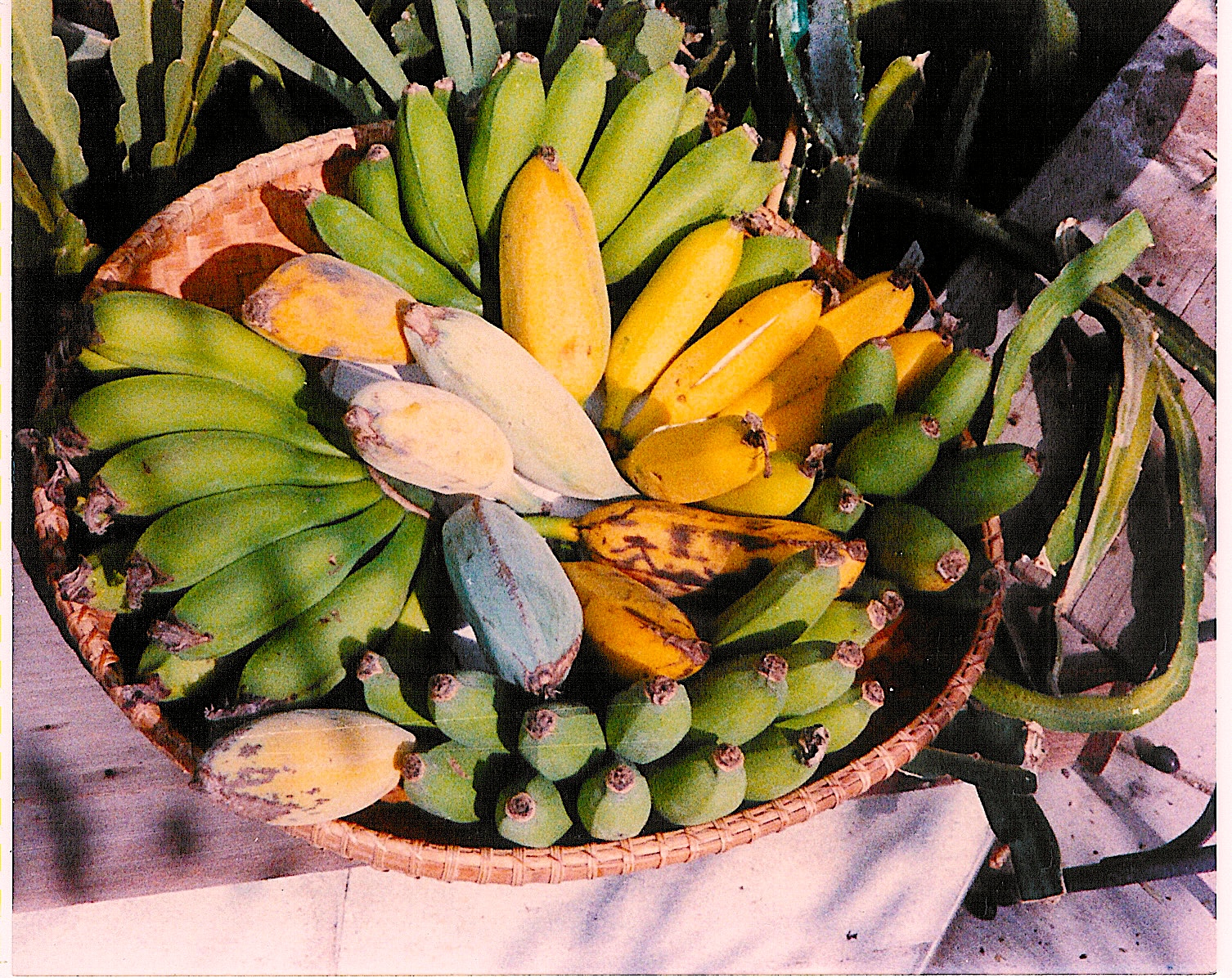
| Cultivars/Varieties | Dwarf Brazilian, Dwarf Jamaican Red, Dwarf Namwah, Dwarf Orinoco, Ae Ae, Blue Java (Ice Cream), Goldfinger, Manzano, Misi Luki, Monthan, Sweetheart/FHIA-3 |
| Country of Origin | Cultivated (Derived from Southeast Asian Species) |
| Native Range | Tropical Southeast Asia (Malaysia, Indonesia, Papua New Guinea, and the Philippines) |
| Also found in other Regions | (India has been one of the world's oldest and most important centers of banana cultivation for thousands of years.) Today, dessert bananas are widely cultivated throughout tropical and subtropical regions, including Central & South America, the Caribbean, Hawaii, Tropical Africa, Australia, Florida, and Southern California |
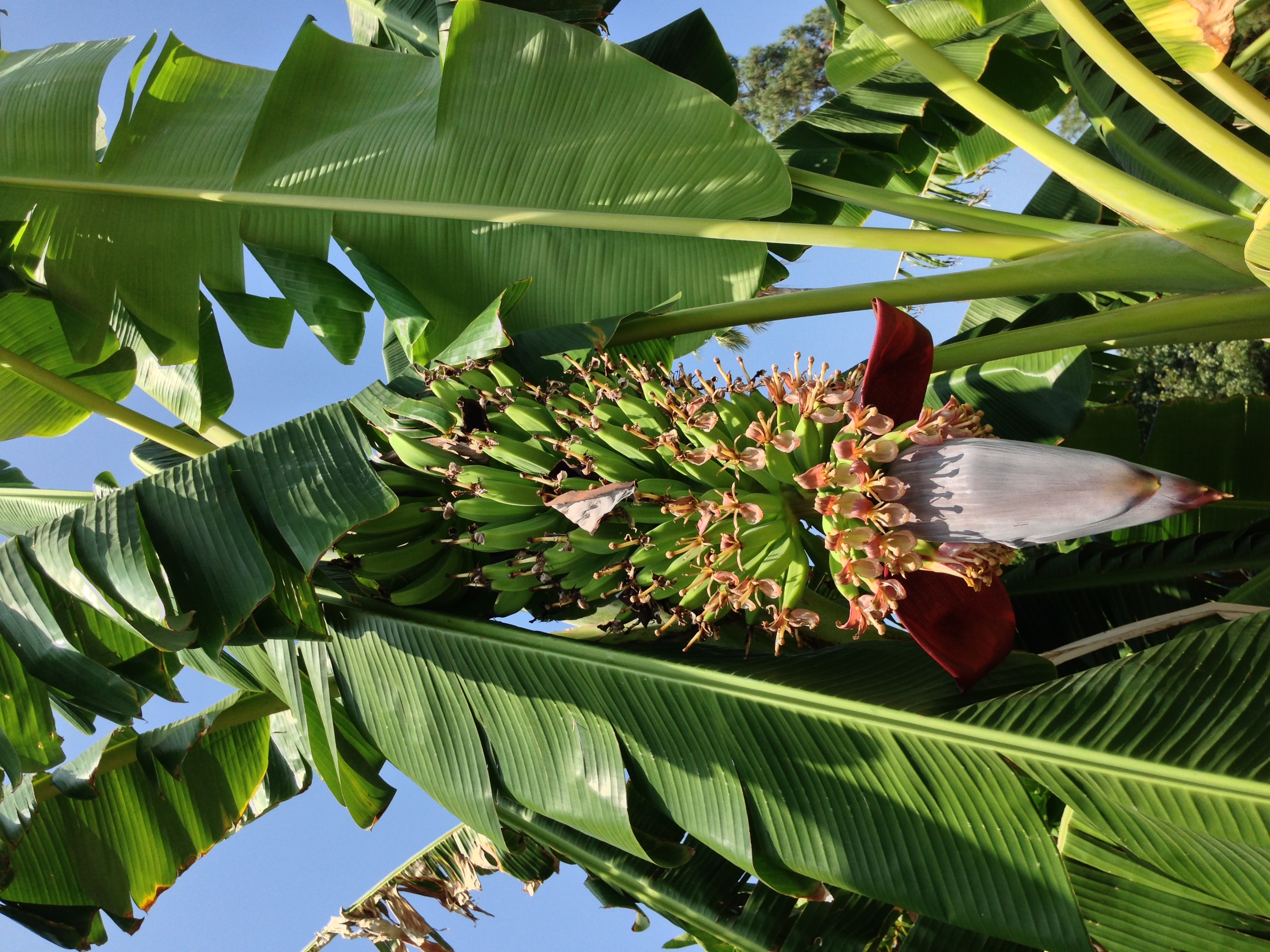
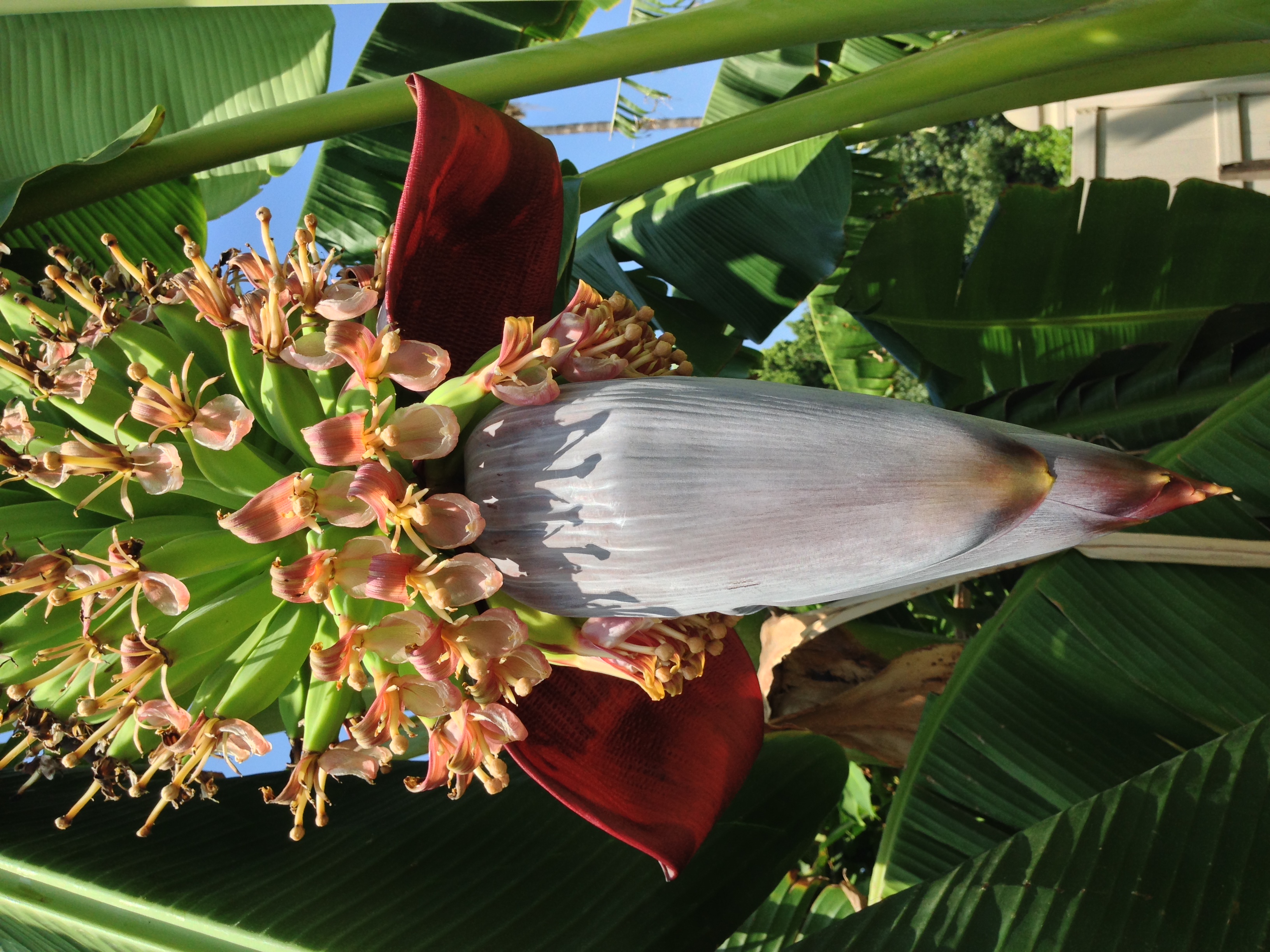
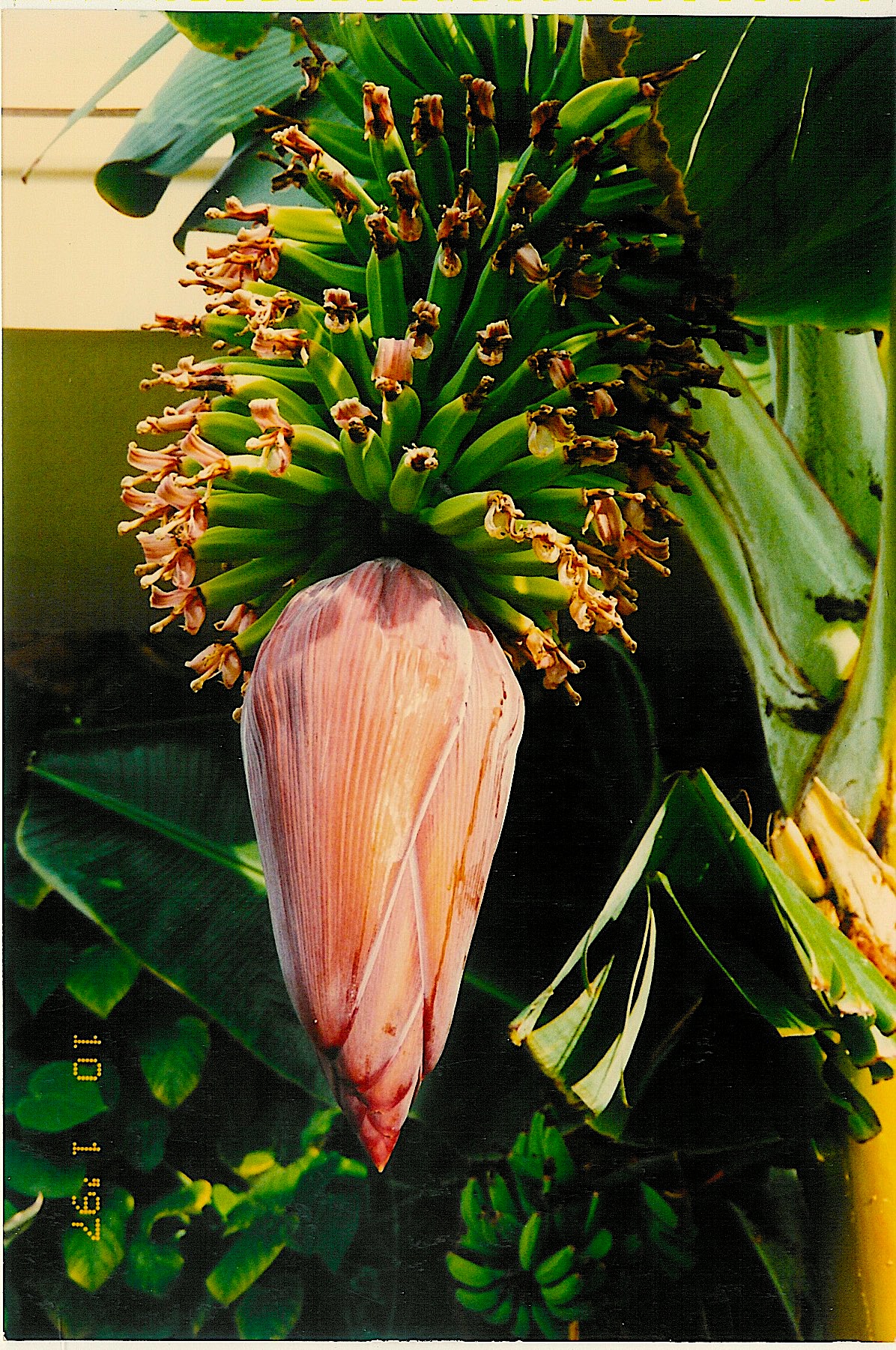
| Description | Dessert bananas are among the easiest and most rewarding tropical fruits to grow in Southern California. Unlike the common supermarket banana, these carefully selected cultivars offer an impressive range of flavors, textures, and aromas that are rarely experienced outside tropical growing regions. Many home gardeners are surprised to discover that a freshly harvested, plant-ripened banana can be significantly sweeter, creamier, and more flavorful than commercially grown fruit. Modern dessert bananas are believed to have originated from natural hybrids between two wild Southeast Asian species, Musa acuminata and Musa balbisiana. Over thousands of years, these naturally occurring hybrids were selected and propagated for their seedless fruit, improved flavor, and productivity. Today, hundreds of named cultivars are grown throughout the tropics, each possessing its own unique characteristics. Although commonly called "banana trees," bananas are actually giant herbaceous perennials. Their apparent trunk, known as a pseudostem, is composed entirely of tightly wrapped leaf bases rather than wood. After producing fruit, the pseudostem naturally dies back and is replaced by vigorous new shoots arising from the underground corm, allowing the planting to remain productive for many years. Many modern dessert banana cultivars have the potential to perform exceptionally well in Southern California when planted in warm, protected locations with fertile, well-drained soil and regular irrigation. I personally have fond memories from the rewarding experience of harvesting my first home-grown, dessert-quality banana fruits to share with friends, neighbors and family. Compact selections such as Dwarf Namwah and Dwarf Brazilian are excellent choices for smaller gardens, while larger cultivars such as Blue Java (Ice Cream) and Misi Luki reward growers with vigorous growth, handsome tropical foliage, and exceptional fruit quality. So, whether the color of your thumb is green (or some other color), cultivating bananas at home is usually a thumbs up experience that I can recommend trying. |
| Evergreen/Deciduous | Evergreen Herbaceous Perennial |
| Height x Width | 8–15 ft. tall X 6–10 ft. wide (depending on cultivar & light exposure) |
| Growth Habit | Upright, clump-forming with underground suckers |
| Growth Rate | Very Fast |
| Sun Exposure | Full Sun |
| Cold Hardiness | Approximately 28–32°F (depending on cultivar and duration of cold) |
| Fruit Bearing Age/Height | Typically 12–18 months after planting under favorable growing conditions |
| Suitable To Container Culture | Yes (especially dwarf cultivars) |
| Harvest Period | Summer through Fall (varies with climate, cultivar, and properly timed pup removals) |
| Pollination | Not required. Dessert bananas produce seedless fruit without pollination. (Parthenocarpy) |
| Video | Coming Soon |
When growing bananas in Southern California's hotter inland valleys, be aware that sunburn can harm not only the pseudostem, but also exposed fruit and even the peduncle (fruit stalk). This damage is most common on smaller, weaker plants whose slender pseudostems bend under the weight of the developing bunch. As the plant leans, the angle of the bunch changes, exposing fruit and the peduncle that would normally remain shaded by healthy foliage. One simple solution is to temporarily shade the exposed area. I've had good success securing a gently curved piece of cardboard wrapped in aluminum foil around the sun-exposed side of the pseudostem, fruit bunch, or peduncle. This makeshift sun shield reflects excess heat while allowing the fruit to continue developing normally until harvest. Healthy, vigorous banana plants usually provide enough foliage to shade the developing fruit naturally. However, plants that are undernourished or carrying unusually heavy bunches are far more likely to benefit from this temporary protection.
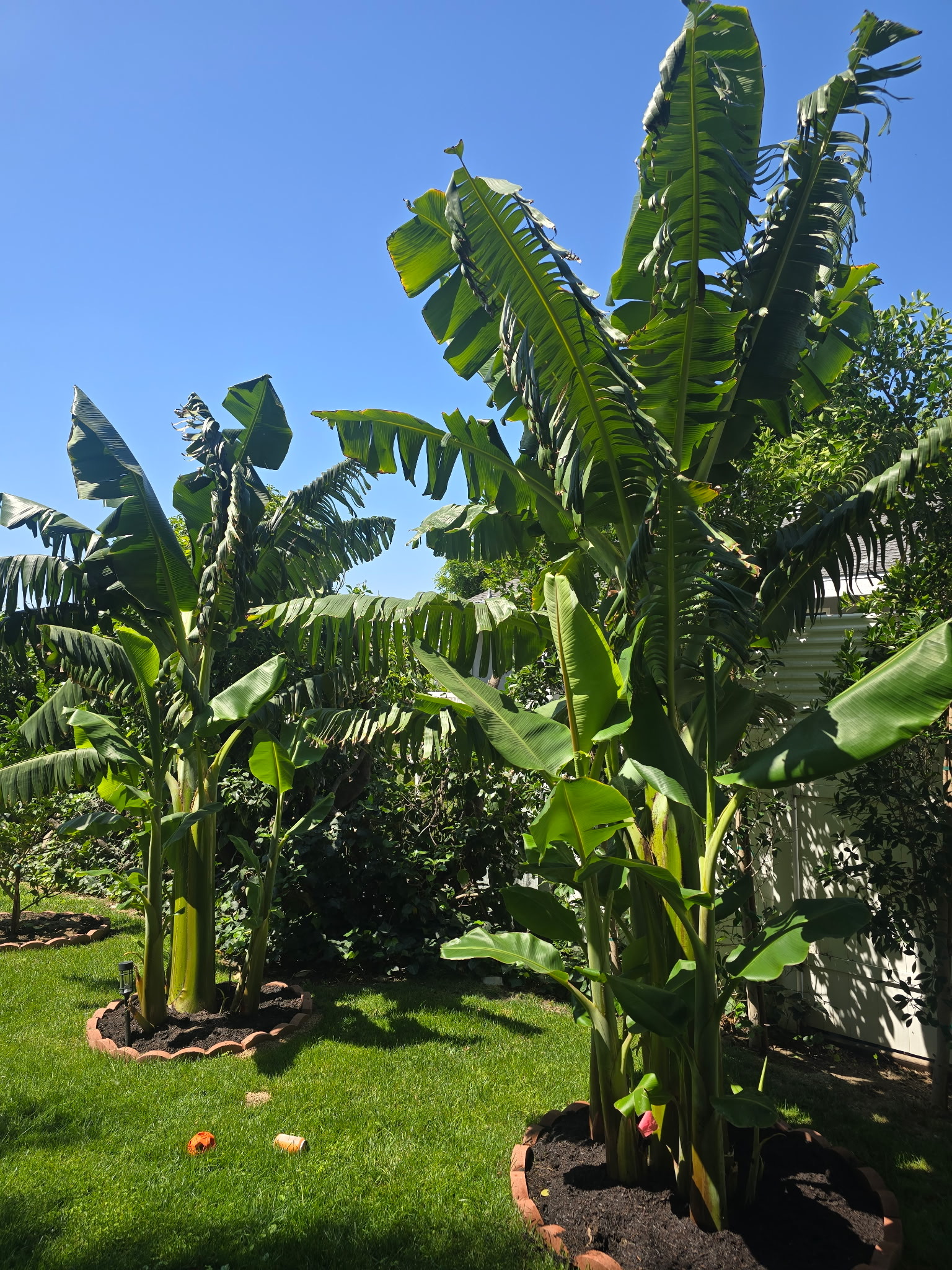
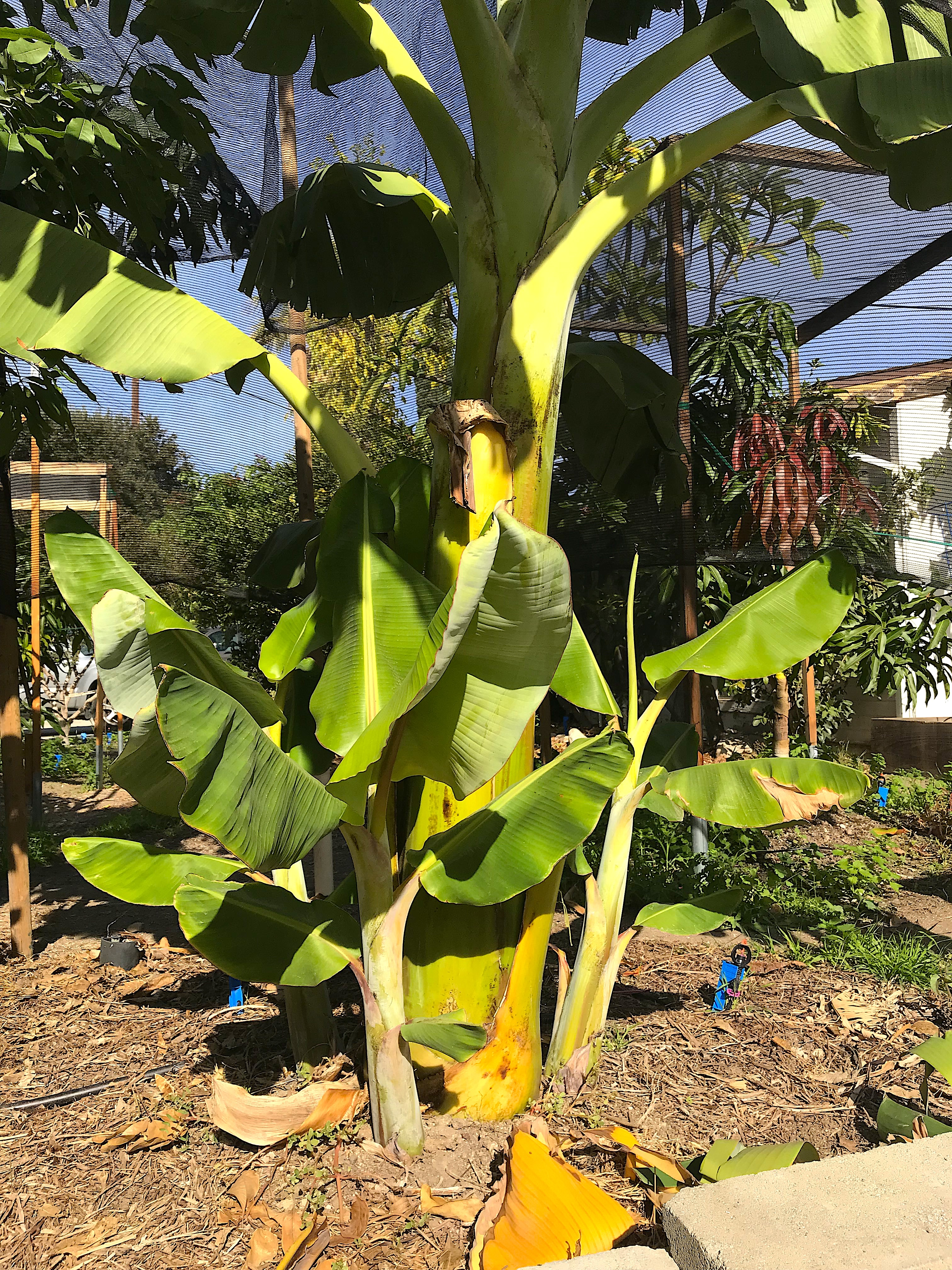
You did almost everything right...you prepared the soil, selected a quality, proven cultivar, planted it in a suitable location, and provided proper fertilizer, mulching, and adequate irrigation. Yet despite all that effort, you overlooked one important maintenance practice—the timely removal of excess banana pups. Here's a simple rule of thumb. Once your banana planting is established and you've identified the largest or mother plant, allow only one vigorous pup to develop as its replacement. Remove the remaining pups when they are approximately 12 to 24 inches tall, before they begin competing for water and nutrients. By concentrating the plant's energy on just two generations—the fruiting mother plant and its successor—the plant will reward you by producing larger bunches, better-quality fruit, and a healthier banana mat overall. Do this one thing consistently, and your friends may start asking what the secret is behind your standout banana harvests.