| Description |
While the edible fruit known as the Persimmon consists mainly of the following two separate species: the Oriental (Diospyros kaki), and the American (D. virginiana), only varieties of the Oriental, aka Japanese persimmon, will be discussed here.
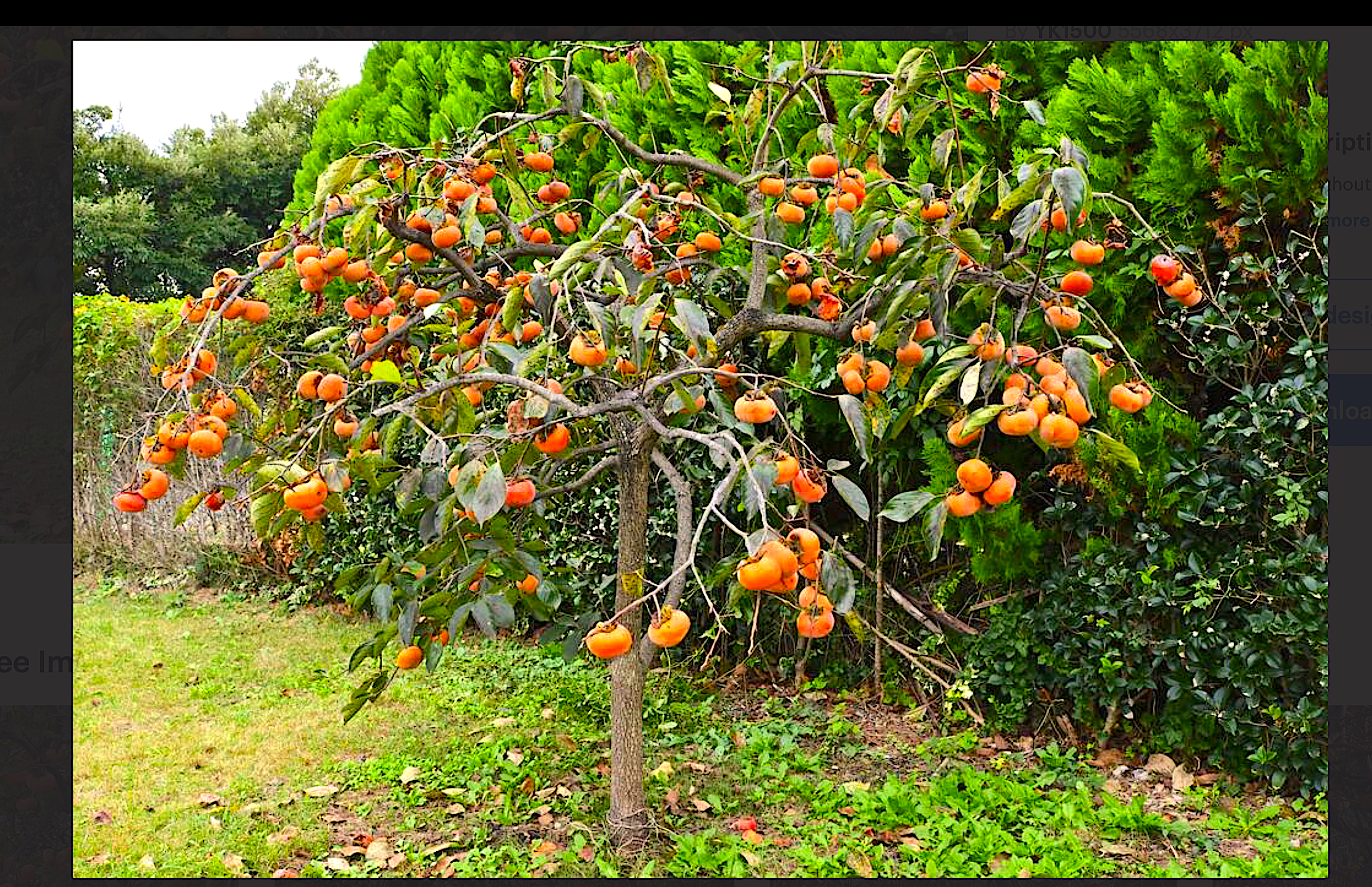
The relatively easy-to-grow Oriental persimmon (Diospyros kaki) is an attractive, medium-sized deciduous fruit tree native to several provinces of central and southern China, including Anhui, Hubei, Shaanxi, Sichuan, and Hainan. Revered for both its ornamental beauty and flavorful fruit, this species has been cultivated in China for more than 2,000 years, making it one of the oldest domesticated fruit trees in East Asia.
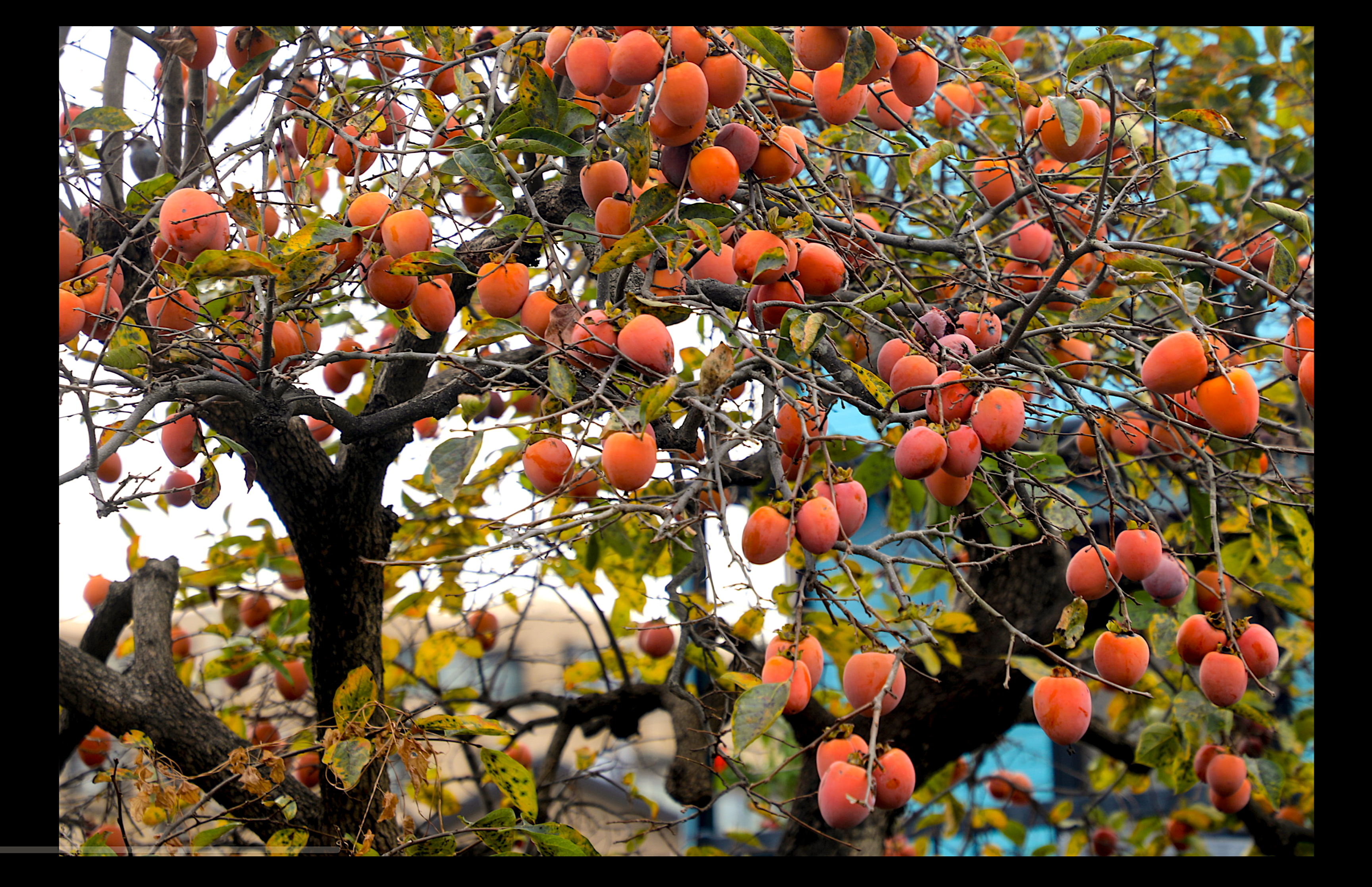
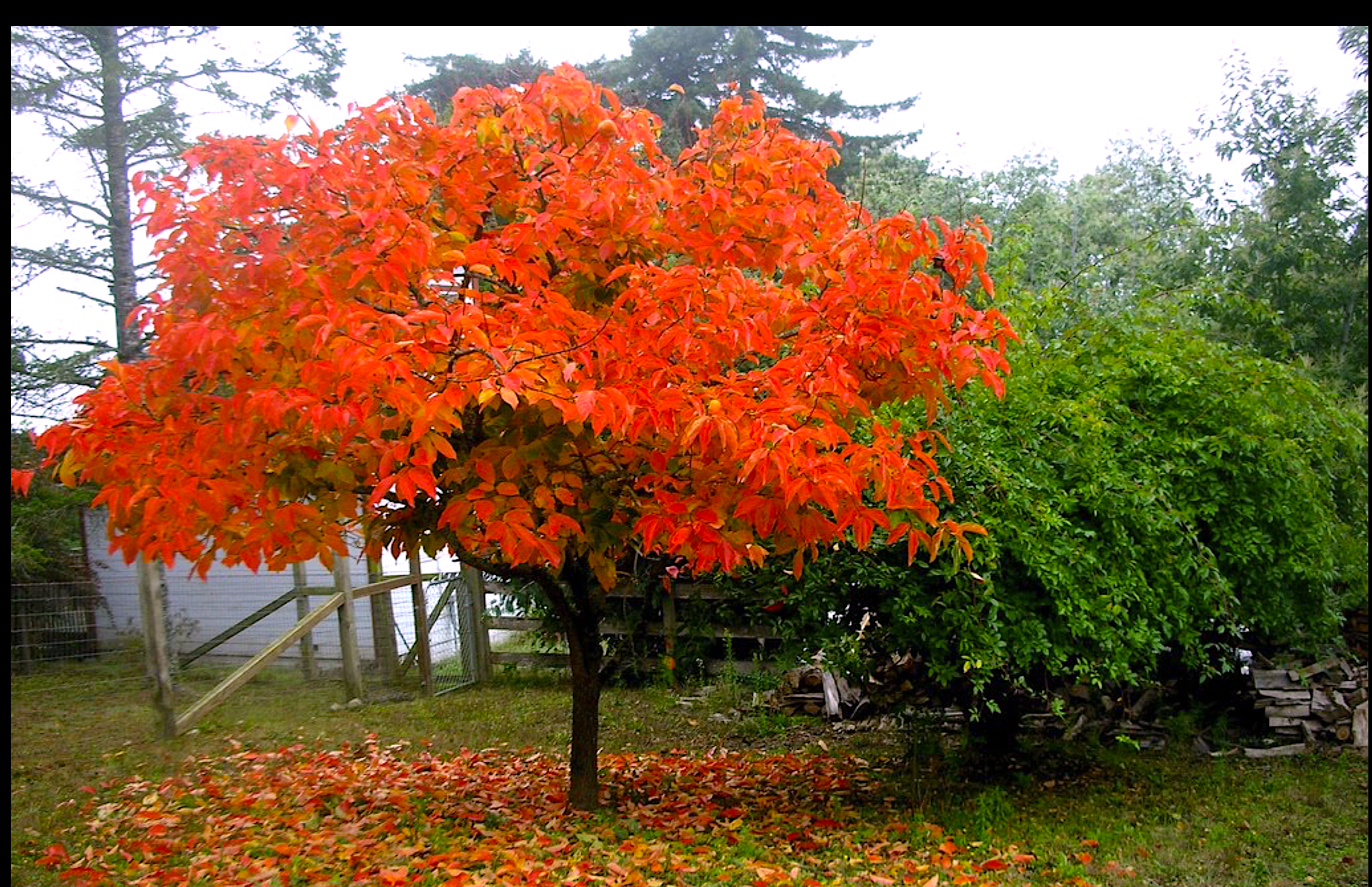
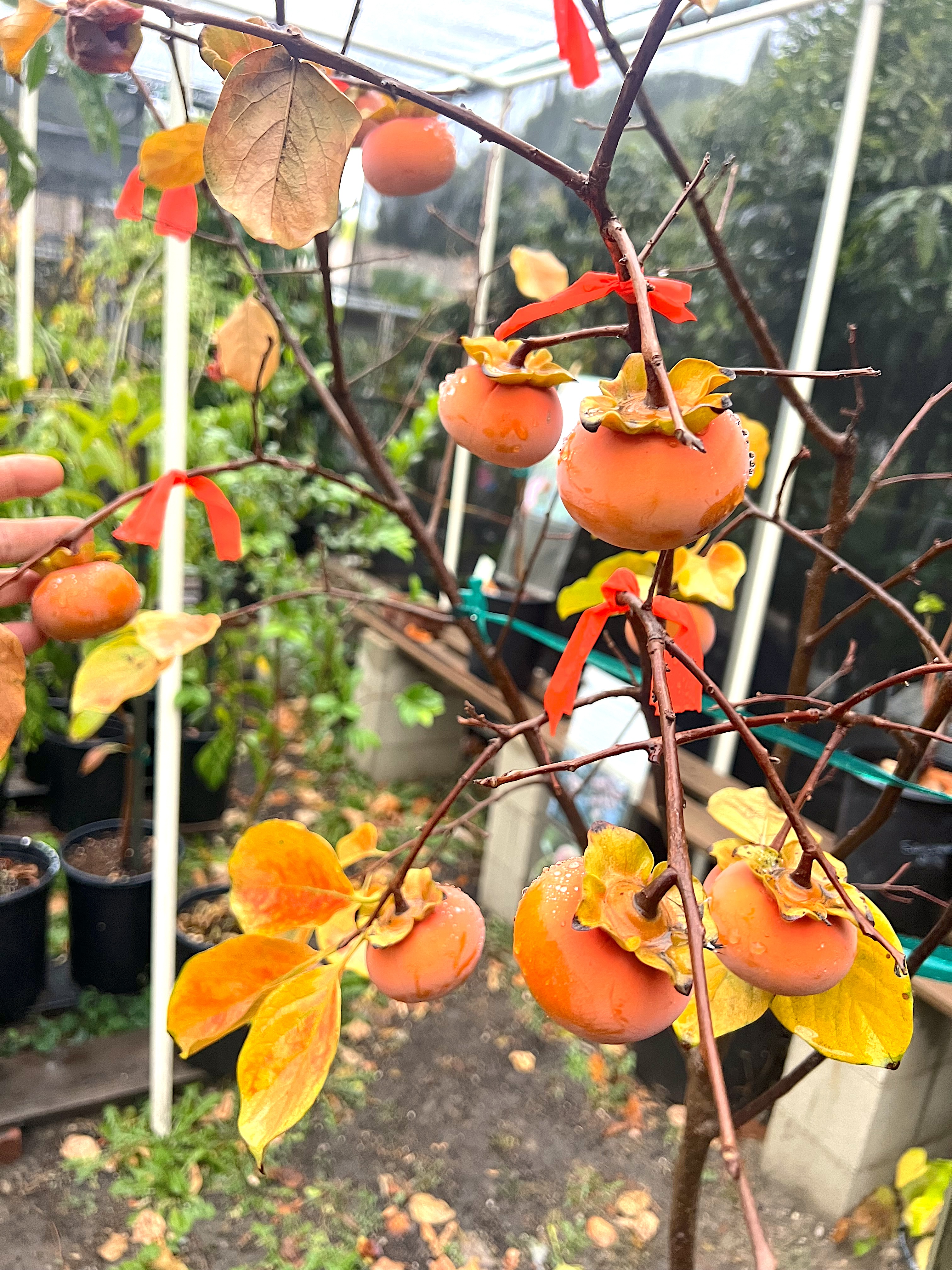
Over centuries of cultivation and selection, the Oriental persimmon spread throughout neighboring regions, particularly Japan and Korea, where numerous cultivars were developed and the fruit became an important part of local agriculture and cuisine. Eventually, during the nineteenth century, some of those cultivars were introduced to southern Europe, eastern and western Asia, northern Africa, and North and South America. One of the most eye-catching, aesthetic qualities of the persimmon tree occurs during the fall months when the color of the foliage changes from glossy green to a combination of yellow, orange and red, eventually falling and in a striking display, unveiling the glowing orange-red-colored fruits beckoning to be harvested!
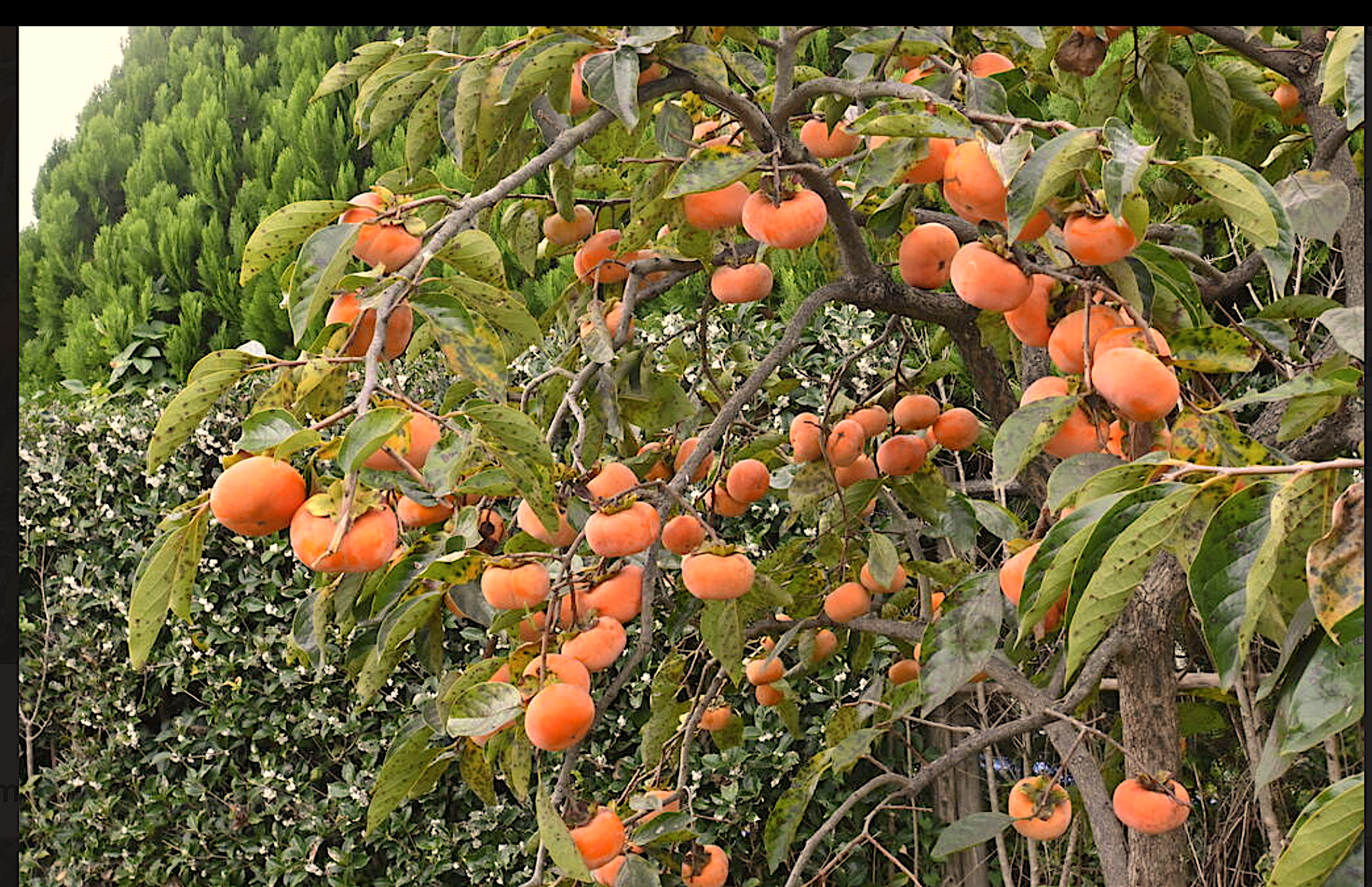
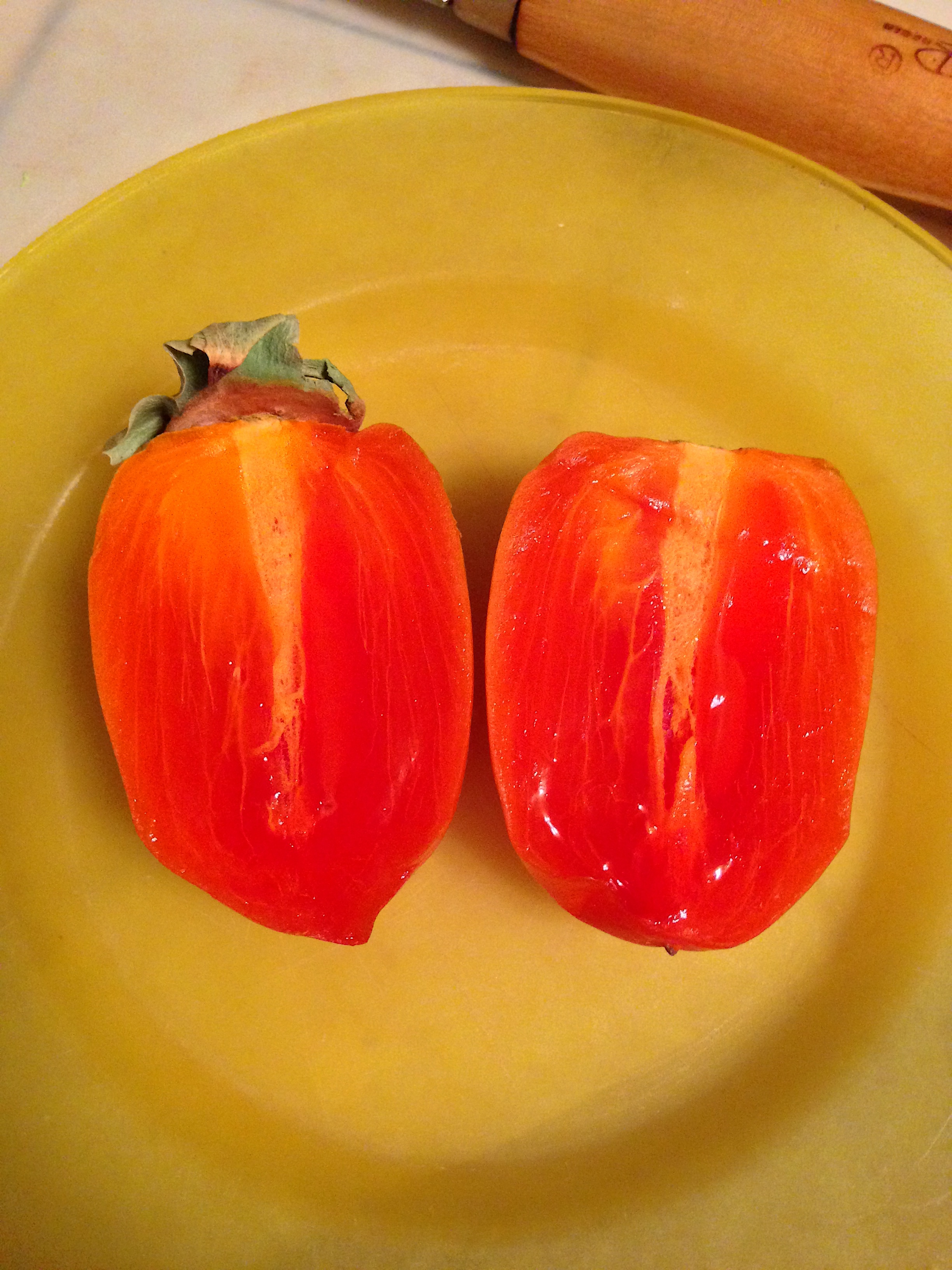
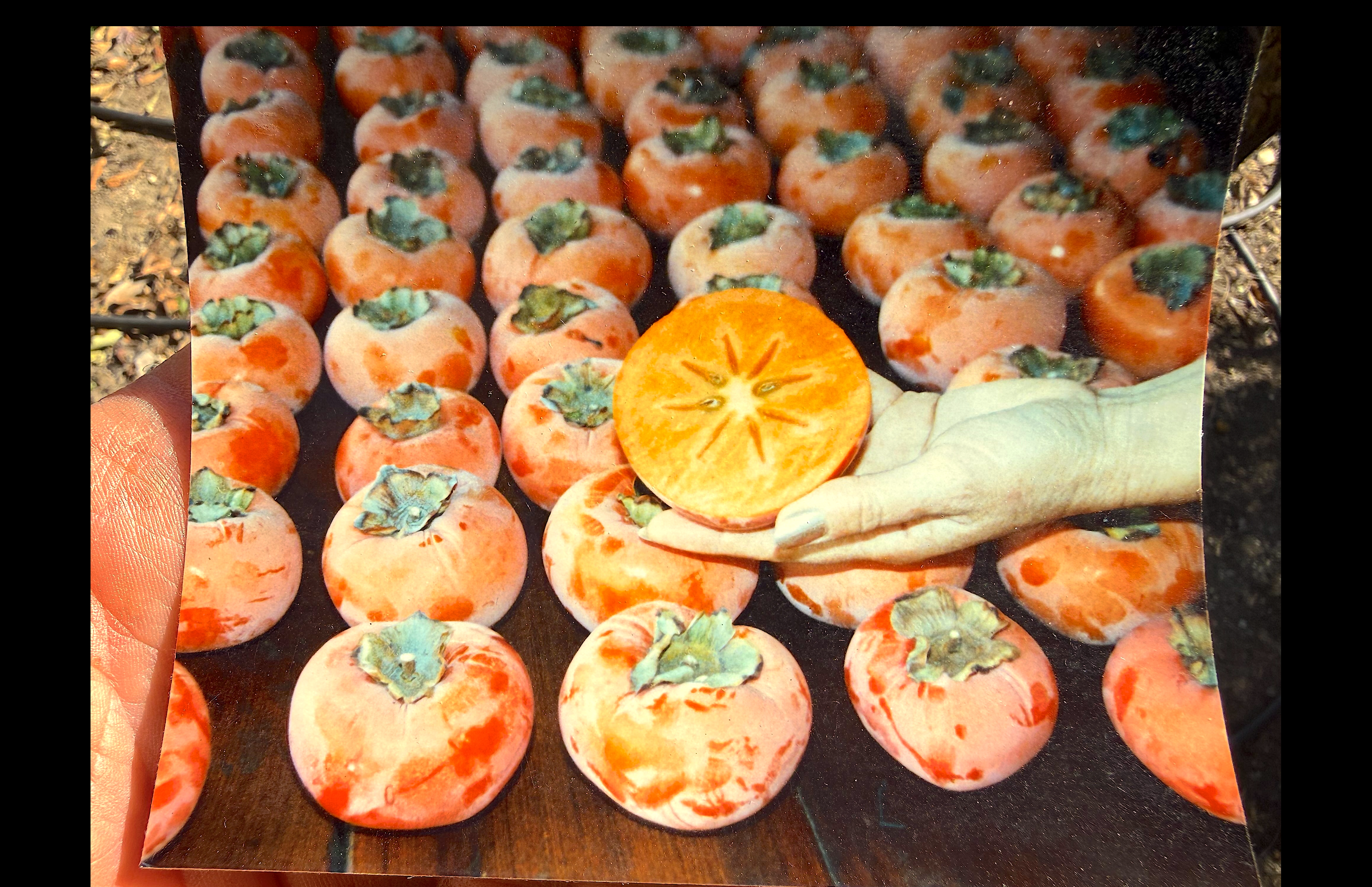
There is considerable variability in fruit size, shape, pulp texture, and color. This sweet fruit is generally categorized into two main types: astringent and non-astringent. The astringent varieties must become fully ripe and very soft before the
natural astringency disappears and the fruit becomes sweet and edible. In contrast, non-astringent varieties can be consumed while still firm, as they lack the strong tannins that cause the puckering sensation associated with astringency.
In addition, four subcategories are recognized within these main types: Pollination-Constant Non-Astringent (PCNA), Pollination-Variant Non-Astringent (PVNA), Pollination-Constant Astringent (PCA), and Pollination-Variant Astringent (PVA). These classifications emphasize the role that pollination plays in the natural processes that influence astringency in the fruit. For practical purposes, understanding these categories can be helpful—particularly when selecting a specific persimmon cultivar for cultivation or consumption. However, the detailed characteristics of each classification are beyond the scope of this brief description.
Traditionally in both China and Japan, the persimmon fruits are typically consumed fresh out of hand or dried. However, centuries later, there are now a multitude of recipes for this fruit ranging from applications in desserts to various savory dishes as well. Here are some examples showing how to utilize this versatile fruit; It is used in various fruit salads, preserves, chutney, purees, cakes, dressings, pastries such as muffins, doughnuts, cream puffs, pancakes, fritters, gingerbread, ice cream, sherbets, mousse, pies, cookies, tarts, meringues, puddings, tea, wine, and sauces. Point being, this is a fruit that for the imaginative, can keep you busy!
Consider the Oriental Persimmon tree as an attractive and practical addition to the private landscape. Have fun! |