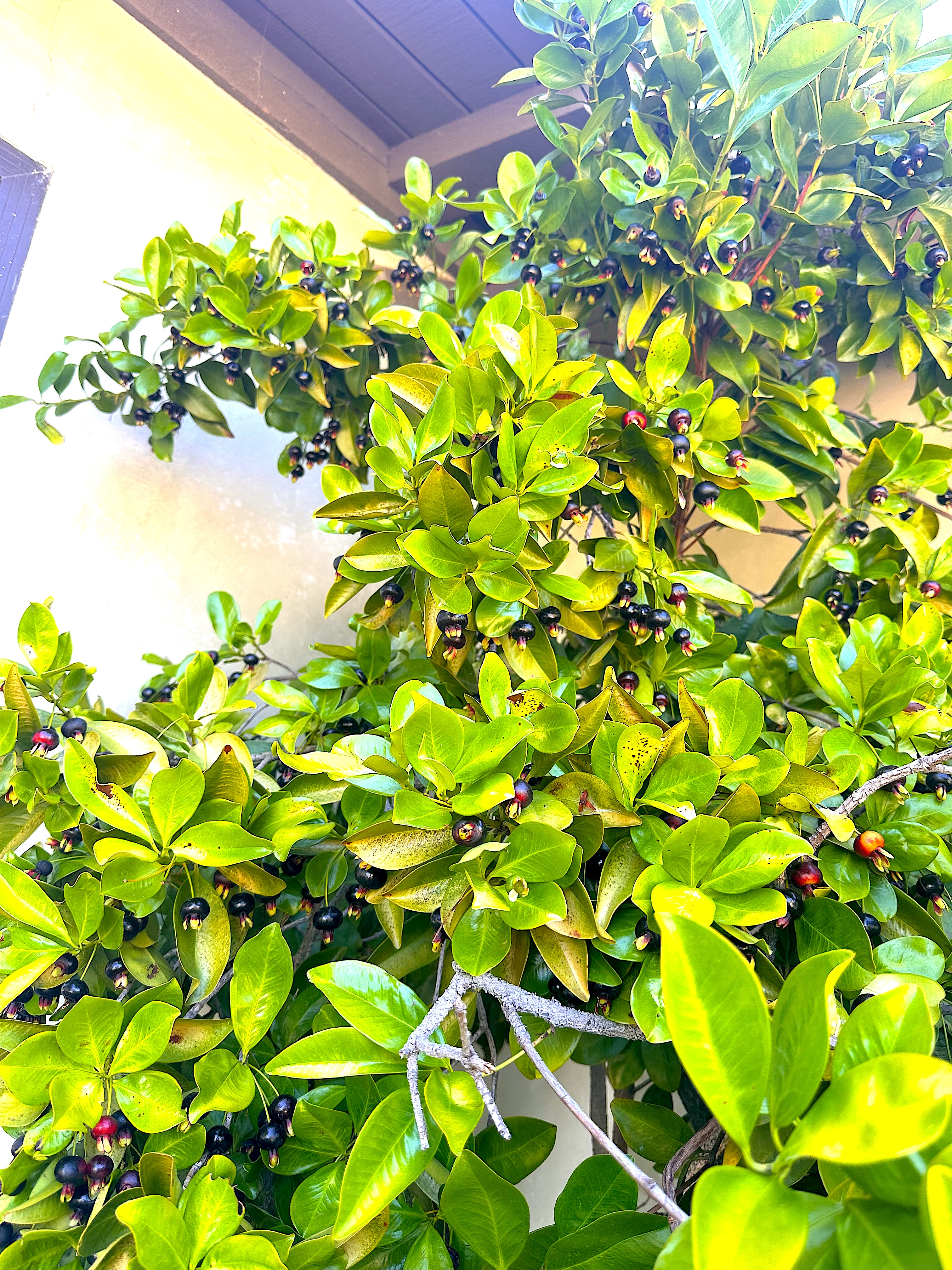
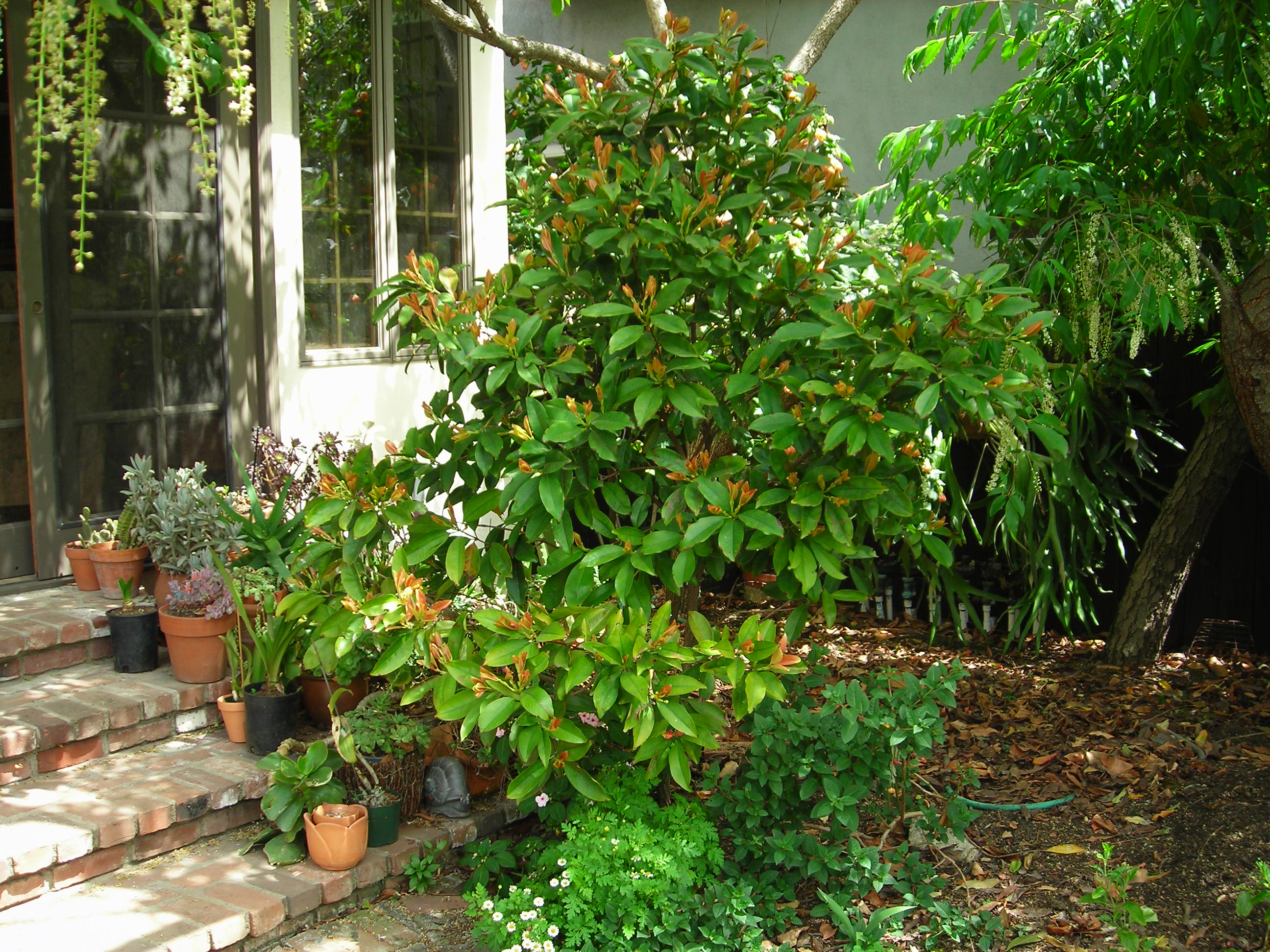
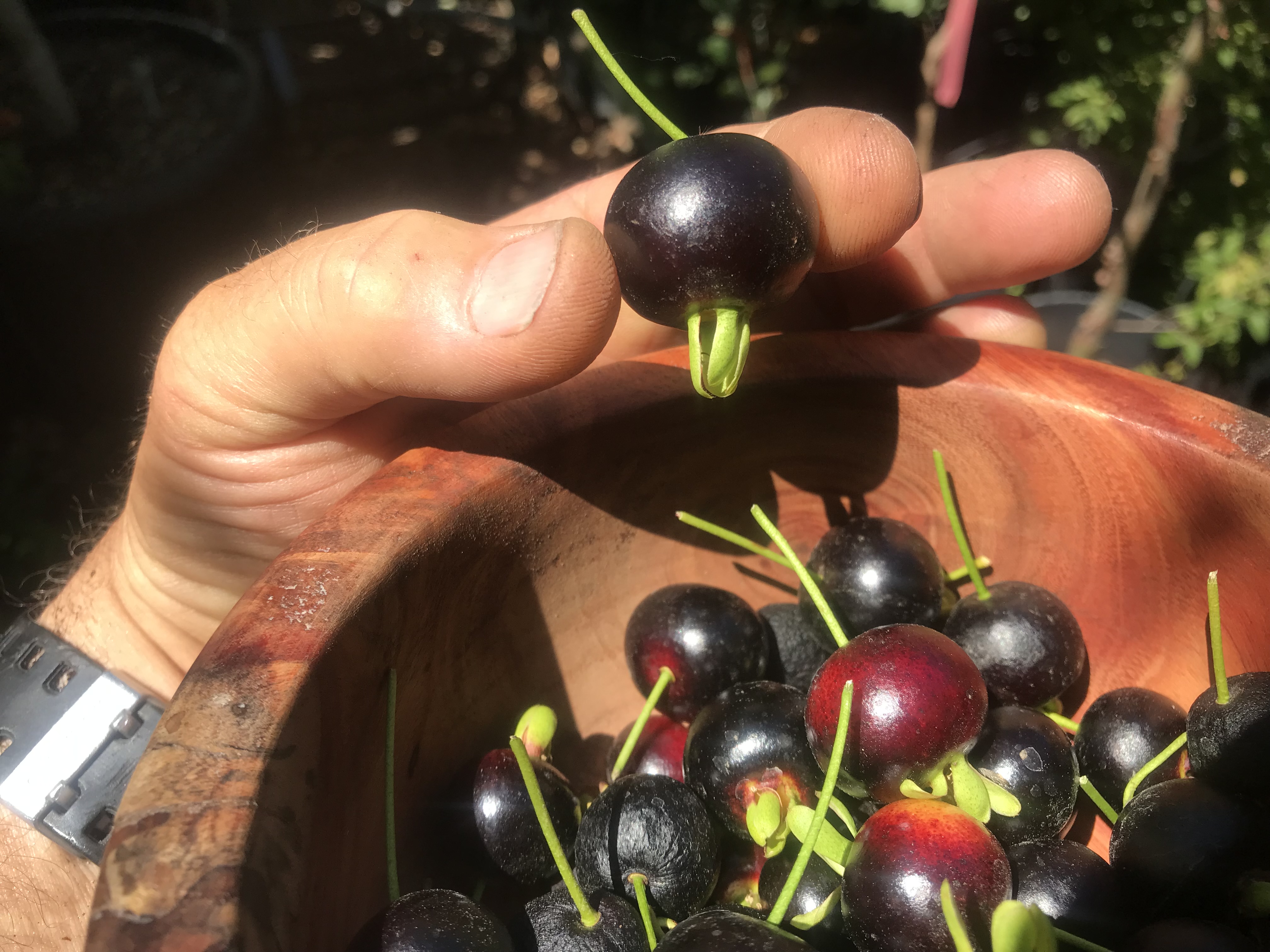
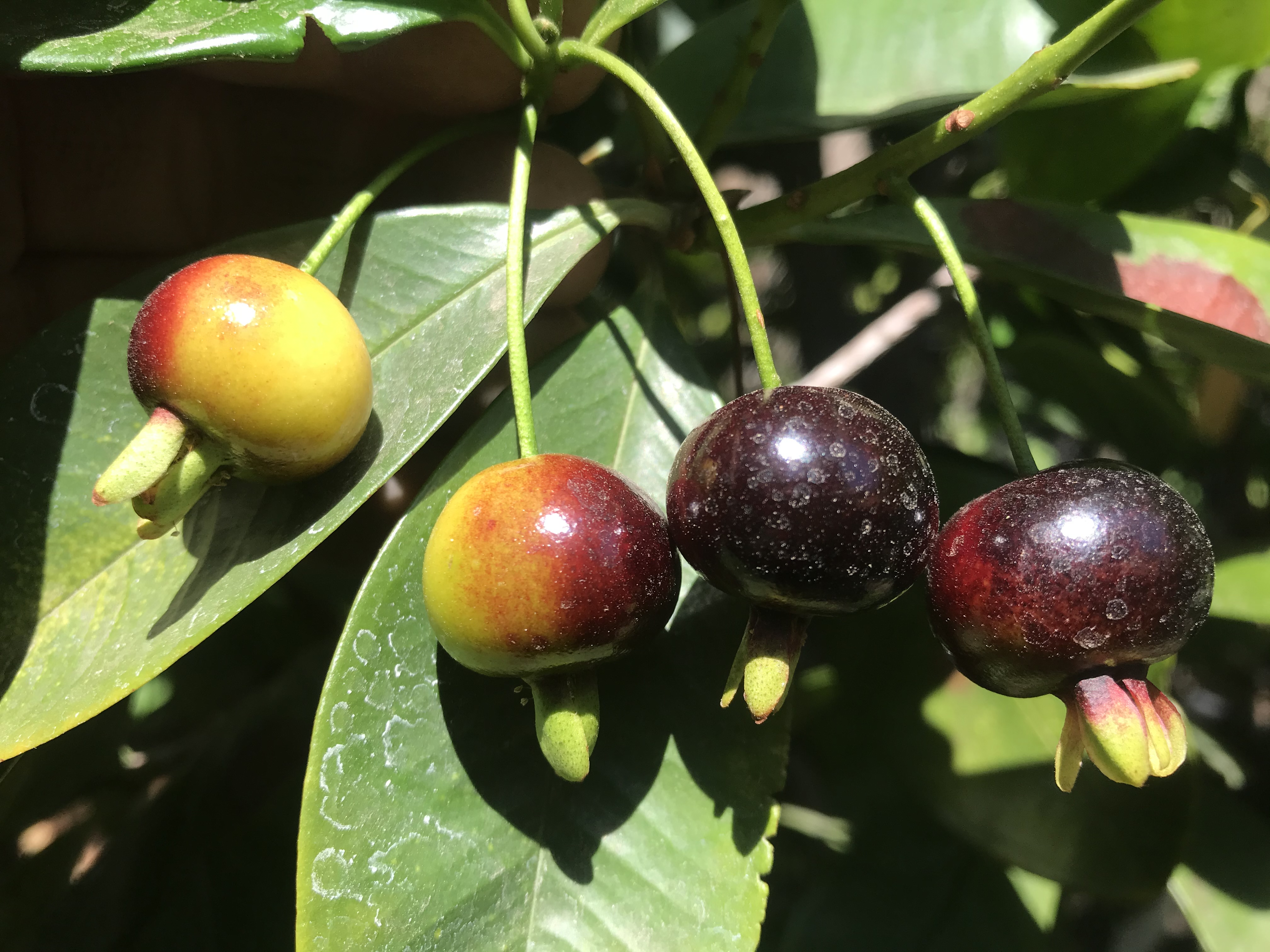
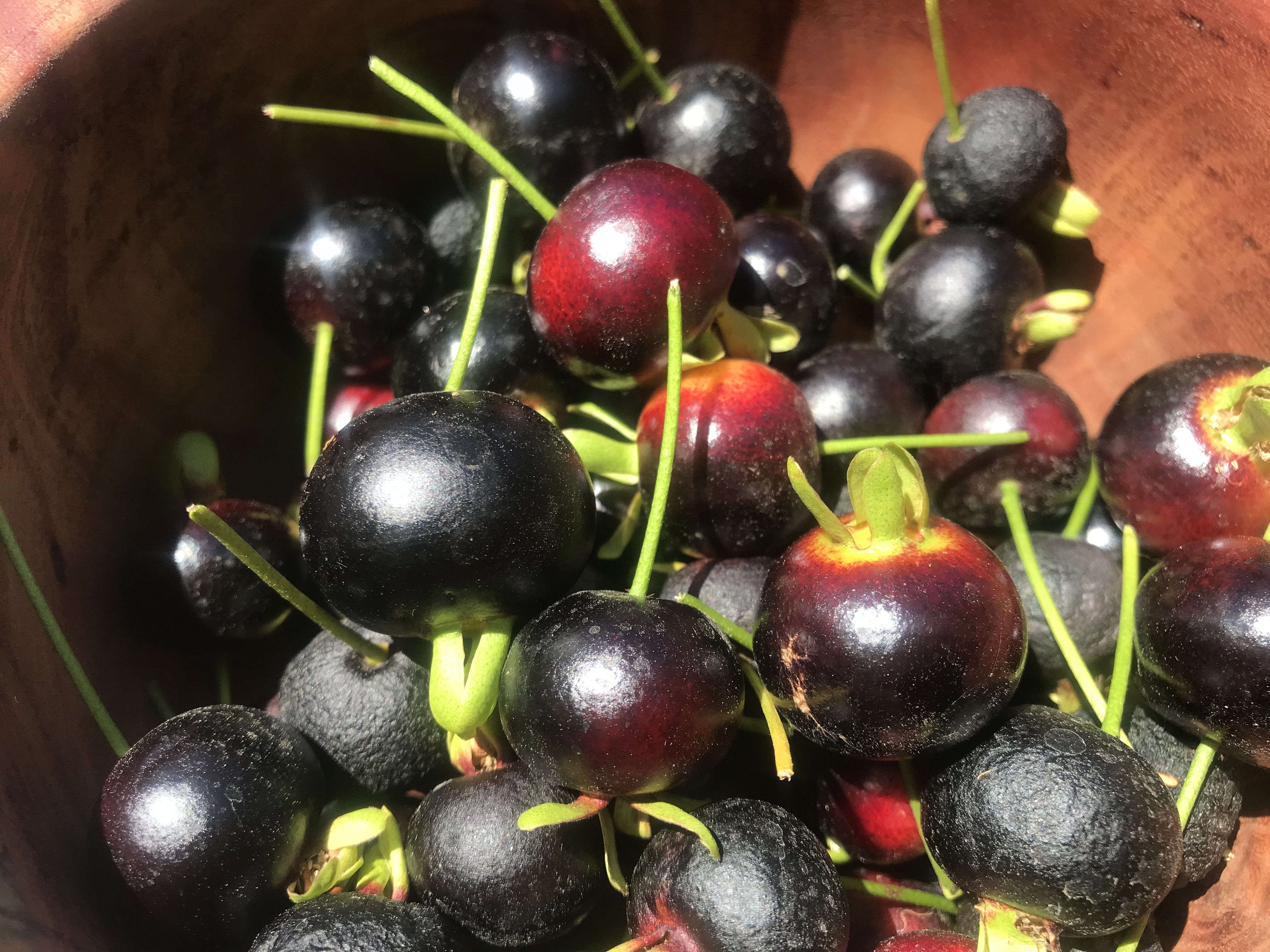
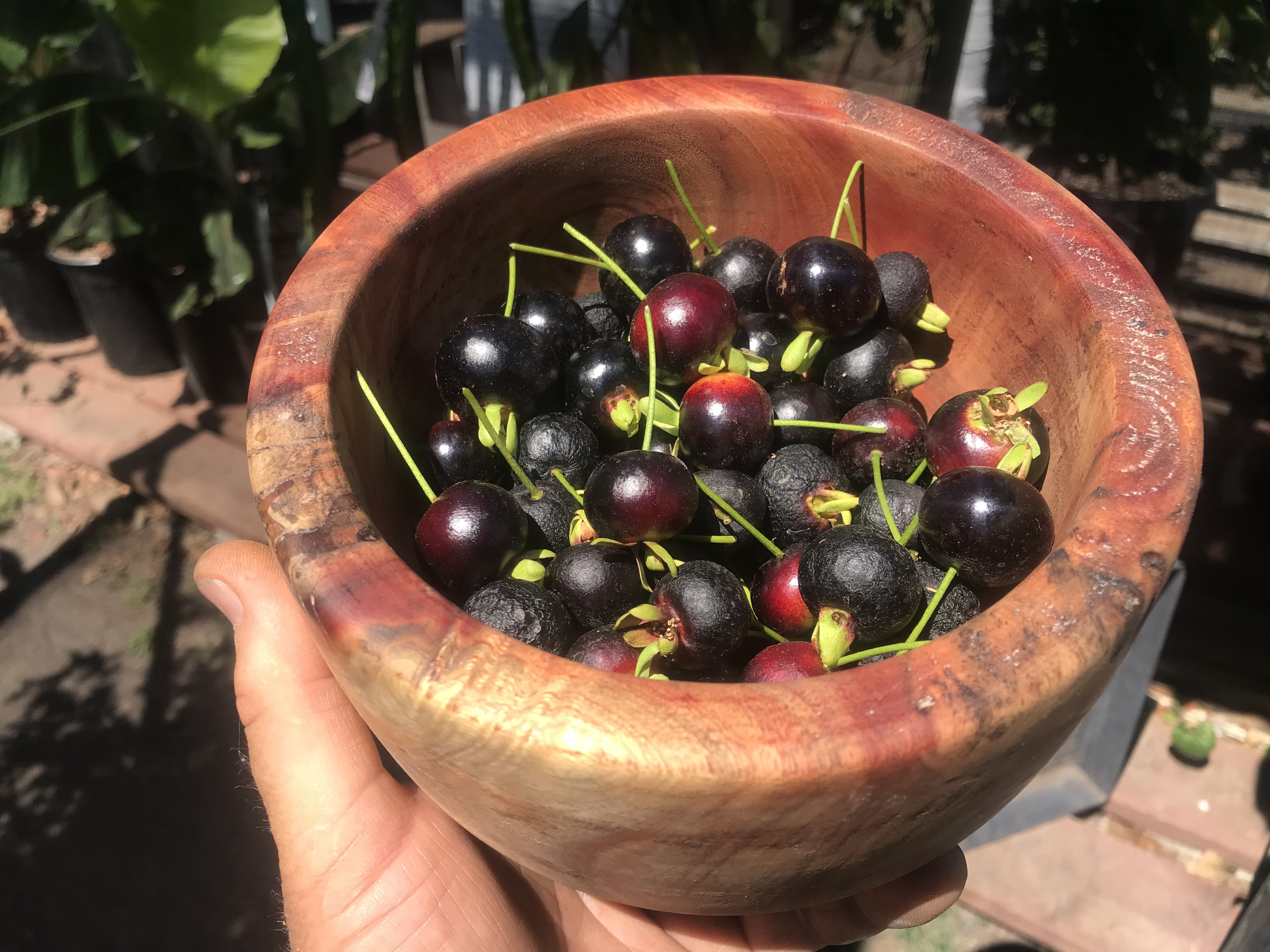
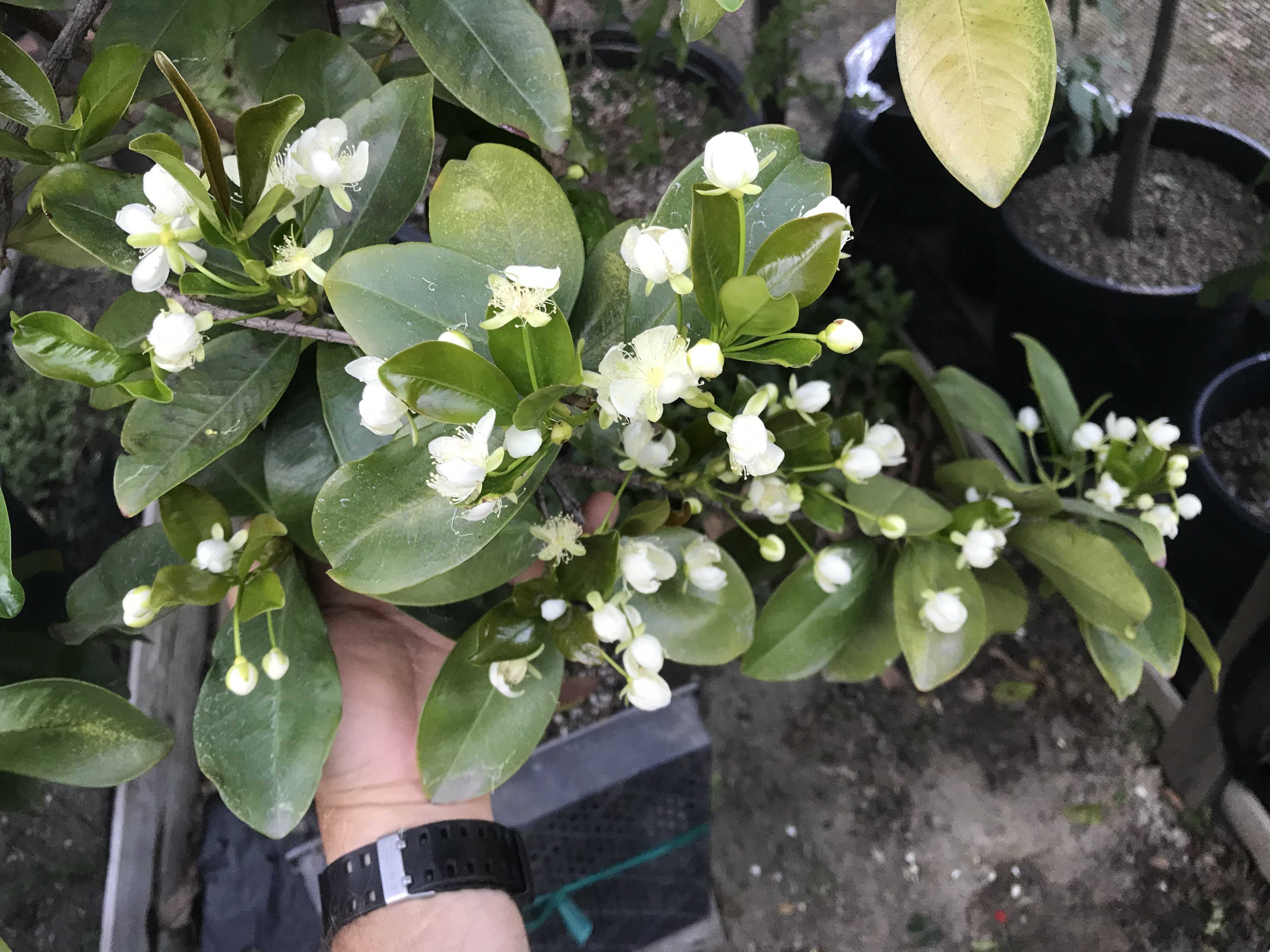
Although Grumichama is relatively uncommon and primarily sought by collectors of unusual fruit trees, it can be a rewarding addition to a Southern California garden when provided with favorable growing conditions. At Papaya Tree Nursery, our best harvest from a Grumichama grown in a protected location in a 20-gallon nursery container was approximately 40 fruits, as shown in the photograph of the wooden bowl above. For an example of its greater production potential when planted in the ground, see the first photograph on the left, showing a heavily fruiting Grumichama in Thousand Oaks, California, approximately three years after being purchased from our nursery. The customer followed our soil-preparation recommendations and planted the tree in an east-facing location receiving only morning sunlight. This illustrates what can be achieved with proper soil preparation, good drainage, and a favorable planting location.
| Common Name | Grumichama/Brazilian Cherry |
| Scientific Name/Synonyms | Eugenia brasiliensis/syn. E. dombeyi |
| Cultivars/Varieties | Bush-Form |
| Country of Origin | Brazil |
| Native Range | Coastal Brazil |
| Also found in other Regions | Not Applicable |
| Description | The Grumichama, also known as the Brazilian Cherry, is a stunning tropical fruit tree native to coastal Brazil. It produces glossy, dark-purple to black cherries with a juicy, sweet-tart flavor similar to a true cherry with hints of grape or plum. In spring, it puts on a show of fragrant white flowers followed by clusters of edible fruit—making it both a delicious and ornamental addition to any garden. This lesser-known tropical cherry is a collector’s favorite, prized for both its flavor and ornamental appeal. With glossy foliage, fragrant blooms, and tasty fruit, Grumichama is a showstopper in any subtropical garden or container collection. |
| Evergreen/Deciduous | Evergreen |
| Height x Width | 10' x 6' |
| Growth Habit | Shrub-like, relatively compact |
| Growth Rate | Slow/Medium |
| Sun Exposure | Partial shade/Full Sun |
| Cold Hardiness | Tolerant to 26°F |
| Fruit Bearing Age/Height | Five to Six Feet |
| Suitable To Container Culture | Yes |
| Harvest Period | June-July |
| Video | Coming Soon |
Grumichama grows best in well-drained, slightly acidic soil that retains adequate moisture without becoming waterlogged. Since much of Southern California's native soil is heavy in clay and tends to be alkaline, proper soil preparation is particularly important. As with Avocado and Blueberry, mound-planting at least 8 inches above the surrounding ground level, using appropriately amended soil, is recommended to encourage healthy root development and avoid problems associated with poor drainage, particularly during the first few years of growth. In the hotter inland valleys, Grumichama should receive direct sunlight only during the early morning hours, preferably before 10 AM, followed by bright shade. At Papaya Tree Nursery, we have observed foliage damage when temperatures exceed approximately 95°F. In cooler areas benefiting from marine influence, established plants may tolerate somewhat longer periods of sun exposure. When grown in containers, protect black plastic nursery pots from direct sunlight, as excessive heat can damage the roots. Water regularly, potentially as often as three times per week during warm weather, depending on soil moisture and growing conditions.