| Common Name | Feijoa/Pineapple Guava |
| Scientific Name/Synonyms | Acca sellowiana |
| Cultivars/Varieties | 'Nazemetz', 'Trask' |
| Country of Origin | Brazil (Southern) |
| Native Range | S.Brazil → Uruguay → N. Argentina |
| Also found in other Regions | Australia, California, and New Zealand |
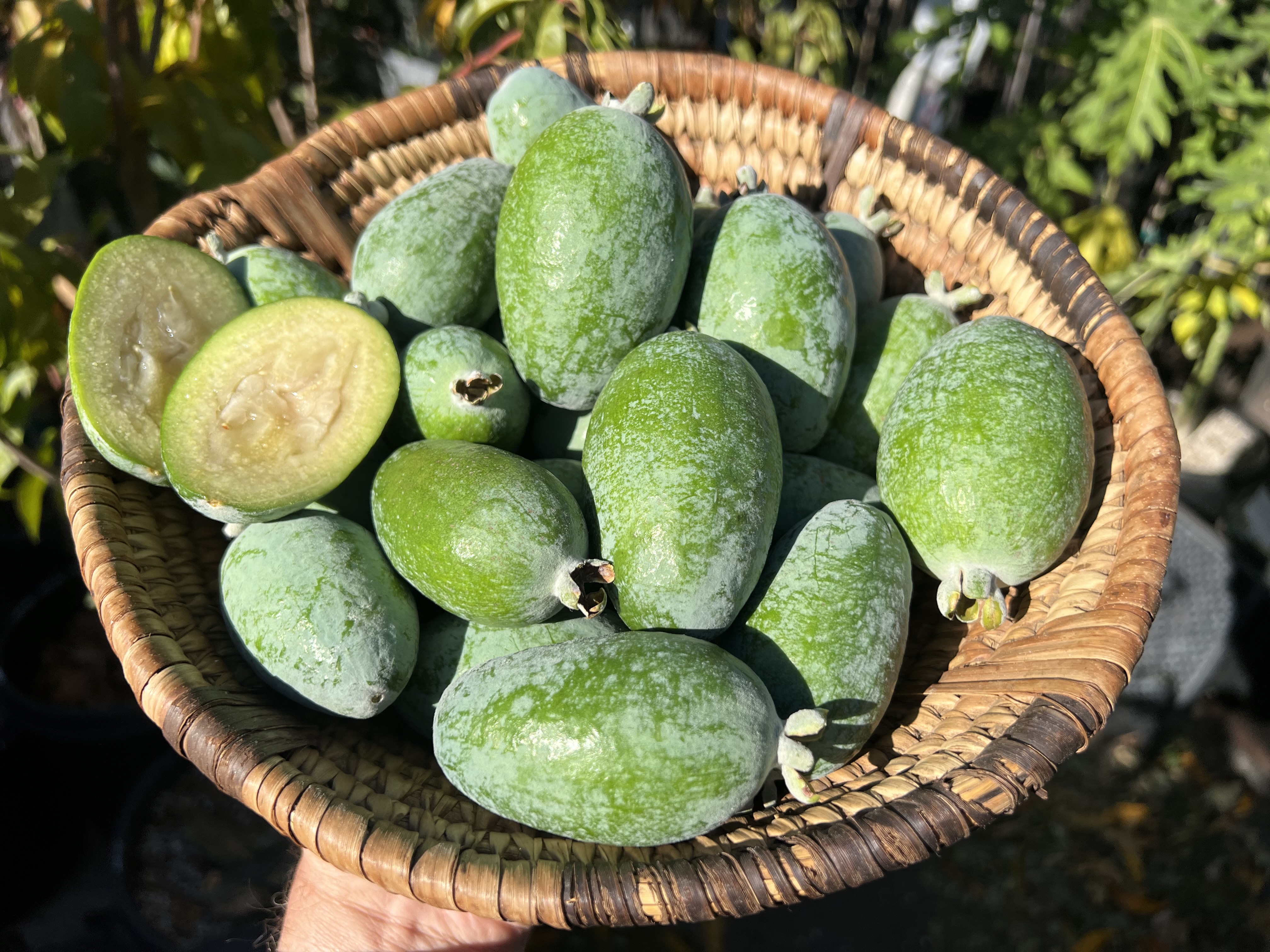
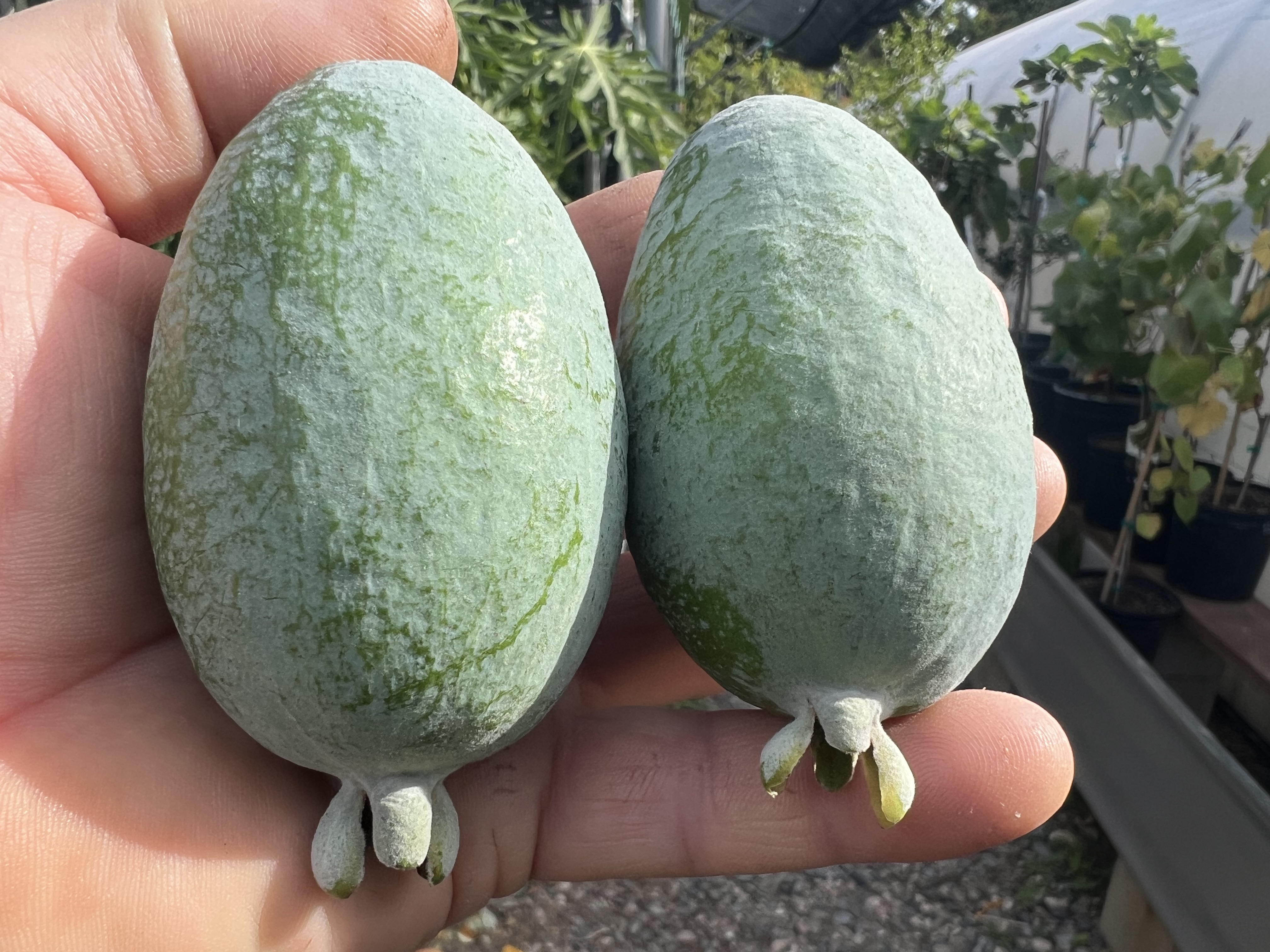
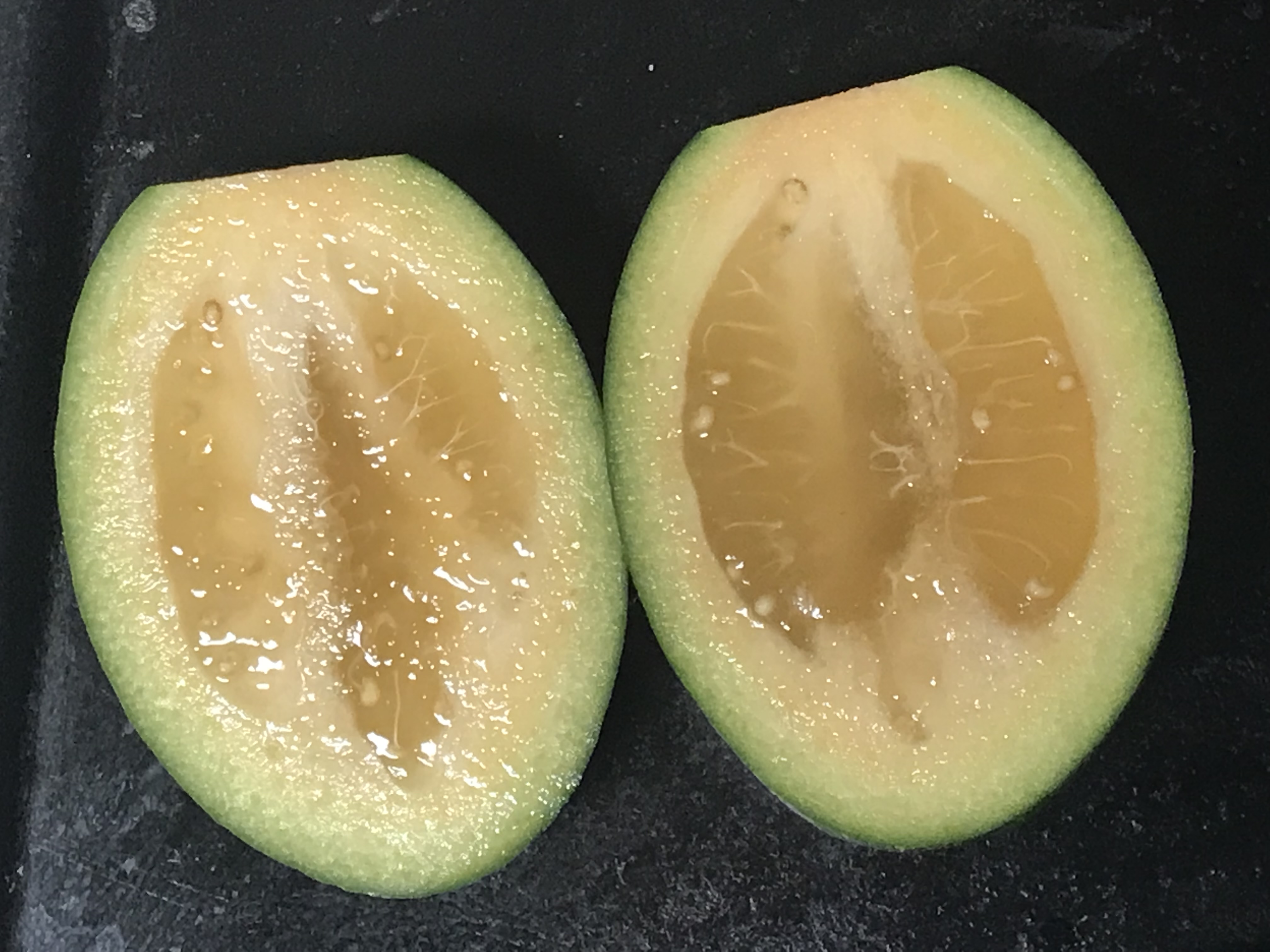
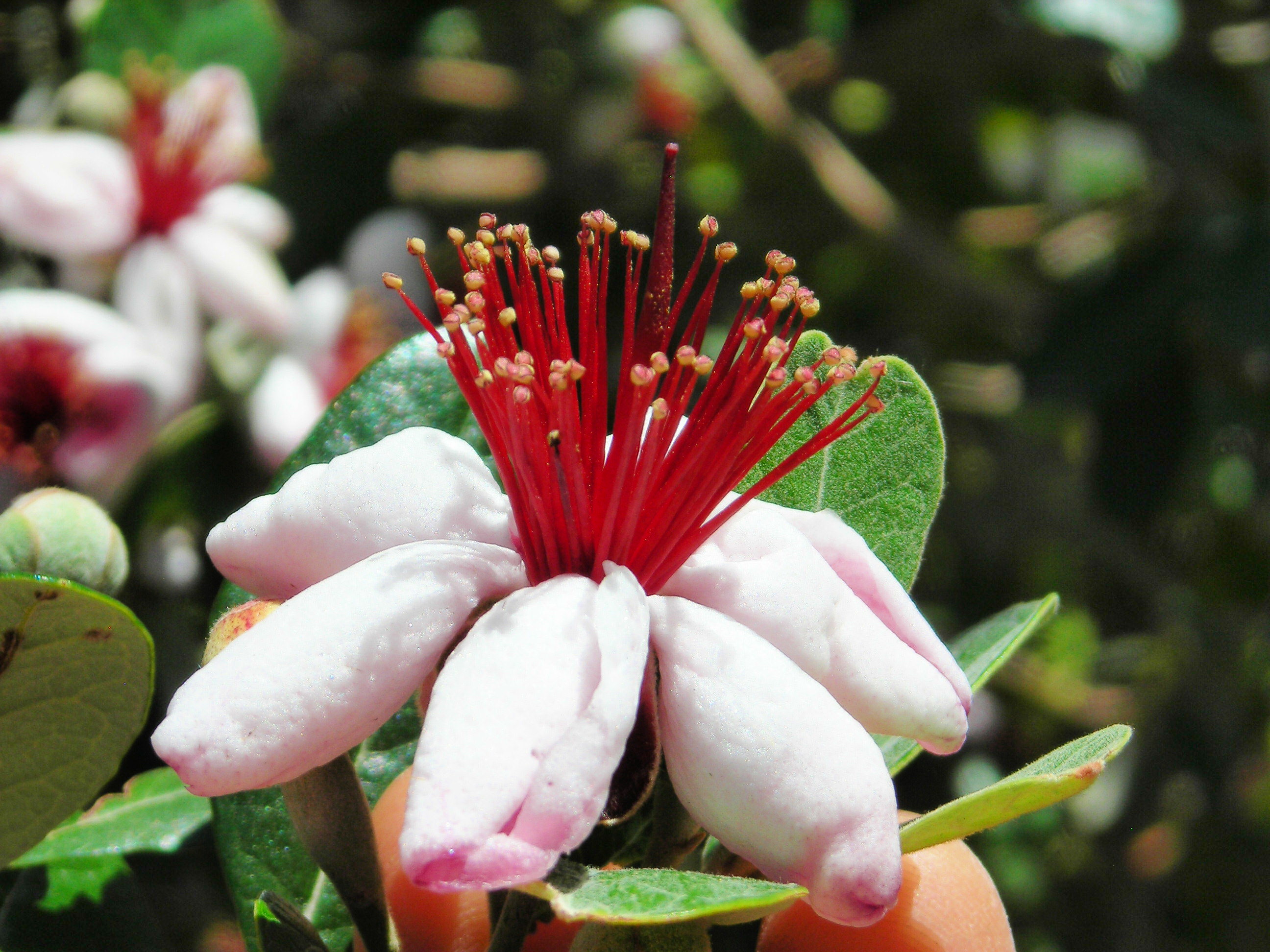
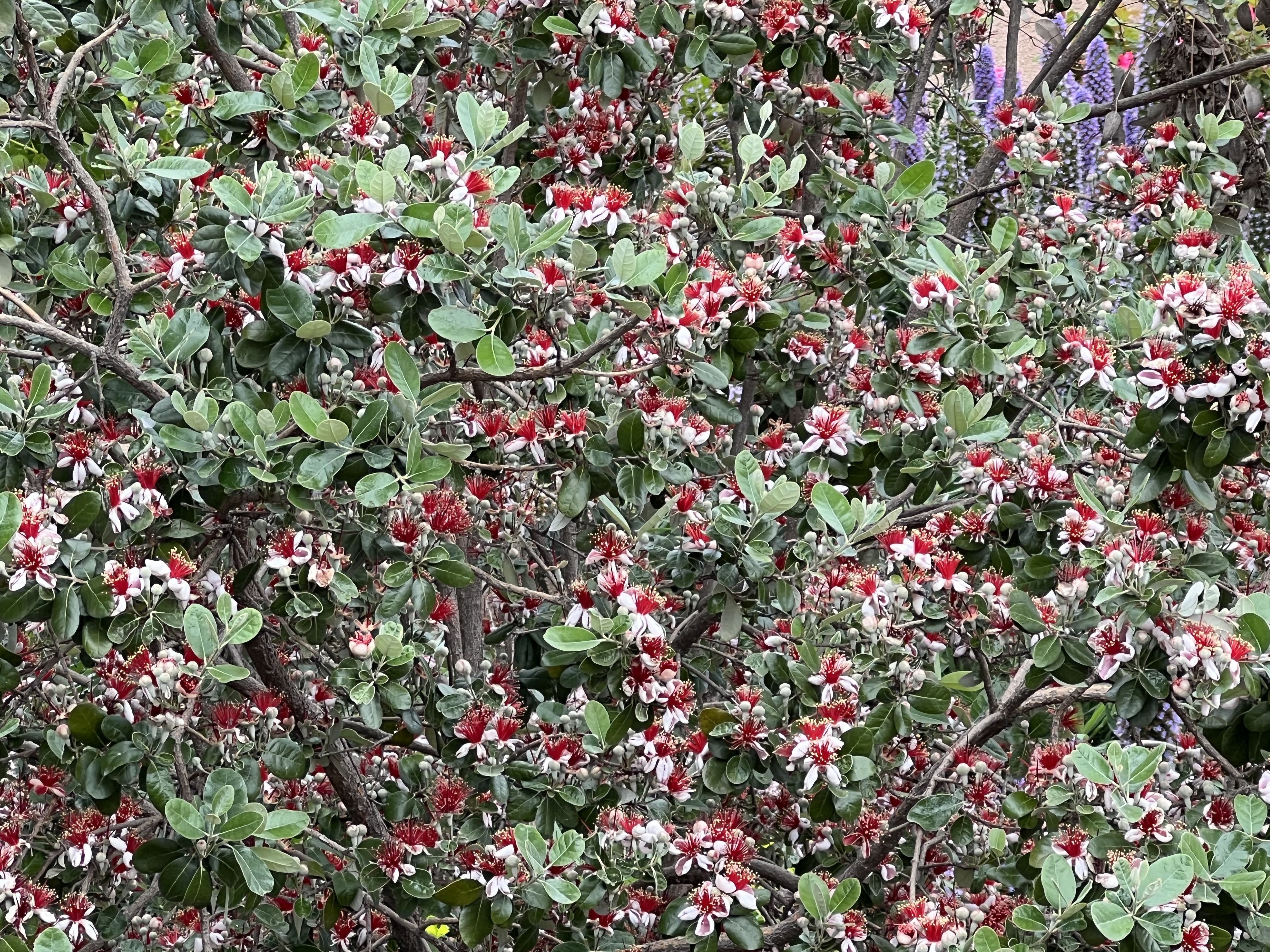
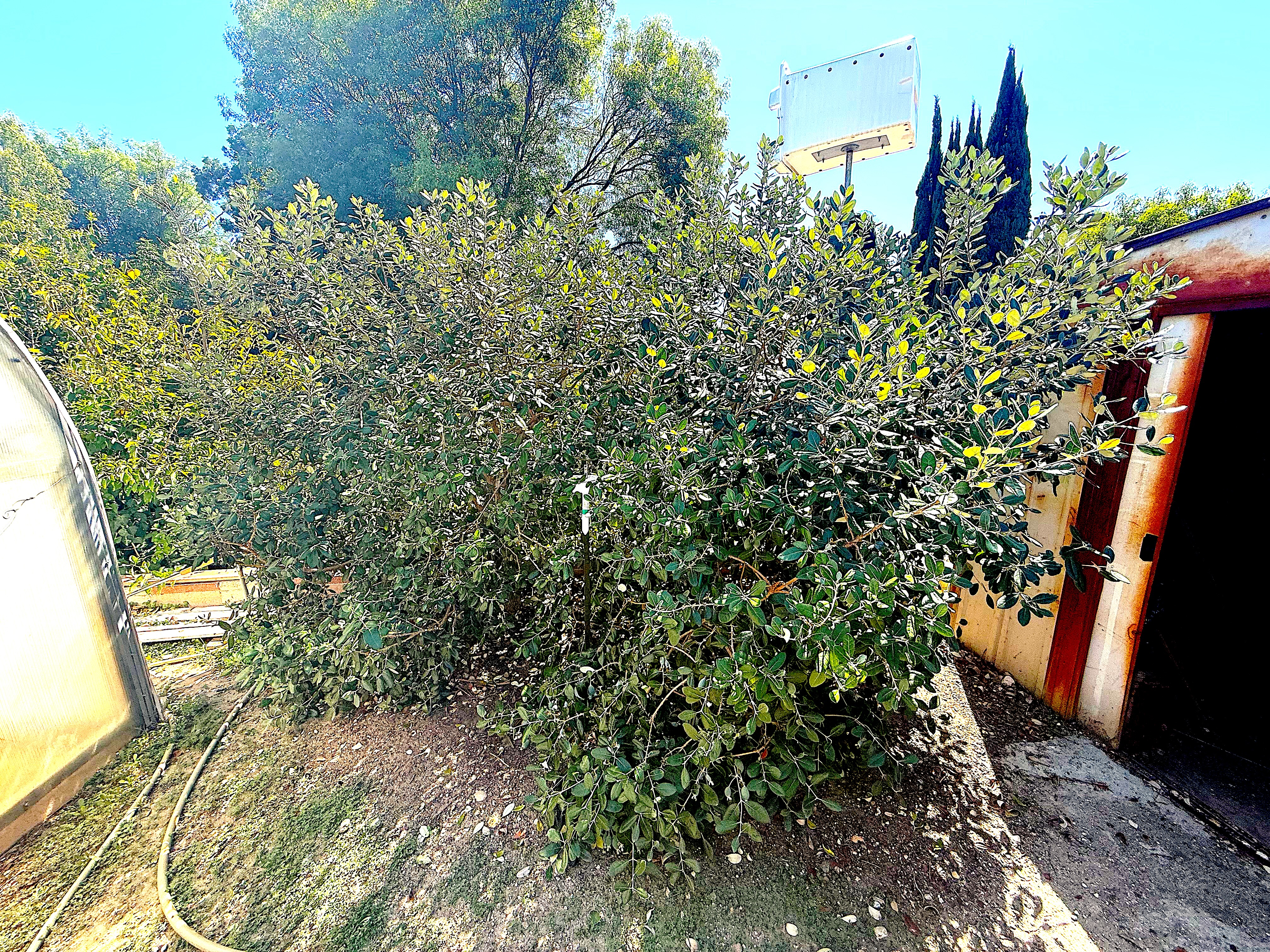
| Description | Feijoa (Acca sellowiana), commonly known as Pineapple Guava, is an attractive evergreen fruiting shrub or small tree native to southern Brazil and neighboring areas of Uruguay, Paraguay, and northern Argentina. Although widely grown as an ornamental landscape plant, improved fruiting selections are capable of producing a surprisingly high-quality fruit that deserves considerably more attention than it often receives. The plant itself has considerable ornamental appeal. Its relatively dense growth habit and attractive foliage make it useful as an informal hedge, screen, specimen shrub, or small fruiting tree. The leaves are particularly distinctive, with deep green upper surfaces contrasting with silvery-gray undersides. The effect is somewhat reminiscent of the familiar olive tree, especially when the foliage moves in a breeze and exposes both surfaces. Spring brings another ornamental feature in the form of unusual flowers with fleshy white to pinkish petals surrounding a prominent cluster of bright red stamens. The petals themselves are edible and have a pleasantly sweet flavor, making Feijoa one of those relatively uncommon fruit plants whose flowers are nearly as interesting as the fruit that follows. The egg-shaped fruits remain green as they mature and develop a fragrant, soft interior when properly ripened. Although its common name suggests a relationship to the true guavas, Feijoa is quite distinctive in both texture and flavor. The aromatic flesh has a complex, sweet-tart character with tropical overtones that are difficult to describe with a single comparison. Rather than trying to define it simply as a combination of pineapple, banana, and guava, it is perhaps better appreciated as having a characteristic flavor all its own. It is also important to point out that not all Feijoas are created equally. Because the plant has long been valued for its ornamental qualities, many specimens found in residential and commercial landscapes are seedlings grown primarily for their appearance and durability rather than for superior fruit production. Such plants can vary considerably in fruit size, productivity, texture, seediness, and flavor—and some may produce relatively little worthwhile fruit at all. Named cultivars and other superior selections propagated specifically for fruit quality can be an entirely different experience. Depending upon the selection, improvements may include larger fruit, better flavor and texture, more reliable production, and other desirable characteristics. For anyone primarily interested in harvesting quality fruit rather than simply growing an attractive landscape shrub, starting with a proven fruiting selection is well worth considering. Despite its somewhat exotic South American origins, Feijoa is remarkably adaptable and relatively easy to grow in many parts of Southern California. Its combination of attractive evergreen foliage, unusual edible flowers, manageable growth habit, and quality fruit makes it one of those plants capable of earning its place in the landscape for more than one reason. |
| Evergreen/Deciduous | Evergreen |
| Height x Width | 8' x 6'("Bush-Form"), 12' x 8'("Tree-Form") |
| Growth Habit | Upright, yet relatively compact shrub |
| Growth Rate | Medium/Fast |
| Sun Exposure | Full Sun |
| Cold Hardiness | Tolerant to 24°F |
| Fruit Bearing Age/Height | 4 to 5 Feet |
| Suitable To Container Culture | Yes |
| Harvest Period | September-November |
| Video | Coming Soon |
When growing Feijoa primarily for fruit production, give some thought to pollination before deciding how many plants to grow and which varieties to select. Of the two varieties we offer, ‘Nazemetz’ is at least partially self-fruitful and can produce fruit when grown by itself. ‘Trask,’ like many Feijoa cultivars, benefits from and generally requires cross-pollination with another compatible variety to produce a satisfactory crop. For that reason, when space permits, I prefer growing ‘Nazemetz’ and ‘Trask’ together—even as close as two feet apart if space is limited. Besides providing the necessary cross-pollination for ‘Trask,’ having two different cultivars flowering nearby can also improve the opportunity for a good fruit set overall. And here's an interesting twist on the familiar expression “the birds and the bees.” While we normally think of bees and other insects as the primary pollinators of our fruit crops, birds can play a particularly important role in pollinating Feijoa. Unlike bees visiting flowers primarily in search of pollen or nectar, birds are attracted to the fleshy, sweet-tasting flower petals themselves. As they move from flower to flower feeding on the petals, they can inadvertently transfer pollen and help accomplish cross-pollination. Based on my own casual observations at the nursery, the bird I most often notice performing this welcome service is the common mockingbird. Watching one move through a flowering Feijoa and feed on the petals gives the old expression “the birds and the bees” a rather more literal meaning. It's worth remembering, however, that self-fruitful doesn't necessarily mean reliably fruitful under every condition. I've observed that even ‘Nazemetz’ can produce a relatively light crop when unfavorable growing or weather conditions coincide with the flowering period. So, while a single ‘Nazemetz’ may be a reasonable choice where space is limited, planting both cultivars is the approach I prefer when dependable fruit production is the primary objective.
Despite its common name, Pineapple “Guava” should not be pruned in the same manner as a Tropical Guava. With established Tropical Guavas, I normally use a fairly aggressive pruning method that includes removing virtually all of the smaller-diameter branchlets. Applying that same approach to Feijoa, however, can unnecessarily remove potentially productive fruiting wood. One of the important differences I've observed is that those seemingly insignificant smaller branches on a Feijoa shouldn't automatically be dismissed as unproductive growth. Branchlets as small as approximately 1/8" in diameter can still be surprisingly productive, sometimes carrying as much fruit as considerably larger branches measuring 3/8" in diameter or more. Established Feijoas can grow vigorously enough to benefit from supplemental pruning, sometimes even twice during the year. For the home grower, I prefer that the bulk of this pruning consist of heading-back cuts to maintain the plant at a reasonable and manageable height, rather than indiscriminately removing the smaller growth. Some selective thinning can also be used where needed to maintain adequate light and air movement through the plant, while preserving enough of those smaller fruiting branchlets to contribute to the following crop. In other words, don't let the word “Guava” in Pineapple Guava fool you into treating the two plants alike. When it comes to pruning for fruit production, Tropical Guava and Feijoa are two quite different plants.