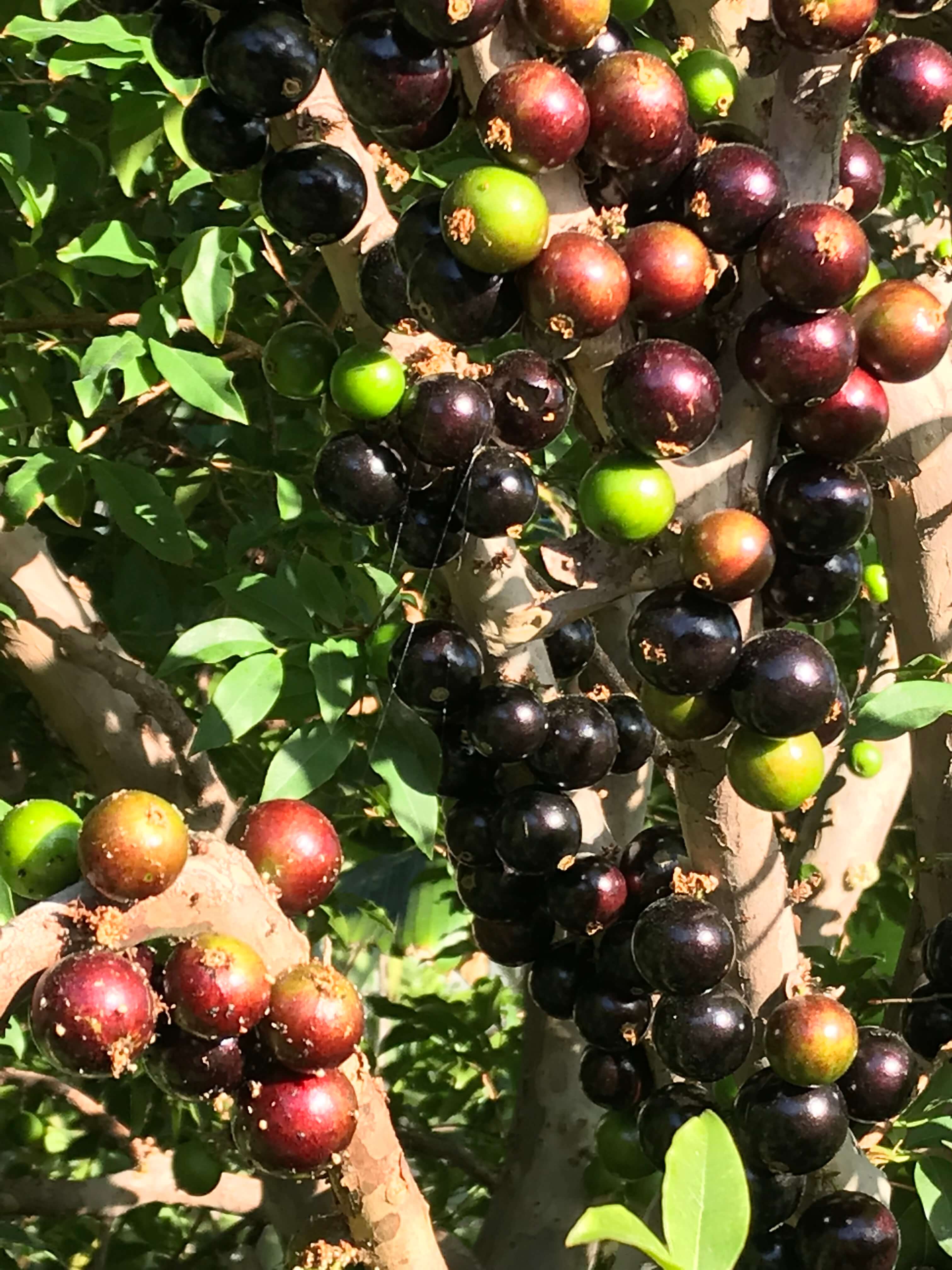
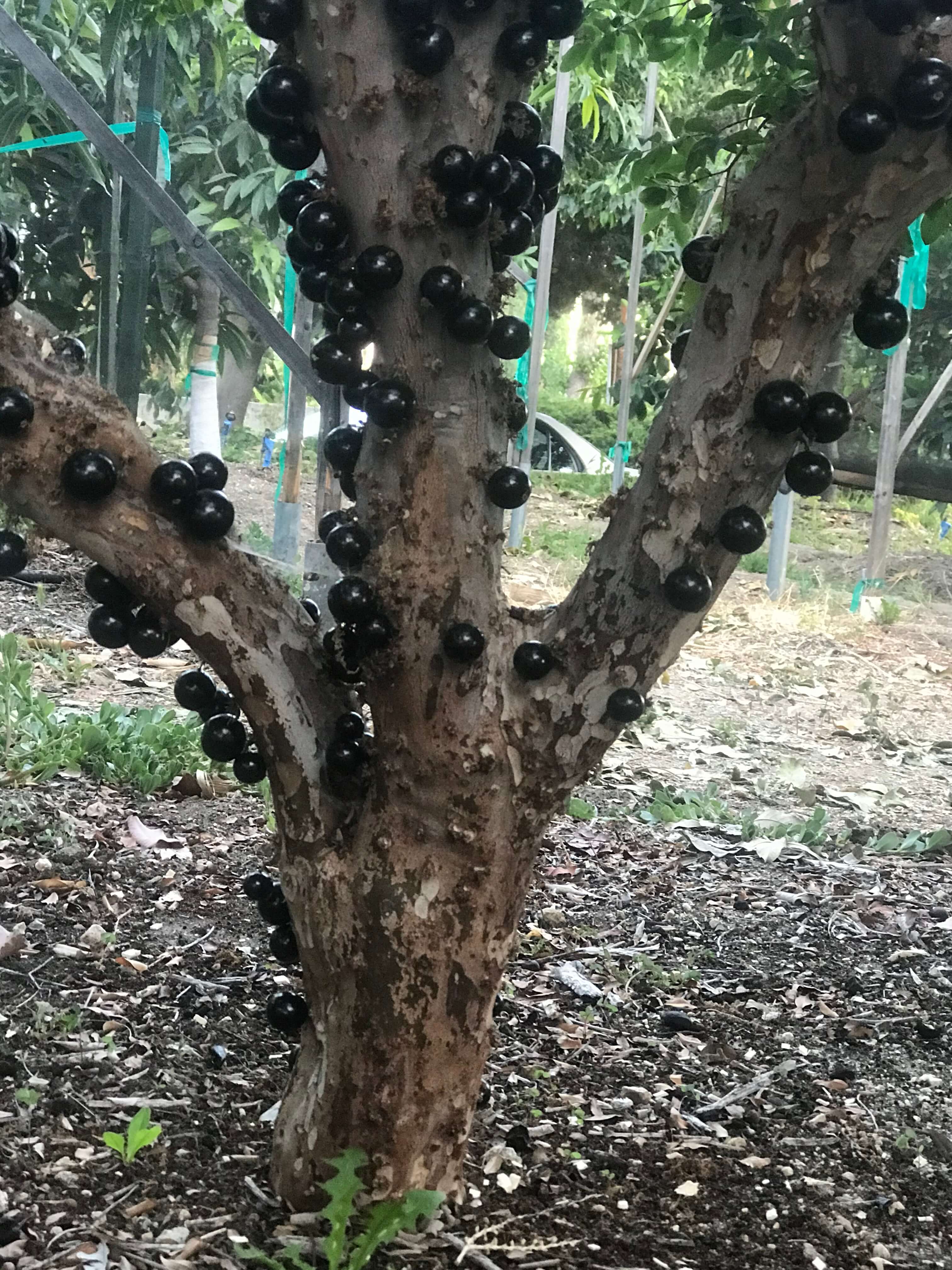
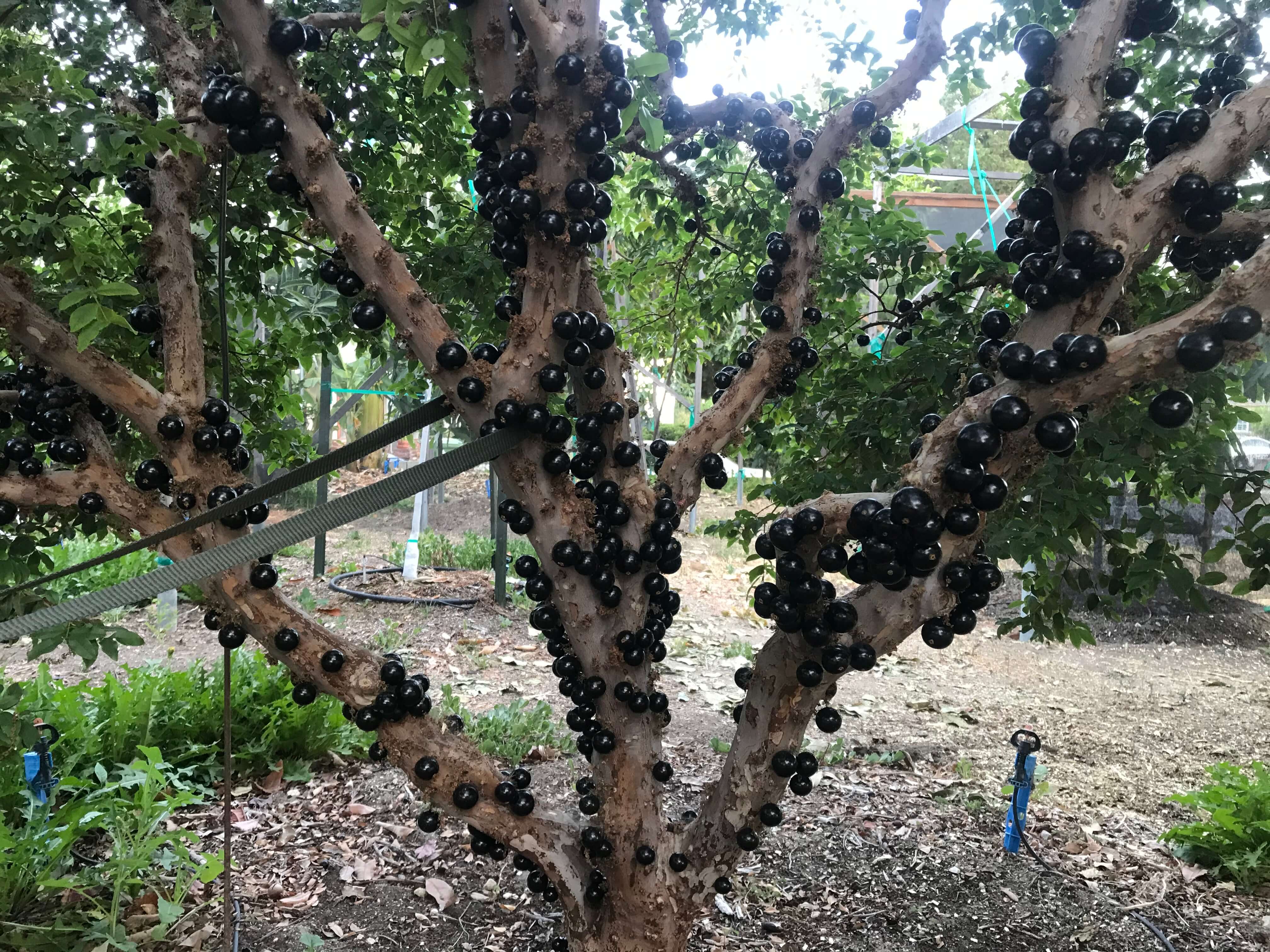
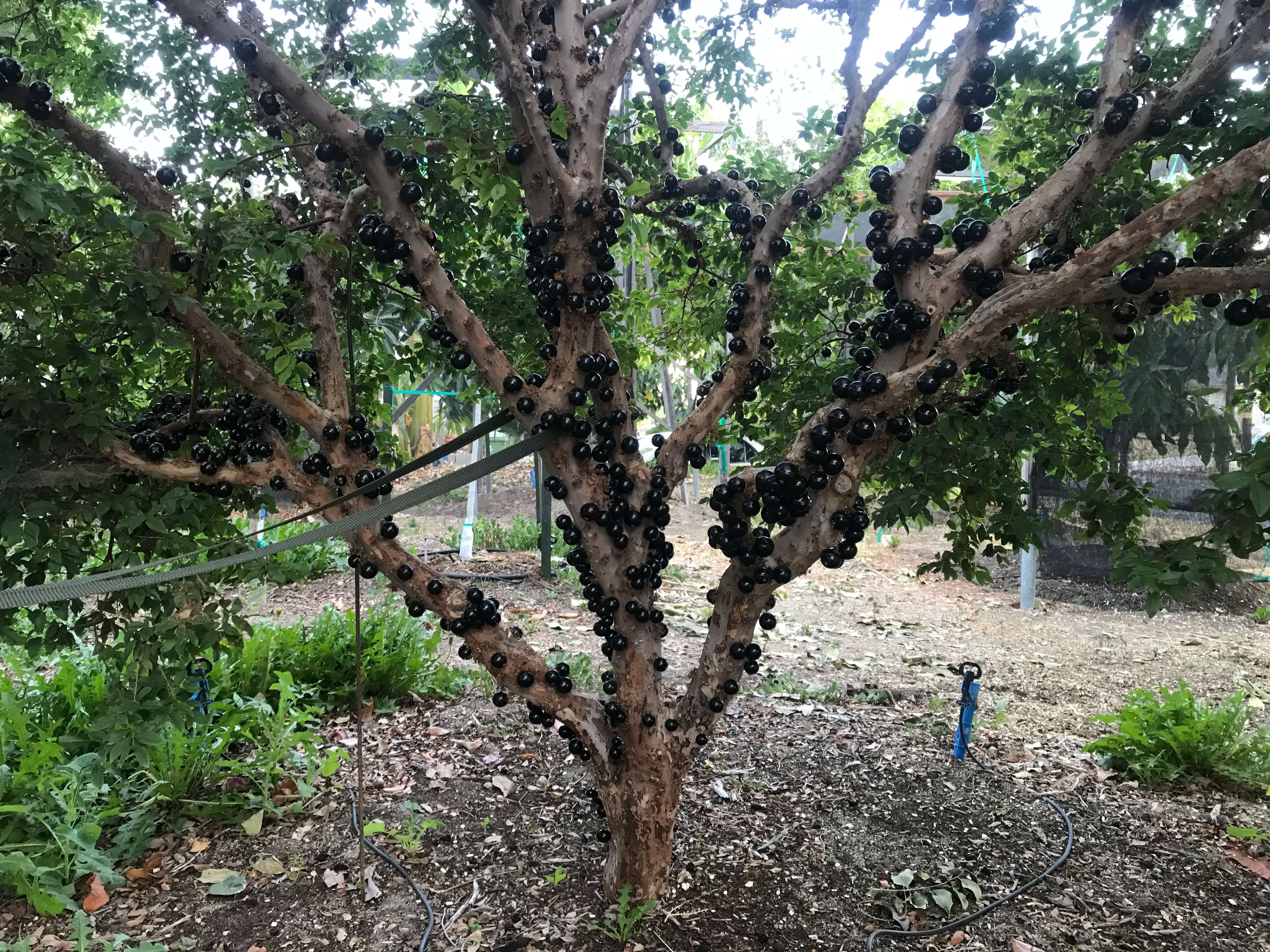
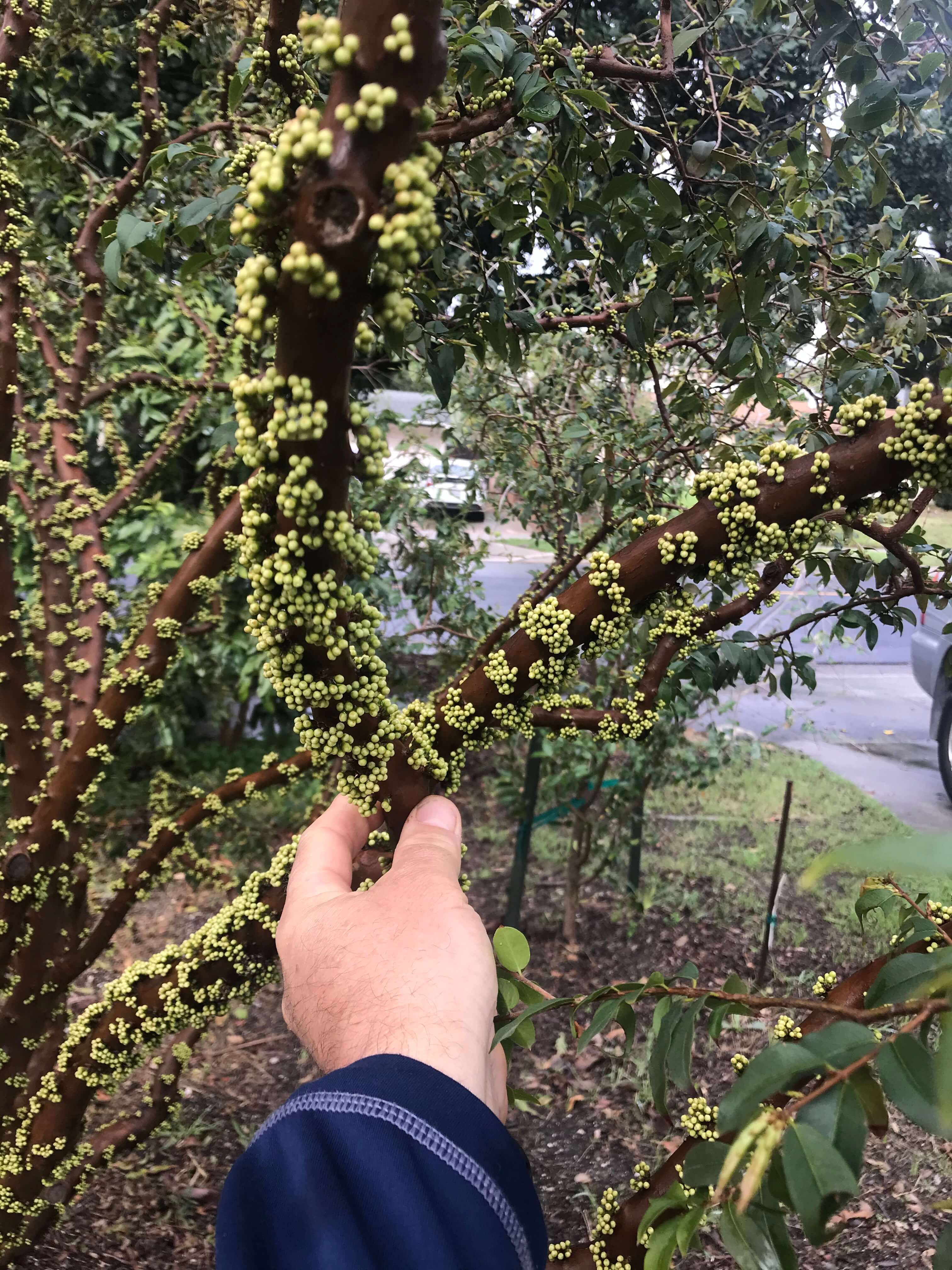
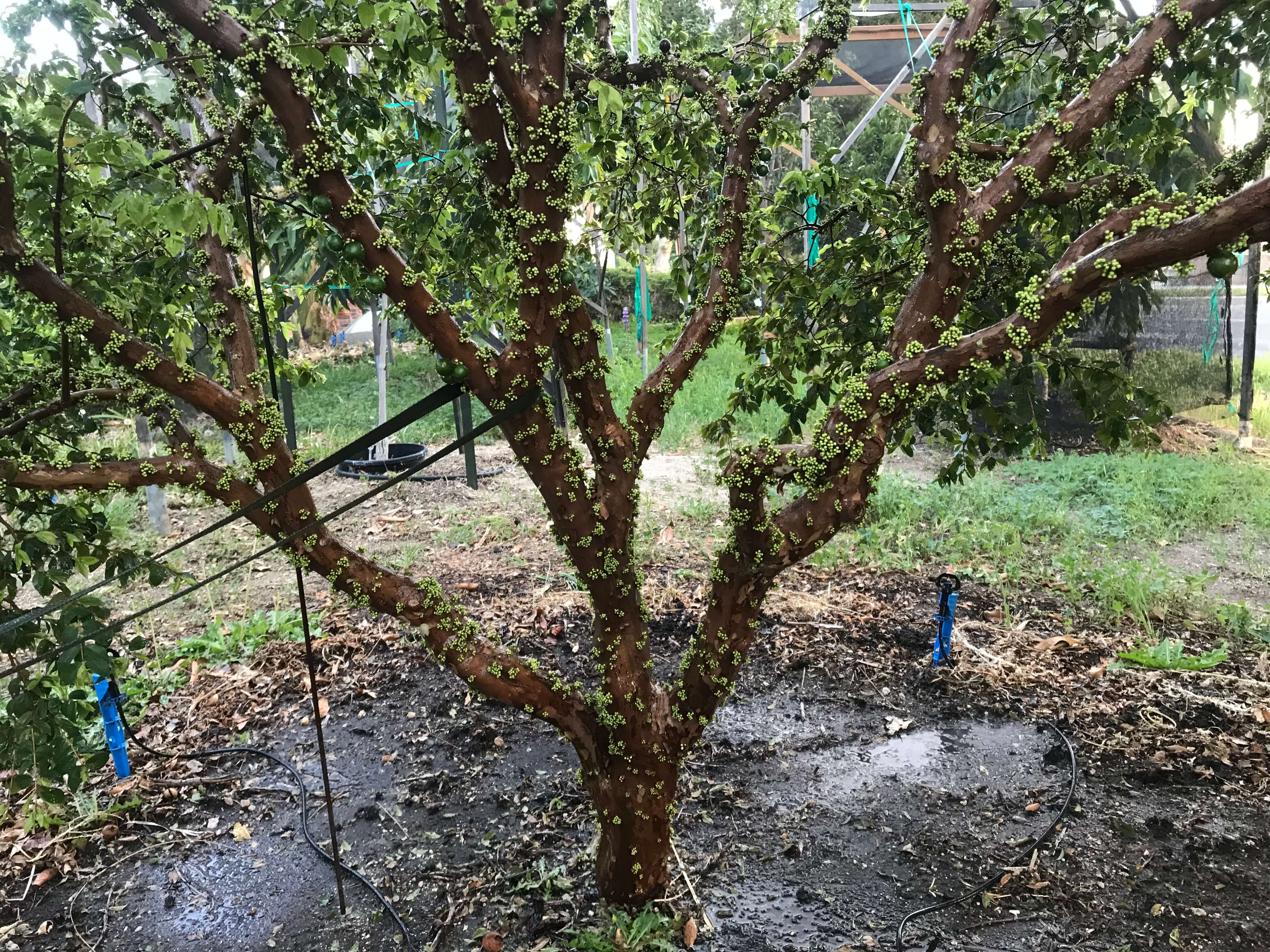
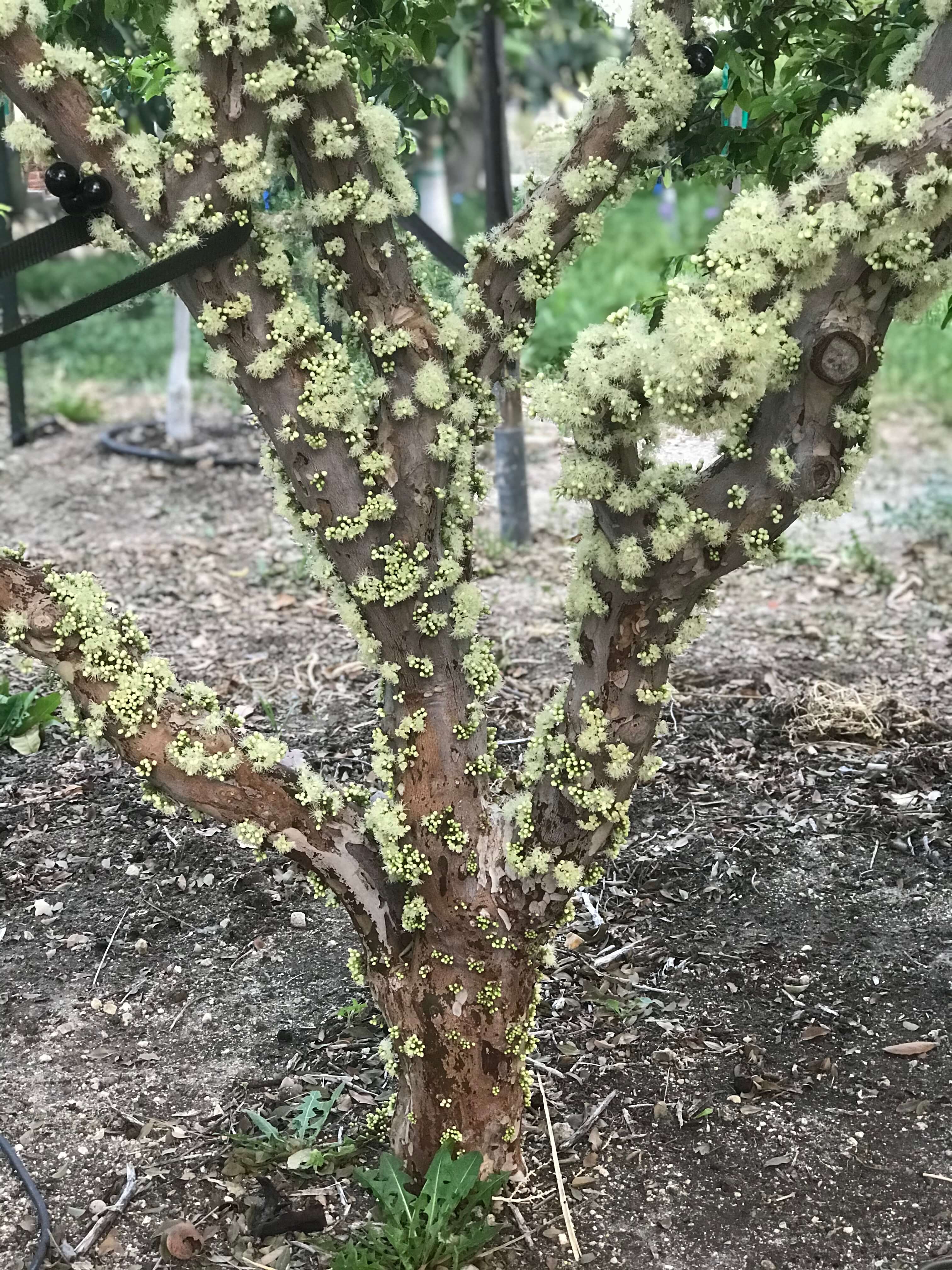
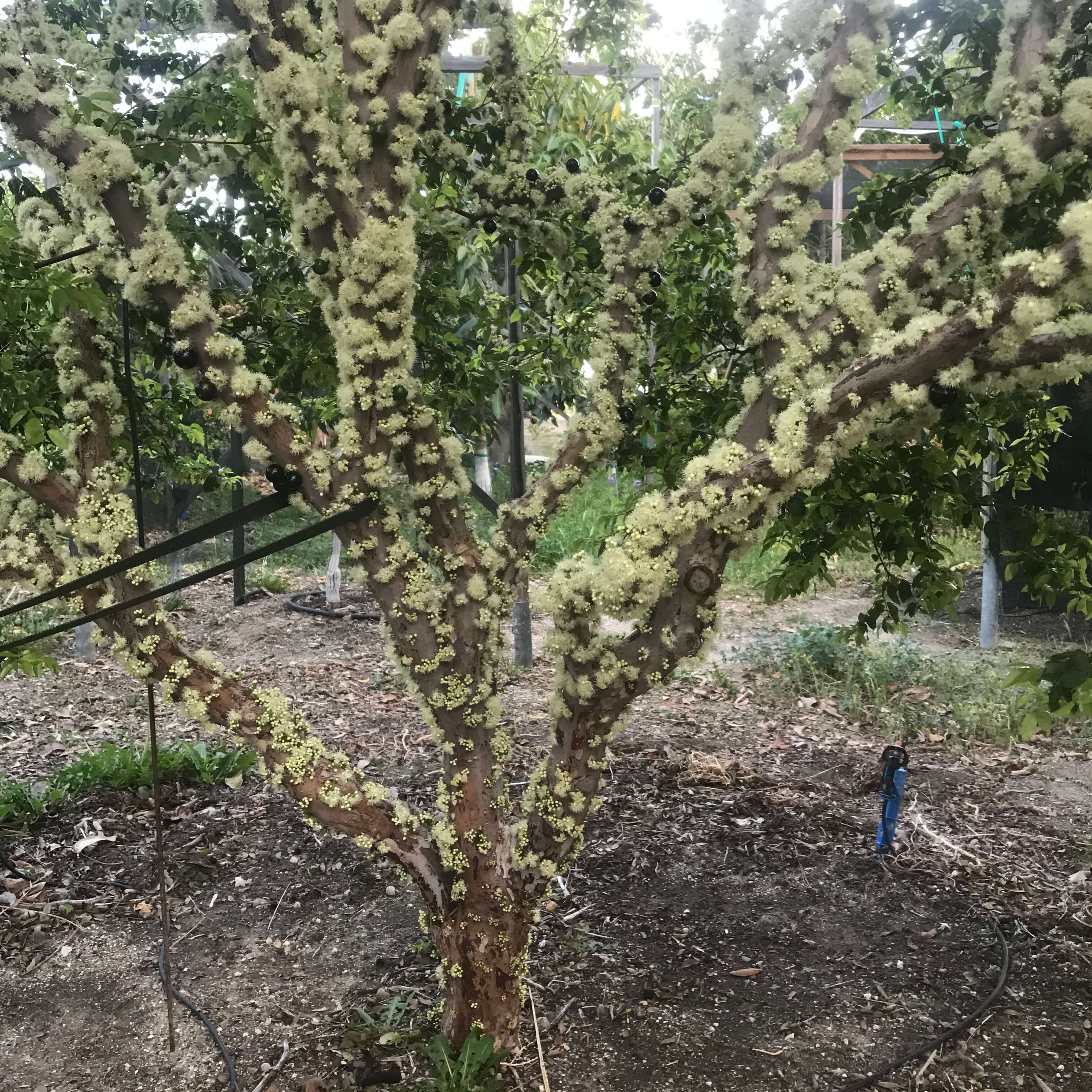
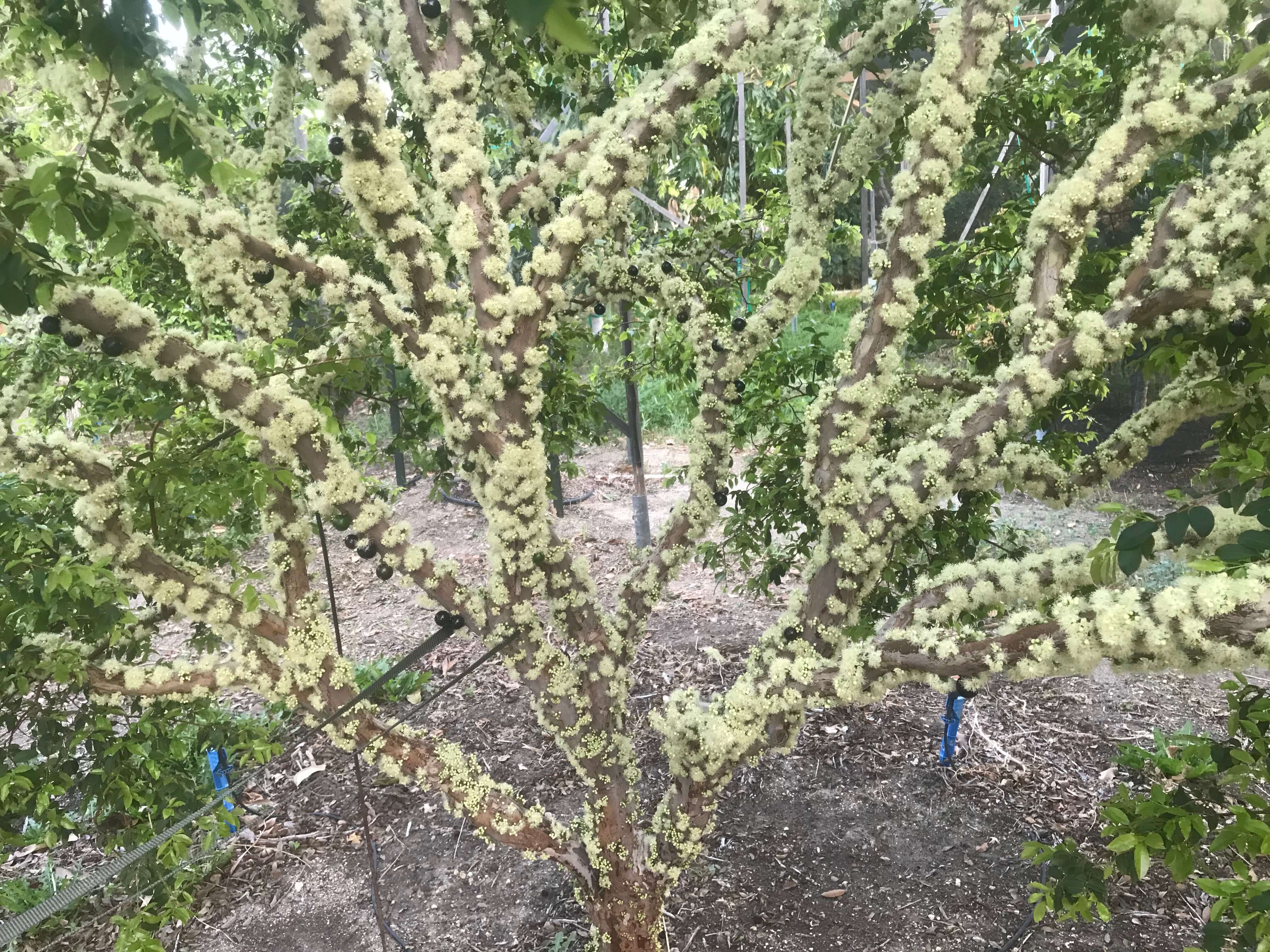
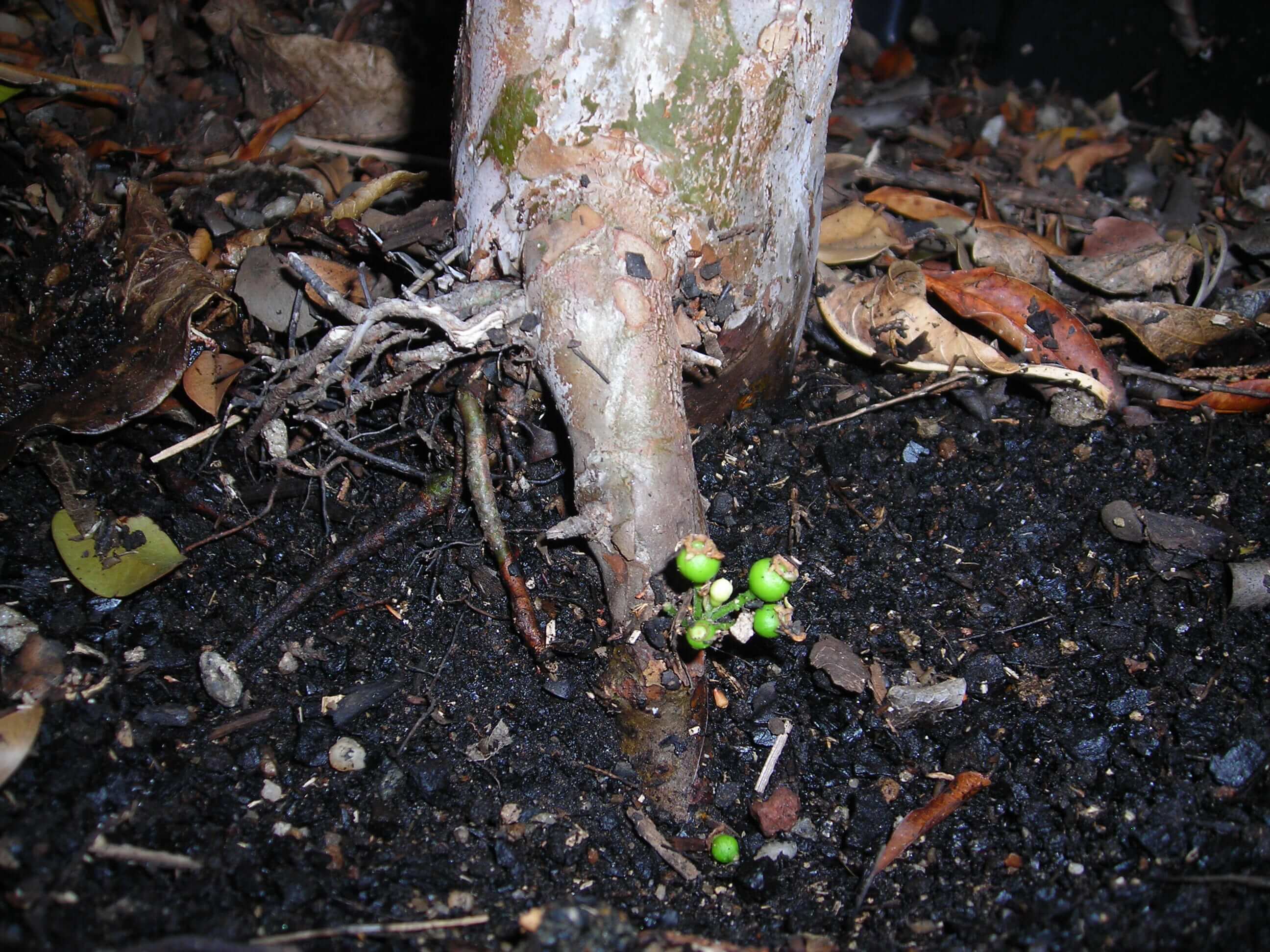
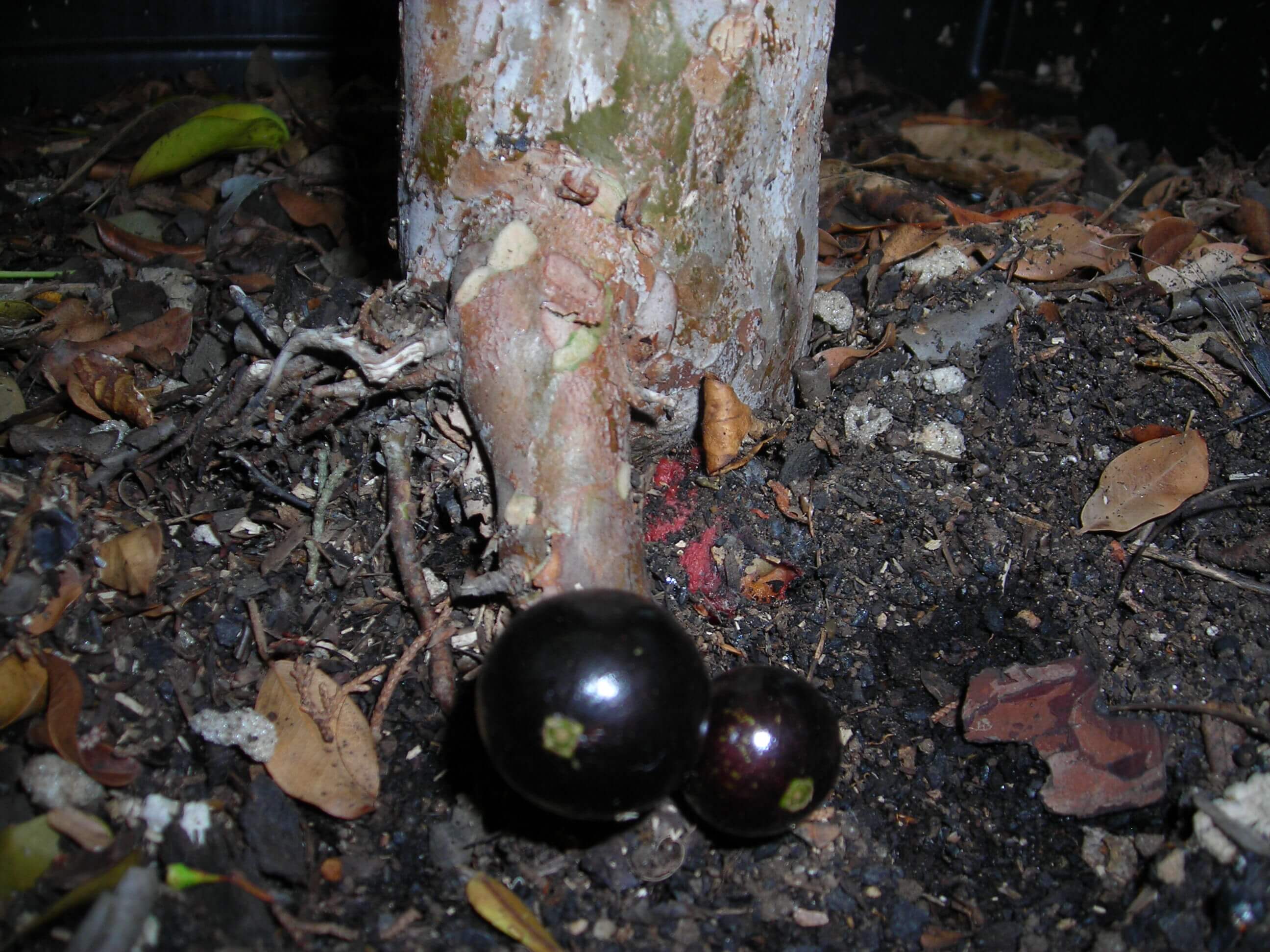
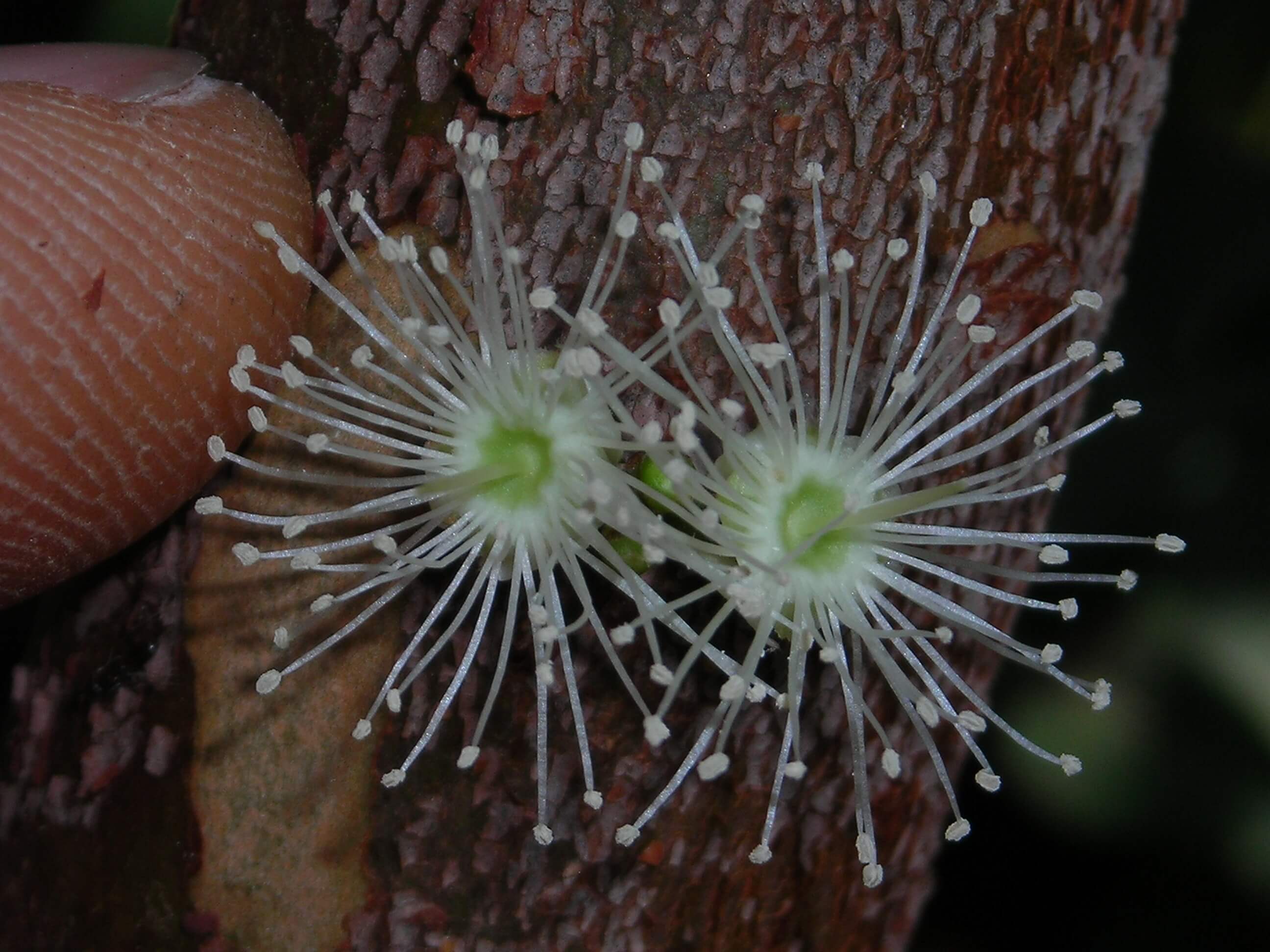
Jaboticaba is often described as a slow-growing fruit tree that takes many years to produce. However, our experience at Papaya Tree Nursery suggests that its growth rate depends greatly on growing conditions and the variety cultivated. Many years ago, at my father's suggestion, we conducted an experiment with approximately fifteen young Jaboticabas, each measuring 12–14 inches tall with trunks about ¼ inch in diameter. Starting in 1-gallon containers, they were transplanted into 5-gallon containers during spring and 7-gallon containers that fall. By the end of the growing season, the largest specimen's trunk had increased to approximately ⅝ inch in diameter, demonstrating the potential for vigorous growth under favorable conditions. In our San Fernando Valley growing conditions, we have observed that Jaboticabas often begin fruiting when their trunks approach 2 inches in diameter, although this varies among plants and varieties. Our Mother Sabara Jaboticaba produced as many as four crops annually in a 45-gallon nursery container and up to five after being planted in the ground. Remarkably, during one year out of more than 20, it initiated a substantial sixth flowering in November. Having already produced five crops, my father recommended removing the flower buds to allow the tree to recuperate. By contrast, our giant Paulista remained unproductive while container-grown, although customers who planted this variety in the ground eventually enjoyed successful harvests. These experiences demonstrate that Jaboticaba's growth and productivity can vary considerably with growing conditions and variety.
| Common Name | Jaboticaba |
| Scientific Name/Synonyms | Myrciaria cauliflora / syn. Plinia cauliflora |
| Cultivars/Varieties | 'Murta' |
| Country of Origin | Brazil |
| Native Range | Not Applicable |
| Also found in other Regions | California, Florida and Hawaii |
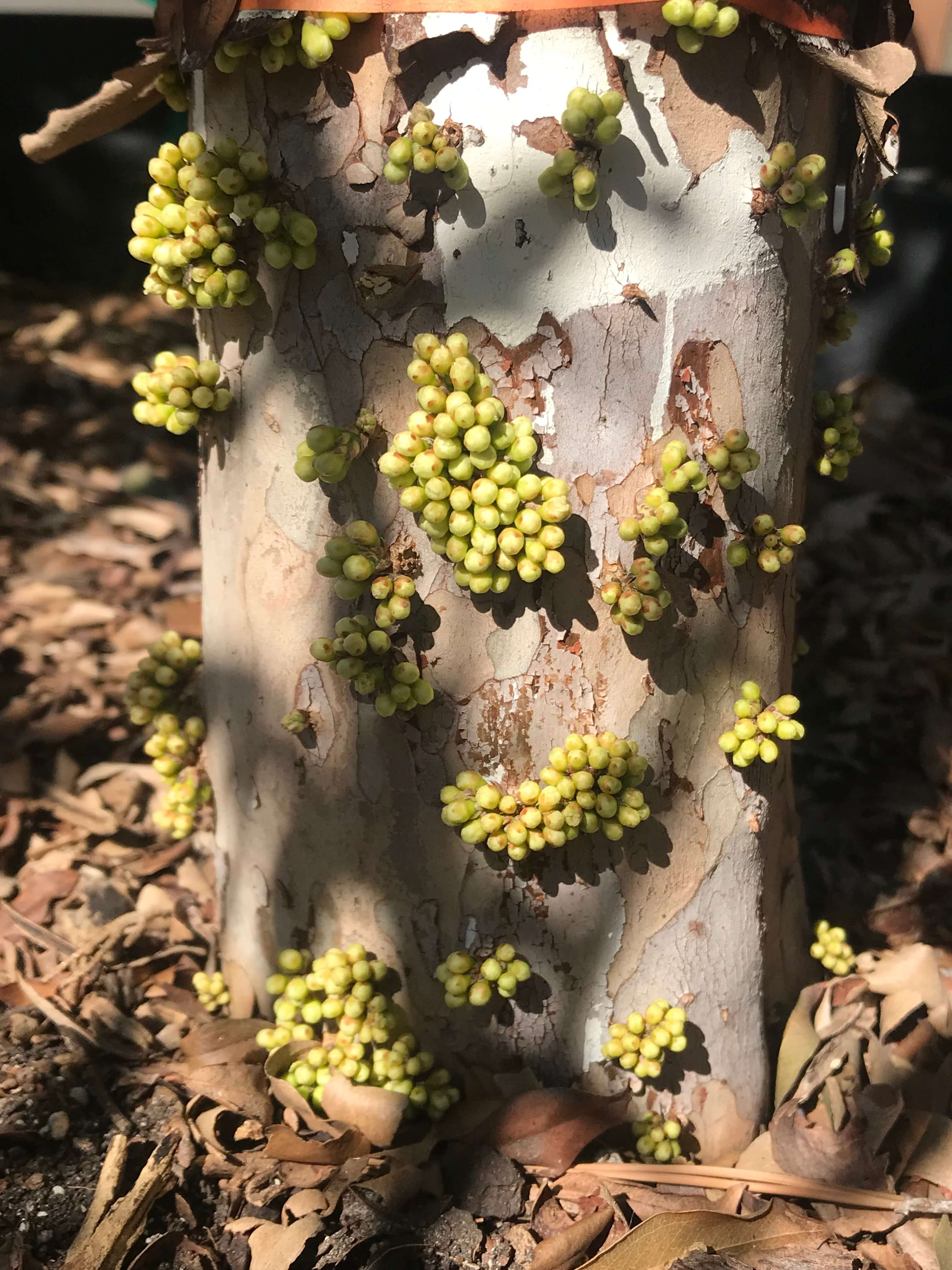
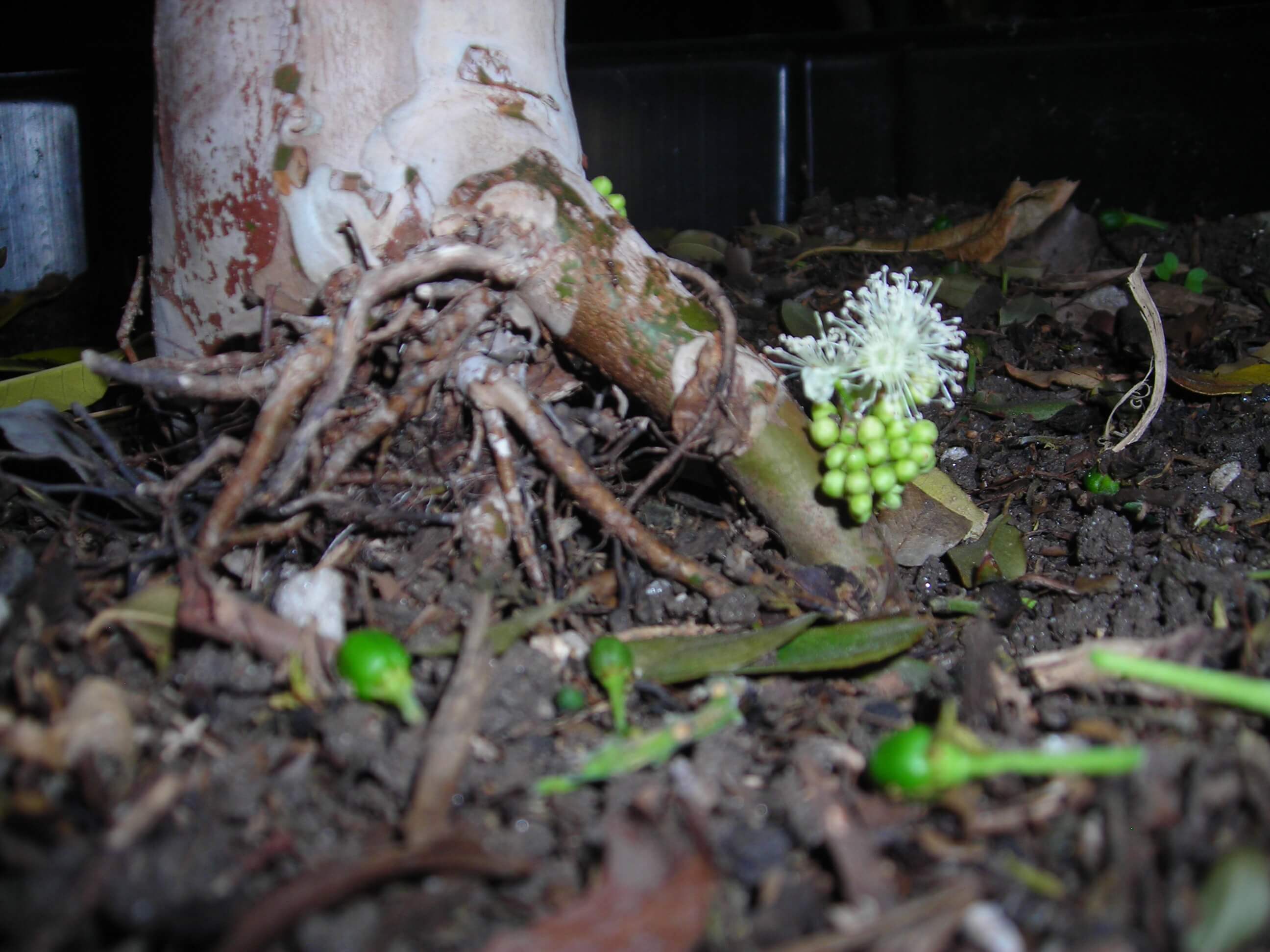
| Description | The Jaboticaba, often called the Brazilian Grape Tree, is a truly unique and captivating fruit tree native to southeastern Brazil. What sets it apart is its unusual habit of cauliflory—the glossy purple-black fruits grow directly from the trunk and branches, creating a striking visual that resembles grapes sprouting from wood. The properly ripened, freshly harvested fruits have a gelatinous interior, pleasantly tart skin and a flavor combination similar to that of the famous Santa Rosa Japanese plum, Muscadine grape and the relatively uncommon Mangosteen. Because of this, it is prized for fresh-eating, making jellies, wines and liqueurs. The Jaboticaba often flowers and fruits multiple times a year, especially when well-watered. Its bark peels attractively, adding ornamental charm even when not in fruit. |
| Evergreen/Deciduous | Evergreen |
| Height x Width | 15' x 10' |
| Growth Habit | Shrub-like, relatively compact |
| Growth Rate | Slow/Medium |
| Sun Exposure | Partial-Shade / Full-Sun |
| Cold Hardiness | Tolerant to 26° |
| Fruit Bearing Age/Height | Six to Eight Feet |
| Suitable To Container Culture | Yes |
| Harvest Period | March-November (Multiple Harvests) |
| Video | Coming Soon |
Jaboticaba grows best in well-drained, slightly acidic soil that retains consistent moisture without becoming waterlogged. Proper soil preparation is especially important in Southern California, where heavy clay and alkaline soils are common. Mound-planting at least 8 inches above the surrounding ground level, using appropriately amended soil, is recommended where drainage is poor. Unlike many tropical fruit trees, established Jaboticabas can be surprisingly tolerant of the intense summer heat experienced in Southern California's inland valleys, provided their roots receive adequate moisture. At Papaya Tree Nursery, we have observed established trees tolerating temperatures exceeding 105°F, even during periods of very low humidity. However, heat tolerance should not be confused with drought tolerance. A generous layer of organic mulch, approximately 3 inches deep, helps conserve moisture and moderate soil temperatures. Jaboticaba benefits from a regular fertilization program using an organic-based fertilizer. Because it can develop iron chlorosis in alkaline soils, maintaining favorable soil conditions and adequate iron availability is also important. One useful indicator of healthy growth, particularly with the common Sabara variety, is the appearance of tender new foliage with a reddish or rosy coloration. The rarer Paulista variety often produces a deeper red flush with considerably longer young leaves. This coloration may last only a few days before the leaves turn green. Jaboticaba can also grow successfully in containers for many years. When transplanting into a larger pot, inspect the root system and address any excessively circling roots to encourage healthy new growth.
One of the most common mistakes when harvesting Jaboticaba is assuming that the fruit is fully ripe as soon as its skin turns black. At Papaya Tree Nursery, more than 30 years of experience have shown us that allowing the fruit to remain on the tree for approximately two additional days can make a significant difference in eating quality. During this final stage of ripening, the skin becomes noticeably thinner and more tender, yielding slightly to gentle pressure while losing much of its chewiness and astringency. The pulp also develops a sweeter, juicier texture, resulting in a far more enjoyable eating experience. Our recommendation: Don't harvest Jaboticaba simply because the fruit has turned black. Allow approximately two additional days for the fruit to develop its best flavor and texture, adjusting for weather conditions and variety.